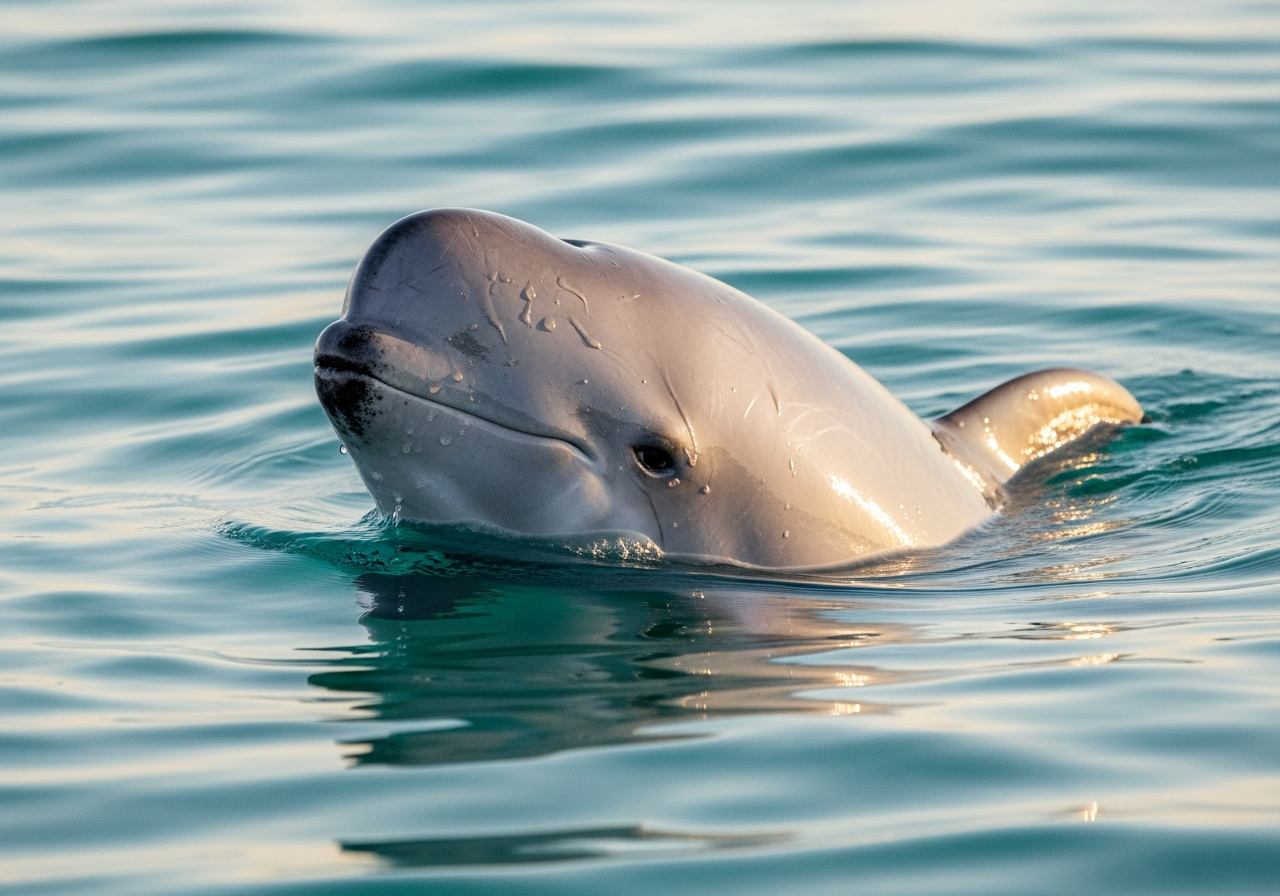
Quick answer
IUCN lists vaquitas (Phocoena sinus) as Critically Endangered (2022). They live only in the northern Gulf of California. A 2025 visual survey found a 67% probability of 7–10 distinct individuals seen in the ZTA+EA study area (mean ~8.5) — not a total-population census. Totoaba gillnets remain the threat. Figures checked 13 August 2026.
Are vaquitas Endangered or Critically Endangered?
Critically Endangered. The 2022 IUCN assessment is the live global label. “Listed in our guides as Critically Endangered” without the totoaba-gillnet driver and the study-area caveat was the thin version of this page. A porpoise this small is not a dolphin, and the listing is not a rumour.
What is driving the decline?
Illegal gillnets set for totoaba, whose swim bladder is trafficked. Vaquitas drown in those nets in a single northern-gulf range. Climate headlines and “habitat loss” copy do not outrank the gear. Ranking threats here is simple: the nets, then everything else.
Is 7–10 an all-clear?
No. Observers asked how many unique vaquitas were seen in the Zero Tolerance Area plus Extension Area. Animals move in and out, so the number is a floor on survivors, not a weekly census. There is no evidence the old ~45% per year crash is still running inside that study area. Still CR. Still gillnets.
What actually helps?
Keep totoaba nets out of the last refuge and cut the bladder trade. A 2017 captive attempt failed. WARN’s donate page funds wildlife-protection partners — not Gulf of California patrols.
Are they already extinct?
No. Calves have still been recorded in recent surveys, and body condition in the study area has not read as a starving remnant. Extinction risk is the nets, not a missing heartbeat. “Most endangered marine mammal” is a description, not a death certificate.
Can they still recover?
Only if gillnets stay out of the water they still use. Reproduction in a handful of animals is not a population rebound. Mexican enforcement and net-removal partners own that work — not a UK donate button pretending to skipper a patrol boat.
Sources
Vaquita FAQs
Are vaquitas endangered?
Yes. IUCN lists the vaquita (Phocoena sinus) as Critically Endangered (2022). It lives only in the northern Gulf of California. Totoaba gillnets remain the main threat. A 2025 visual survey found a 67% probability that 7–10 distinct individuals were seen in the ZTA+EA study area (mean about 8.5) — not a total-population census. Figures checked 13 August 2026.
How many vaquitas are left?
Treat 7–10 as distinct animals seen in the 2025 ZTA+EA study area — about 67% probability, mean near 8.5 — not a gulf-wide census. Animals move in and out. There is no evidence the old ~45% per year crash continues inside that study area. The species is still Critically Endangered.
Did captivity save them?
No. A 2017 attempt to bring vaquitas into human care (VaquitaCPR) failed; at least one animal died and the effort was abandoned. Removing totoaba gillnets from the last northern-gulf range is the live option. They are porpoises, not aquarium pets and not a bottlenose-dolphin mix-up.
What actually helps vaquitas?
Cut illegal totoaba gillnets in the Zero Tolerance Area and shut the swim-bladder trade that still sets those nets. Acoustic detections outside the study box do not make a recovery. World Animal Rescue Network’s donate page funds wildlife-protection partners. WARN does not run Gulf of California patrols.
Who this page is for. This page explains IUCN-style status. Skip it if you need an emergency wildlife-rescue number.