Spectacled Bear
Tremarctos ornatus
Quick answer
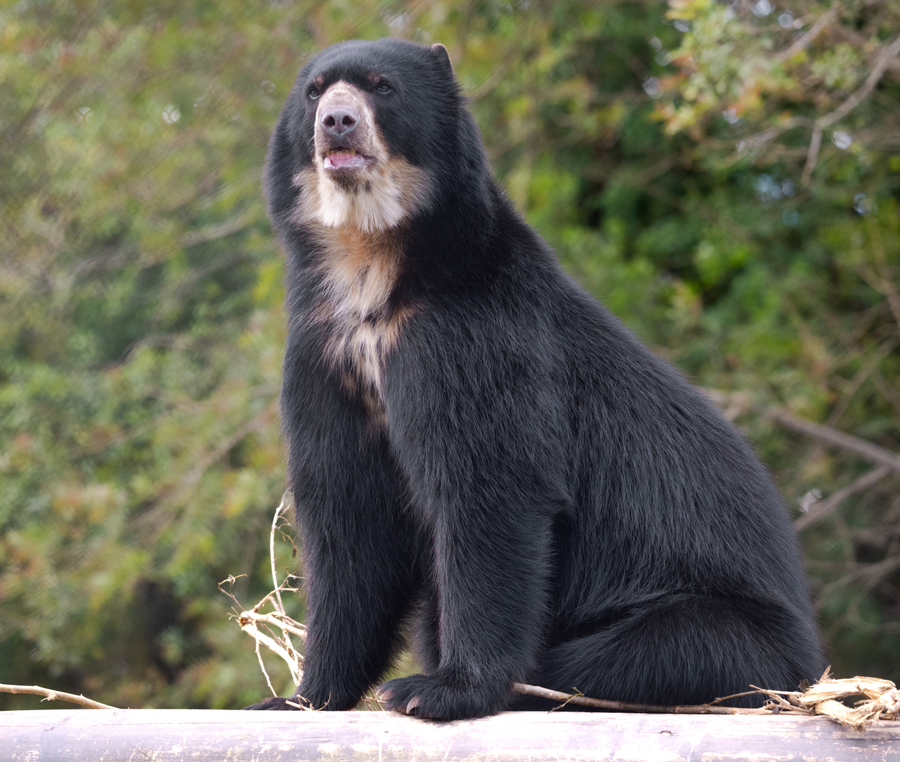
The spectacled bear is the only bear species native to South America, named for pale facial markings that resemble eyeglasses. It inhabits Andean cloud forests, weighs 60–175 kg (130–385 lb), feeds heavily on fruit and bromeliads, and is listed Vulnerable as forests are cleared.
Spectacled Bear facts at a glance
| Scientific name | Tremarctos ornatus |
|---|---|
| Diet | Omnivore — fruit, bromeliads, cactus, insects, and small mammals |
| Habitat | Andean cloud forest, scrub, and dry forest from Venezuela to Bolivia |
| Lifespan | 20–25 years in the wild |
| Weight | 60–175 kg (130–385 lb); males larger |
| Top speed | Agile climber; moderate speed on ground |
| Conservation status | Vulnerable (IUCN) |
| Kingdom | Animalia |
|---|---|
| Phylum | Chordata |
| Class | Mammalia |
| Order | Carnivora |
| Family | Ursidae |
| Genus | Tremarctos |
Where it lives
Andean cloud forests and scrub from western Venezuela through Colombia, Ecuador, Peru, and Bolivia.
What is a group of spectacled bears called?
Group name (collective noun)
A group of Spectacled Bears is called a sleuth.
Baby name
A baby Spectacled Bear is called a cub.
Explore more animal collective nouns and baby animal names .
Andean arboreal bear
Spectacled bears climb extensively to reach fruit, bromeliads, and cactus pads. They build platform nests in trees for resting and feeding. Their short, broad muzzle and strong jaws crush tough vegetation unavailable to many other Andean mammals.
Facial markings
Each bear's pale spectacled pattern is unique — rings, semicircles, or light muzzles vary individually. The markings may aid recognition between bears in dense forest. Despite the name, not every individual has obvious 'glasses'.
Shy temperament
Spectacled bears are generally shy and diurnal, avoiding people when possible. They are not aggressive hunters; small mammals and carrion supplement a mostly vegetarian diet. Males may have large home ranges overlapping several females.
Conservation in the Andes
Listed Vulnerable, spectacled bears lose habitat to cattle grazing, crop expansion, and mining roads that fragment cloud forest. Corridors linking protected areas in Peru, Ecuador, and Colombia are priorities. The species is culturally significant as the 'Andean bear'.
Dig deeper into the Spectacled Bear
- Are Spectacled Bear Endangered
Dig deeper into spectacled bear — are spectacled bear endangered.
- How Long do Spectacled Bear Live?
Dig deeper into spectacled bear — how long do spectacled bear live.
- Spectacled Bear Facts 5
Dig deeper into spectacled bear — spectacled bear facts 5.
- What do Spectacled Bear Eat
Dig deeper into spectacled bear — what do spectacled bear eat.
- Where do Spectacled Bear Live?
Dig deeper into spectacled bear — where do spectacled bear live.
Explore the Spectacled Bear
Compare
Collections
Range & geography
Did you know? Spectacled Bear facts
- The spectacled bear is the only bear species native to South America, named for pale facial markings that resemble eyeglasses.
- Pale cream or yellowish fur around the eyes and muzzle can look like eyeglasses, though markings vary widely among individuals.
- Yes — Tremarctos ornatus is the only living bear species native to South America.
- Mostly fruit, bromeliads, and other plants; they also eat insects, small rodents, and carrion opportunistically.
- Andean cloud forests and adjacent scrub from western Venezuela through Colombia, Ecuador, Peru, and Bolivia.
- Conservation: Vulnerable (IUCN).
Diet & feeding
Spectacled Bear feeds primarily as a omnivore — fruit, bromeliads, cactus, insects, and small mammals. Spectacled bears climb extensively to reach fruit, bromeliads, and cactus pads. They build platform nests in trees for resting and feeding. Their short, broad muzzle and strong jaws crush tough vegetation unavailable
Adaptations
- Spectacled bears climb extensively to reach fruit, bromeliads, and cactus pads. They build platform nests in trees for resting and feeding. Their short, broad muzzle and strong jaws crush tough vegetation unavailable to many other Andean mammals.
- Each bear's pale spectacled pattern is unique — rings, semicircles, or light muzzles vary individually. The markings may aid recognition between bears in dense forest. Despite the name, not every individual has obvious 'glasses'.
Behaviour & ecology
- Spectacled bears climb extensively to reach fruit, bromeliads, and cactus pads. They build platform nests in trees for resting and feeding. Their short, broad muzzle and strong jaws crush tough vegetation unavailable to many other Andean mammals.
- Each bear's pale spectacled pattern is unique — rings, semicircles, or light muzzles vary individually. The markings may aid recognition between bears in dense forest. Despite the name, not every individual has obvious 'glasses'.
- Spectacled bears are generally shy and diurnal, avoiding people when possible. They are not aggressive hunters; small mammals and carrion supplement a mostly vegetarian diet. Males may have large home ranges overlapping several females.
Communication
- Spectacled Bear uses scent, posture, and vocal signals to mark territory and coordinate social behaviour.
- Communication intensity often peaks during breeding seasons and territorial disputes.
Habitat & range
Andean cloud forest, scrub, and dry forest from Venezuela to Bolivia
Ecological role
Spectacled Bear plays a recognised ecological role in andean cloud forest, scrub, and dry forest from venezuela to bolivia.
Frequently asked questions about the Spectacled Bear
Why is it called a spectacled bear?
Pale cream or yellowish fur around the eyes and muzzle can look like eyeglasses, though markings vary widely among individuals.
Are spectacled bears the only bears in South America?
Yes — Tremarctos ornatus is the only living bear species native to South America.
What do spectacled bears eat?
Mostly fruit, bromeliads, and other plants; they also eat insects, small rodents, and carrion opportunistically.
Where do spectacled bears live?
Andean cloud forests and adjacent scrub from western Venezuela through Colombia, Ecuador, Peru, and Bolivia.
Are spectacled bears endangered?
They are Vulnerable — not yet Endangered globally, but populations are declining from habitat loss and human conflict.
What is a group of spectacled bears called?
A group of Spectacled Bears is called a sleuth.
What is a baby spectacled bear called?
A baby Spectacled Bear is called a cub.
Sources & references
This guide is compiled and reviewed against established zoological and conservation references. Key sources for the Spectacled Bear:
-
IUCN Red List of Threatened Species
Conservation status (Vulnerable) reflects the IUCN Red List category for Tremarctos ornatus.
- IUCN Red List — Tremarctos ornatus.
Conservation status (Vulnerable) and population trends.
- Animal Diversity Web — Tremarctos ornatus. University of Michigan Museum of Zoology.
Life history, morphology, and range.
- Wikipedia — Spectacled Bear.
General taxonomy and overview (cross-check primary sources).
-
Global Animal Guide editorial standards
How we research, source, review, and update every guide for accuracy.