Image sourcing: see credits & licences
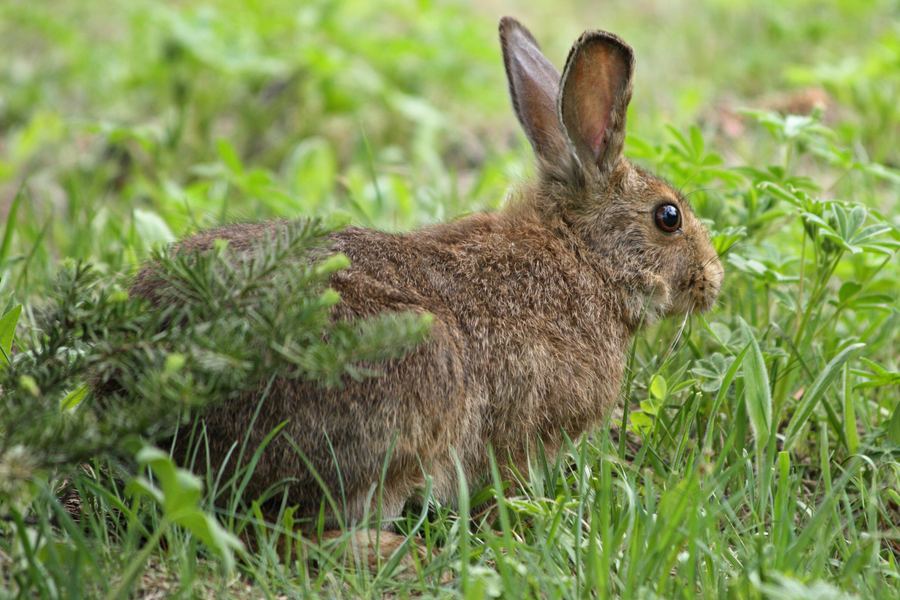
The snowshoe hare (Lepus americanus) is a mammal of the family Leporidae, in the order Lagomorpha.
Quick answer
The snowshoe hare (Lepus americanus) is a boreal lagomorph that moults from brown in summer to white in winter, matching snow in Canada, Alaska, and the northern United States. Oversized hind feet act as snowshoes. Listed Least Concern, its 8–11 year population cycles famously drive Canada lynx numbers.
Top questions about the Snowshoe Hare
Snowshoe Hare facts at a glance
- Weight 1.5 kg
- Length 50 cm
- Top speed 45 km/h
- Lifespan 5 years
| Scientific name | Lepus americanus |
|---|---|
| Diet | Herbivore |
| Habitat | Boreal forest, muskeg, and thickets |
| Lifespan | Around 5 years in the wild (varies by population and captivity). |
| Weight | About 1.5 kg typical adult mass (sex and region vary). |
| Top speed | Up to roughly 45 km/h when moving at speed. |
| Conservation status | Least Concern (IUCN) |
| Kingdom | Animalia |
|---|---|
| Phylum | Chordata |
| Class | Mammalia |
| Order | Lagomorpha |
| Family | Leporidae |
| Genus | Lepus |
Where it lives
The snowshoe hare (Lepus americanus) is native to Boreal forests across Canada and Alaska into the northern United States. — recorded across North America in this guide’s range summary.
For occurrence records, see GBIF species search and sources below.
How big is a snowshoe hare?
An adult snowshoe hare measures 50 cm long — about 29% of the height of an average adult person (1.73 m) — and weighs around 1.5 kg, about 2% of an average adult’s body weight (70 kg).
Length vs an average adult’s height (to scale)
What is a group of snowshoe hares called?
Group name (collective noun)
A group of Snowshoe Hares is called a down.
Baby name
A baby Snowshoe Hare is called a leveret.
Explore more animal collective nouns and baby animal names .
Seasonal coat switch
Photoperiod triggers moult to white winter pelage and brown summer fur. Mismatches when snow arrives late leave white hares conspicuous — a climate concern in some regions.
Browse of the boreal night
Diet is twigs, buds, and bark of willow, birch, and conifers in winter; green forage in summer. Nocturnal and crepuscular feeding reduces exposure to hawks.
Canada–Alaska forests
Boreal forest, muskeg, and thickets across Canada and Alaska into the northern United States. Across its range it is tied to boreal forest, muskeg, and thickets, and field accounts emphasise this species’ distinctive ecology rather than generic habitat labels.
Lynx–hare cycles
Least Concern as a species. Classic predator–prey cycles with Canada lynx are among ecology's best-documented population oscillations; trapping and habitat change can alter local dynamics.
Explore the Snowshoe Hare
Range & geography
Conservation status of the Snowshoe Hare
The snowshoe hare (Lepus americanus) is listed as Least Concern on the IUCN Red List. Least Concern (LC) is the IUCN's lowest-risk category, assigned to widespread, abundant species that have been evaluated and found not to be threatened. It does not mean a species faces no pressures — only that it is not currently at risk of extinction.
The snowshoe hare (Lepus americanus) is assessed on the IUCN Red List. Look up on the IUCN Red List .
Frequently asked questions about the Snowshoe Hare
Why do snowshoe hares turn white?
Winter camouflage against snow reduces detection by lynx, foxes, and owls.
What happens if snow is late?
White hares on brown ground are more visible to predators — an increasing mismatch as climates warm.
Why are their feet so big?
Large, furred hind feet spread weight on soft snow like snowshoes.
How are lynx linked to snowshoe hares?
Lynx specialise on hares; both species' numbers rise and fall in multi-year cycles.
Where do snowshoe hares live?
Boreal forests across Canada and Alaska into the northern United States.
What is a group of snowshoe hares called?
A group of Snowshoe Hares is called a down.
What is a baby snowshoe hare called?
A baby Snowshoe Hare is called a leveret.
Sources & references
This guide is compiled and reviewed against established zoological and conservation references. Key sources for the Snowshoe Hare:
-
IUCN Red List of Threatened Species
Conservation status (Least Concern) reflects the IUCN Red List category for Lepus americanus.
-
iNaturalist — observations & photos
Search citizen-science observations and community IDs for Lepus americanus. Useful for range checks and recent sightings — not a substitute for formal Red List status.
-
GBIF — occurrence data
Global Biodiversity Information Facility species search for Lepus americanus. Explore published occurrence records used in range research.
-
Global Animal Guide editorial standards
How we research, source, review, and update every guide for accuracy.