Image sourcing: see credits & licences
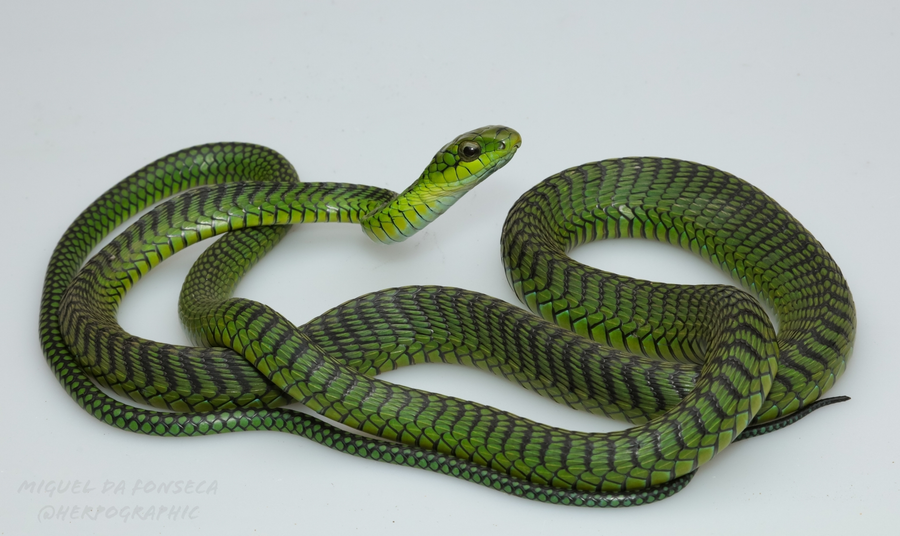
The boomslang (Dispholidus typus) is a reptile of the family Colubridae, in the order Squamata.
Quick answer
The boomslang (Dispholidus typus) is an arboreal African colubrid with potent haemotoxic venom and large rear fangs. It hunts chameleons and birds in savanna and woodland canopies across sub-Saharan Africa, weighs about 0.5 kg, and is listed Least Concern — famous also for the fatal bite that killed herpetologist Karl Schmidt in 1957.
Top questions about the Boomslang
Boomslang facts at a glance
- Weight 500 g
- Length 1.5 m
- Top speed 5 km/h
- Lifespan 10 years
| Scientific name | Dispholidus typus |
|---|---|
| Diet | Carnivore (chameleons and birds) |
| Habitat | Tree canopies in savanna and woodland |
| Lifespan | Around 10 years in the wild (varies by population and captivity). |
| Weight | About 0.5 kg typical adult mass (sex and region vary). |
| Top speed | Up to roughly 5 km/h when moving at speed. |
| Conservation status | Least Concern (IUCN) |
| Kingdom | Animalia |
|---|---|
| Phylum | Chordata |
| Class | Reptilia |
| Order | Squamata |
| Family | Colubridae |
| Genus | Dispholidus |
Where it lives
The boomslang (Dispholidus typus) is native to Savanna and woodland trees across much of sub-Saharan Africa. — recorded across Africa in this guide’s range summary.
For occurrence records, see GBIF species search and sources below.
How big is a boomslang?
An adult boomslang measures 1.5 m long — about 87% of the height of an average adult person (1.73 m) — and weighs around 500 g, about 1% of an average adult’s body weight (70 kg).
Length vs an average adult’s height (to scale)
What is a group of boomslangs called?
Group name (collective noun)
A group of Boomslangs is called a bed.
Baby name
A baby Boomslang is called a hatchling.
Explore more animal collective nouns and baby animal names .
Big eyes in the canopy
Enormous eyes give excellent vision for spotting prey among leaves. Colour varies from green to brown or grey. Rear fangs sit far back, so many defensive bites fail to envenomate — but a solid bite is dangerous.
Chameleons and nestling birds
Diet focuses on chameleons, other lizards, frogs, and birds or eggs raided from nests in trees. Across its range it is tied to tree canopies in savanna and woodland, and field accounts emphasise this species’ distinctive ecology rather than generic habitat labels.
Sub-Saharan tree country
Savanna and woodland canopies across much of sub-Saharan Africa — the Afrikaans name means "tree snake.". Across its range it is tied to tree canopies in savanna and woodland, and field accounts emphasise this species’ distinctive ecology rather than generic habitat labels.
Venom research milestone
Least Concern as a species. Schmidt's documented self-report after a bite advanced understanding of boomslang coagulopathy; specific antivenom now exists in southern Africa.
Explore the Boomslang
Close relatives
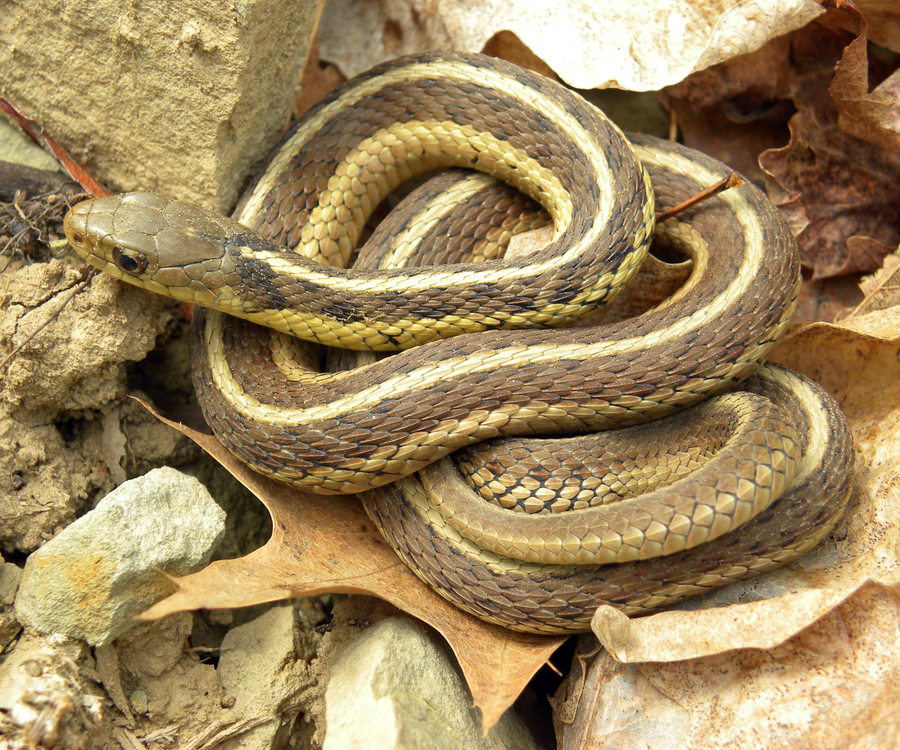
- Common Garter Snake Same family
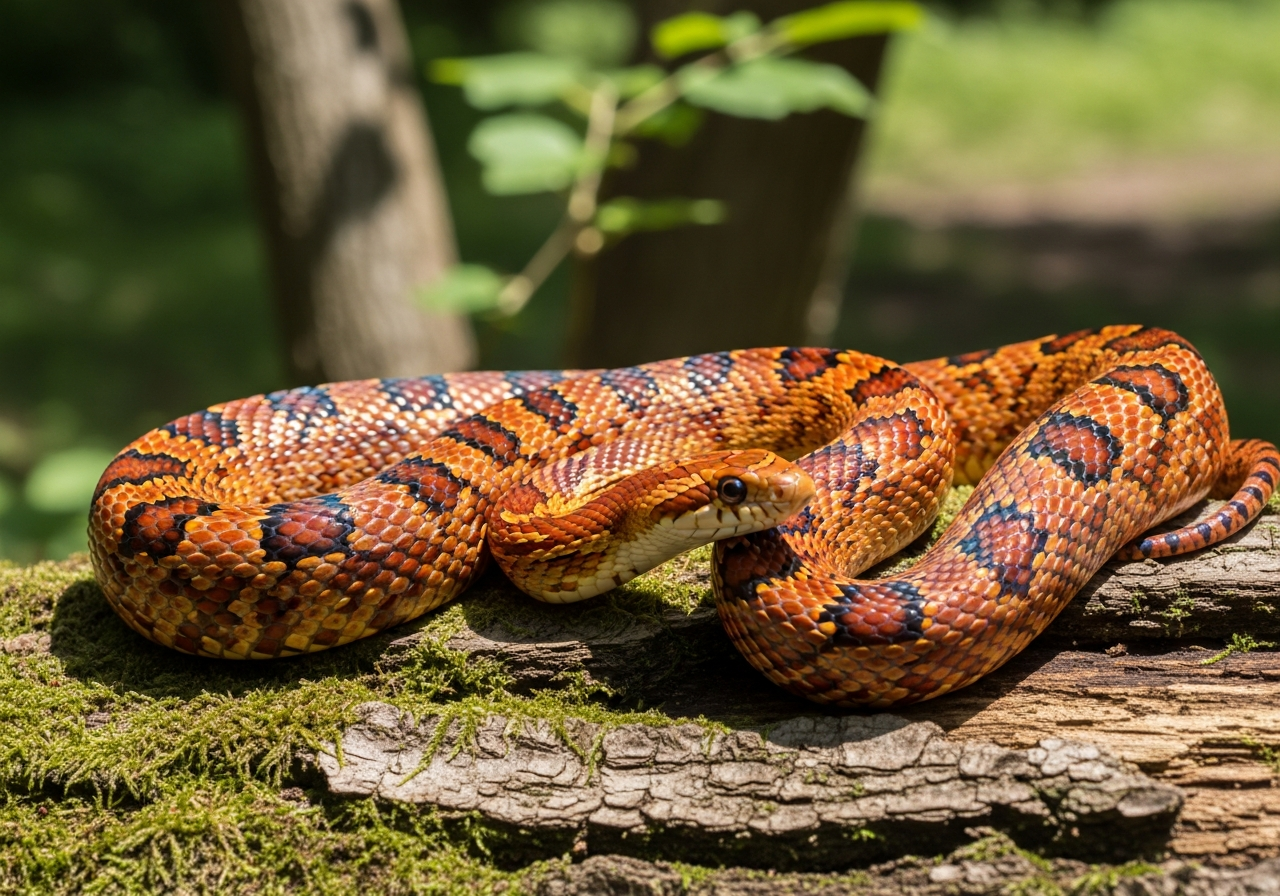
- Corn Snake Same family
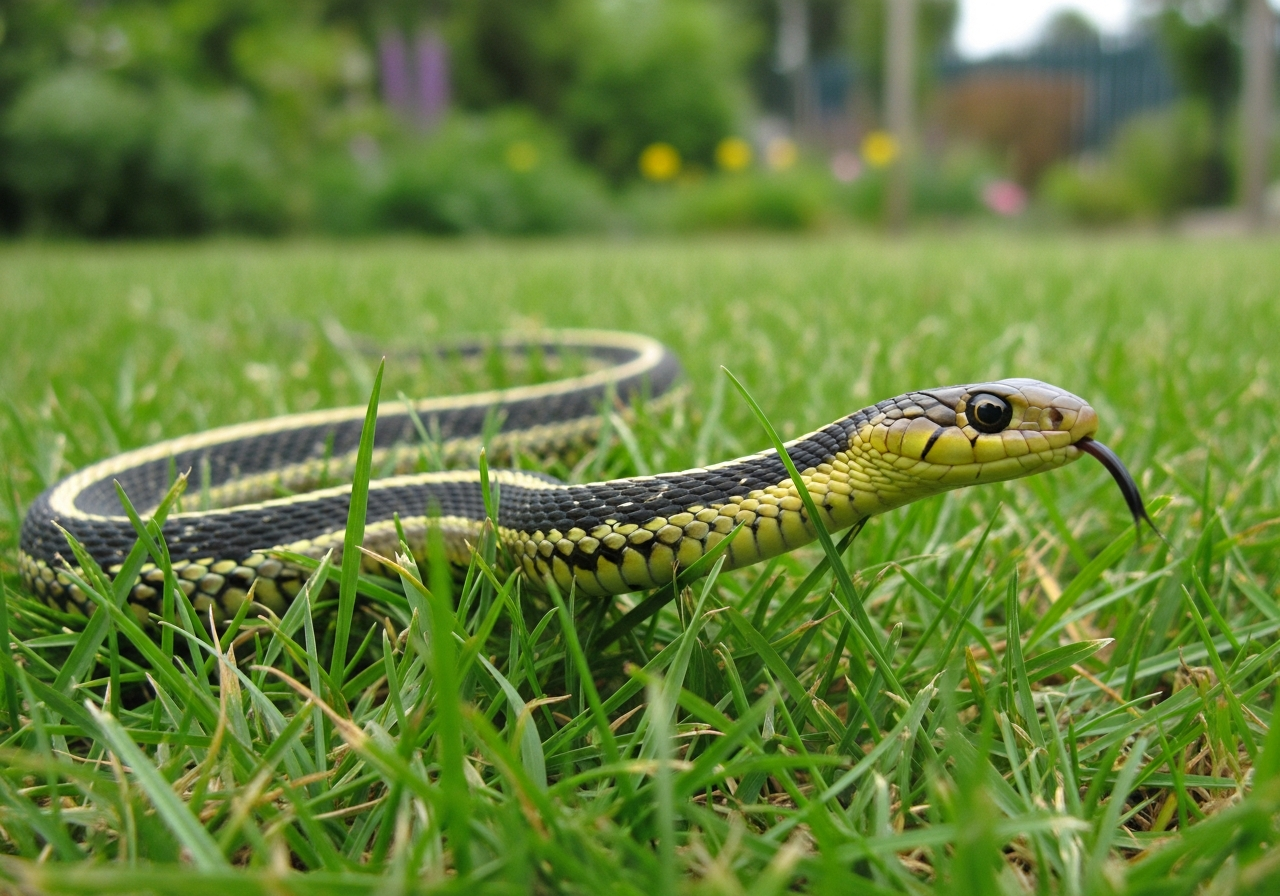
- Garter Snake Same family
- Black Mamba Same order
Range & geography
Conservation status of the Boomslang
The boomslang (Dispholidus typus) is listed as Least Concern on the IUCN Red List. Least Concern (LC) is the IUCN's lowest-risk category, assigned to widespread, abundant species that have been evaluated and found not to be threatened. It does not mean a species faces no pressures — only that it is not currently at risk of extinction.
The boomslang (Dispholidus typus) is assessed on the IUCN Red List. Look up on the IUCN Red List .
Frequently asked questions about the Boomslang
Is boomslang venom dangerous?
Yes — it can cause severe clotting disorders; seek emergency care even if symptoms are delayed.
Why are boomslang bites sometimes "dry"?
Rear fangs may not engage in quick defensive snaps; chewing bites are more likely to inject venom.
What do boomslangs eat?
Mainly chameleons, lizards, and birds in the canopy.
Are boomslangs aggressive?
Generally shy; most bites occur when snakes are handled or grabbed.
Where do boomslangs live?
Trees in savanna and woodland across much of sub-Saharan Africa. Native range summary: Savanna and woodland trees across much of sub-Saharan Africa.
What is a group of boomslangs called?
A group of Boomslangs is called a bed.
What is a baby boomslang called?
A baby Boomslang is called a hatchling.
Sources & references
This guide is compiled and reviewed against established zoological and conservation references. Key sources for the Boomslang:
-
IUCN Red List of Threatened Species
Conservation status (Least Concern) reflects the IUCN Red List category for Dispholidus typus.
-
iNaturalist — observations & photos
Search citizen-science observations and community IDs for Dispholidus typus. Useful for range checks and recent sightings — not a substitute for formal Red List status.
-
GBIF — occurrence data
Global Biodiversity Information Facility species search for Dispholidus typus. Explore published occurrence records used in range research.
-
Global Animal Guide editorial standards
How we research, source, review, and update every guide for accuracy.