Platypus
Ornithorhynchus anatinus
Quick answer
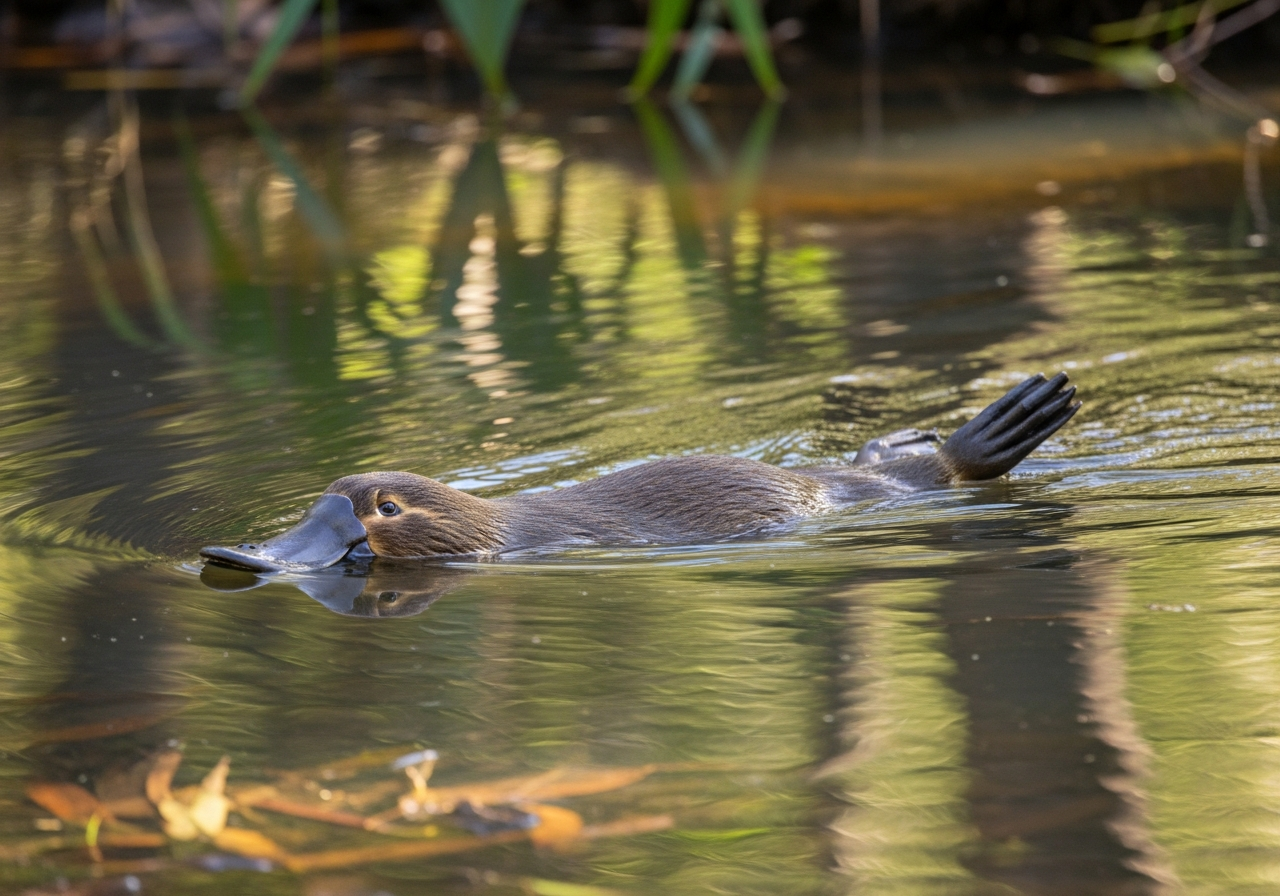
The platypus is a small, semi-aquatic Australian mammal with a duck-like bill, webbed feet, and a beaver-like tail. It is one of only five mammal species that lay eggs (a monotreme), and males have a venomous spur. Platypuses typically live 6 to 15 years in the wild.
Platypus facts at a glance
| Scientific name | Ornithorhynchus anatinus |
|---|---|
| Diet | Carnivore (insect larvae, worms, shellfish) |
| Habitat | Freshwater rivers, streams, and lakes |
| Lifespan | 6–15 years in the wild |
| Weight | 0.7–2.4 kg (1.5–5.3 lb) |
| Length | 40–50 cm (16–20 in) including tail |
| Conservation status | Near Threatened (IUCN) |
| Kingdom | Animalia |
|---|---|
| Phylum | Chordata |
| Class | Mammalia |
| Order | Monotremata |
| Family | Ornithorhynchidae |
| Genus | Ornithorhynchus |
Where it lives
Eastern Australia from northern Queensland to Victoria, and across Tasmania, in permanent freshwater rivers, streams, and lakes.
What is a group of platypuses called?
Group name (collective noun)
A group of Platypuses is called a paddle.
Baby name
A baby Platypus is called a puggle.
Explore more animal collective nouns and baby animal names .
A mammal that lays eggs
The platypus is a monotreme — one of just five surviving species of egg-laying mammals, alongside four echidna species. Females lay one to three leathery eggs in a riverbank burrow and curl around them until they hatch after about ten days. Like all mammals, the mother then feeds her young milk, though platypuses have no nipples and instead secrete milk through patches of skin.
The electric bill
A platypus hunts with its eyes, ears, and nostrils sealed shut underwater. Instead, its soft rubbery bill is packed with tens of thousands of receptors that detect the faint electric fields given off by the muscles of prey such as insect larvae, worms, and shrimp. This electroreception lets it find food in murky water, sweeping its bill side to side like a living metal detector.
Venomous spurs
Male platypuses are among the few venomous mammals. Each hind leg carries a sharp spur connected to a venom gland that becomes more active in the breeding season, when males use it in fights over mates. The venom is not deadly to humans but causes intense, long-lasting pain that ordinary painkillers struggle to relieve.
Habitat and range
Platypuses live only in eastern Australia, from the tropical rivers of northern Queensland down through New South Wales and Victoria to Tasmania. They need permanent freshwater with earthen banks for burrowing and spend much of the day resting, becoming active at dawn and dusk to forage.
Conservation
The platypus is listed as Near Threatened by the IUCN. Drought, river regulation, land clearing, and entanglement in litter and illegal nets have shrunk its range and numbers. Because it is so dependent on healthy waterways, the platypus is treated as an indicator of river health across eastern Australia.
Dig deeper into the Platypus
- How Long do Platypus Live?
Dig deeper into platypus — how long do platypus live.
- Platypus Facts 4
Dig deeper into platypus — platypus facts 4.
- Platypus Facts 5
Dig deeper into platypus — platypus facts 5.
- What do Platypus Eat
Dig deeper into platypus — what do platypus eat.
- Where do Platypus Live?
Dig deeper into platypus — where do platypus live.
Explore the Platypus
Range & geography
Did you know? Platypus facts
- The platypus is a small, semi-aquatic Australian mammal with a duck-like bill, webbed feet, and a beaver-like tail.
- Yes. Despite laying eggs, the platypus is a mammal because it is warm-blooded, has fur, and feeds its young milk. It belongs to a small group of egg-laying mammals called monotremes.
- Males are. Each hind leg has a spur linked to a venom gland, used mainly in fights with rival males. The venom is not lethal to people but causes severe, long-lasting pain.
- Platypuses are carnivores that feed on insect larvae, worms, freshwater shrimp, and other small bottom-dwelling animals, which they detect using the electrical sensors in their bill.
- Platypuses are found only in eastern Australia and Tasmania, in permanent freshwater rivers, streams, and lakes with banks soft enough to dig burrows.
- Conservation: Near Threatened (IUCN).
Diet & feeding
Platypus feeds primarily as a carnivore (insect larvae, worms, shellfish). The platypus is a monotreme — one of just five surviving species of egg-laying mammals, alongside four echidna species. Females lay one to three leathery eggs in a riverbank burrow and curl around them until they hatch after about ten days. Like
Adaptations
- The platypus is a monotreme — one of just five surviving species of egg-laying mammals, alongside four echidna species. Females lay one to three leathery eggs in a riverbank burrow and curl around them until they hatch after about ten days. Like all mammals, the mother then feeds her young milk, though platypuses have no nipples and instead secrete milk through patches of skin.
- A platypus hunts with its eyes, ears, and nostrils sealed shut underwater. Instead, its soft rubbery bill is packed with tens of thousands of receptors that detect the faint electric fields given off by the muscles of prey such as insect larvae, worms, and shrimp. This electroreception lets it find food in murky water, sweeping its bill side to side like a living metal detector.
Behaviour & ecology
- The platypus is a monotreme — one of just five surviving species of egg-laying mammals, alongside four echidna species. Females lay one to three leathery eggs in a riverbank burrow and curl around them until they hatch after about ten days. Like all mammals, the mother then feeds her young milk, though platypuses have no nipples and instead secrete milk through patches of skin.
- A platypus hunts with its eyes, ears, and nostrils sealed shut underwater. Instead, its soft rubbery bill is packed with tens of thousands of receptors that detect the faint electric fields given off by the muscles of prey such as insect larvae, worms, and shrimp. This electroreception lets it find food in murky water, sweeping its bill side to side like a living metal detector.
- Male platypuses are among the few venomous mammals. Each hind leg carries a sharp spur connected to a venom gland that becomes more active in the breeding season, when males use it in fights over mates. The venom is not deadly to humans but causes intense, long-lasting pain that ordinary painkillers struggle to relieve.
Communication
- Platypus uses scent, posture, and vocal signals to mark territory and coordinate social behaviour.
- Communication intensity often peaks during breeding seasons and territorial disputes.
Habitat & range
Freshwater rivers, streams, and lakes
Ecological role
Platypus acts as a predator that helps regulate prey populations and maintain balance in freshwater rivers, streams, and lakes.
Frequently asked questions about the Platypus
Is the platypus a mammal?
Yes. Despite laying eggs, the platypus is a mammal because it is warm-blooded, has fur, and feeds its young milk. It belongs to a small group of egg-laying mammals called monotremes.
Is the platypus venomous?
Males are. Each hind leg has a spur linked to a venom gland, used mainly in fights with rival males. The venom is not lethal to people but causes severe, long-lasting pain.
What does a platypus eat?
Platypuses are carnivores that feed on insect larvae, worms, freshwater shrimp, and other small bottom-dwelling animals, which they detect using the electrical sensors in their bill.
Where do platypuses live?
Platypuses are found only in eastern Australia and Tasmania, in permanent freshwater rivers, streams, and lakes with banks soft enough to dig burrows.
How long do platypuses live?
In the wild platypuses usually live 6 to 15 years, which is long for such a small mammal. Individuals in captivity have reached their early twenties.
What is a group of platypuses called?
A group of Platypuses is called a paddle.
What is a baby platypus called?
A baby Platypus is called a puggle.
Sources & references
This guide is compiled and reviewed against established zoological and conservation references. Key sources for the Platypus:
-
IUCN Red List of Threatened Species
Conservation status (Near Threatened) reflects the IUCN Red List category for Ornithorhynchus anatinus.
- IUCN Red List — Ornithorhynchus anatinus.
Conservation status (Near Threatened) and population trends.
- Animal Diversity Web — Ornithorhynchus anatinus. University of Michigan Museum of Zoology.
Life history, morphology, and range.
- Wikipedia — Platypus.
General taxonomy and overview (cross-check primary sources).
-
Global Animal Guide editorial standards
How we research, source, review, and update every guide for accuracy.