Quick answer
The luna moth is a large, pale-green silk moth of eastern North America, with long, sweeping tails on its hindwings and a wingspan up to about 11 cm (4.5 in). Adults do not feed and live only about a week, focusing entirely on mating, while the caterpillars feed heavily on tree leaves. The trailing tails are thought to confuse the echolocation of hunting bats.
Key takeaway
The luna moth is a large, pale-green silk moth of eastern North America, with long, sweeping tails on its hindwings and a wingspan up to about 11 cm (4.5 in). Adults do not feed and live only about a week, focusing entirely on mating, while the caterpillars feed heavily on tree leaves. The trailing tails are thought to confuse the echolocation of hunting bats.
Luna Moth overview
Luna Moth (Actias luna) is a insect listed here as Least Concern. Typical weight about 0.002 kg; lifespan around Adults about 1 week; full cycle a few months.
Luna Moth ecology
Diet: Caterpillars eat leaves; adults do not feed. Habitat: Deciduous forests of eastern North America. Movement and social systems reflect those pressures across the native range.
Luna Moths and people
Learn before you travel or keep related pets. Wild luna moths are not toys; captive care needs species-specific husbandry.
Status and further reading
Conservation label in our guides: Least Concern. See the full Luna Moth profile for taxonomy, FAQs, and related topic guides on this site.
Appearance
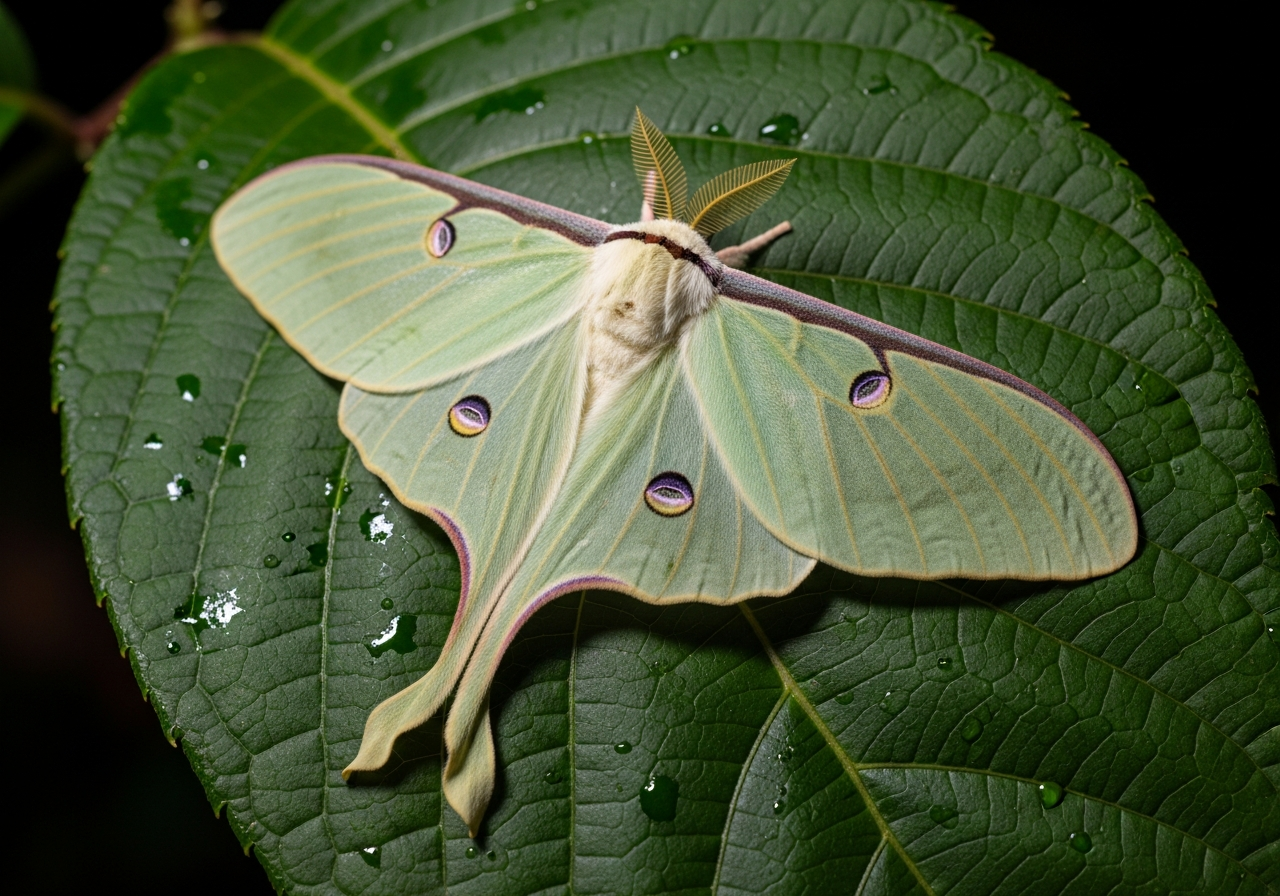
The luna moth is among the most striking moths in North America, with broad, pale-green wings, eyespots, and long, twisting tails trailing from the hindwings. Its body is white and furry, and the antennae of males are large and feathery for detecting females. Its size and soft color make it unmistakable when it appears at lights on summer nights.
A brief adult life
Adult luna moths have no functional mouthparts and do not feed, living on energy stored during the caterpillar stage. As a result they survive only about a week, during which their sole purpose is to find a mate and reproduce. Females release pheromones to attract males, which locate them using their sensitive antennae.
Sources
Luna Moth FAQs
What are key facts about luna moths?
The luna moth is a large, pale-green silk moth of eastern North America, with long, sweeping tails on its hindwings and a wingspan up to about 11 cm (4.5 in). Adults do not feed and live only about a week, focusing entirely on mating, while the caterpillars feed heavily on tree leaves. The trailing tails are thought to confuse the echolocation of hunting bats.
What is the scientific name of the luna moth?
Actias luna — used in research and conservation listings for luna moths.
What do luna moths eat?
Luna Moths have a two-stage diet: caterpillars eat leaves, while adults do not feed, with seasonal and regional variation in Deciduous forests of eastern North America.
Where do luna moths live?
They are associated with Deciduous forests of eastern North America. Local presence depends on food, cover, and human land use.
What is the conservation status of luna moths?
Listed in our guides as Least Concern. Check the IUCN Red List and national assessments for the latest formal category.