Quick answer
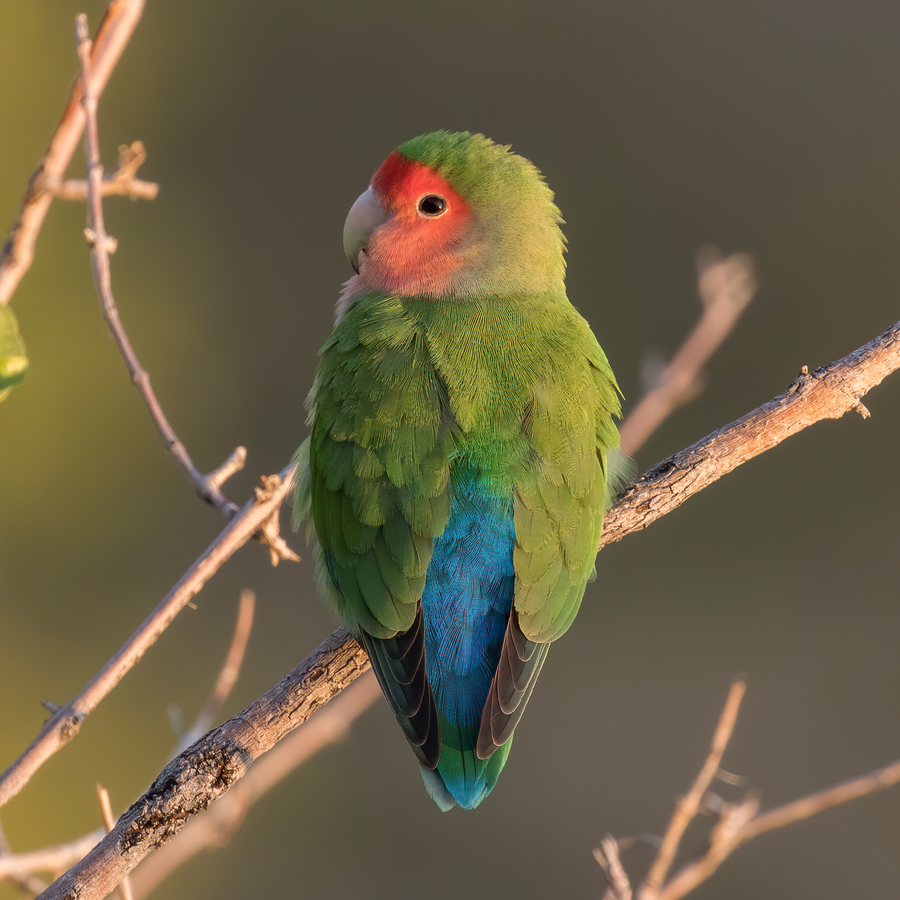
Peach-faced lovebirds are small colourful parrots from southwestern Africa, named for strong pair bonds and affectionate behaviour. Wild birds have green bodies with peach faces; captive colour mutations are popular pets. They weigh 40–60 g (1.4–2 oz), live in flocks at waterholes, and are Least Concern in the wild.
Key takeaway
Peach-faced lovebirds are small colourful parrots from southwestern Africa, named for strong pair bonds and affectionate behaviour. Wild birds have green bodies with peach faces; captive colour mutations are popular pets. They weigh 40–60 g (1.4–2 oz), live in flocks at waterholes, and are Least Concern in the wild.
Peach-faced Lovebird overview
Peach-faced Lovebird (Agapornis roseicollis) is a bird listed here as Least Concern. Typical weight 40–60 g (1.4–2.1 oz); lifespan around 10–15 years in the wild; 15–20 in captivity.
Peach-faced Lovebird ecology
Diet: Herbivore — seeds, fruit, berries, and cultivated crops. Habitat: Dry woodland, savanna, and river valleys of southwestern Africa. Movement and social systems reflect those pressures across the native range.
Peach-faced Lovebirds and people
Learn before you travel or keep related pets. Wild peach-faced lovebirds are not toys; captive care needs species-specific husbandry.
Status and further reading
Conservation label in our guides: Least Concern. See the full Peach-faced Lovebird profile for taxonomy, FAQs, and related topic guides on this site.
Pair bonding
Lovebirds form strong monogamous pairs that preen, feed, and roost together year-round. In captivity a lone bird may bond with a human or mirror if no partner is available. Wild flocks gather at waterholes in dry country, splitting into pairs during breeding.
Nest building in captivity
Females tuck nesting material into tail feathers and carry it to a cavity — a behaviour famous among pet owners who provide paper strips. In the wild they nest in tree holes and rock crevices, laying 4–6 eggs per clutch.
Sources
Peach-faced Lovebird FAQs
What are key facts about peach-faced lovebirds?
Peach-faced lovebirds are small colourful parrots from southwestern Africa, named for strong pair bonds and affectionate behaviour. Wild birds have green bodies with peach faces; captive colour mutations are popular pets. They weigh 40–60 g (1.4–2 oz), live in flocks at waterholes, and are Least Concern in the wild.
What is the scientific name of the peach-faced lovebird?
Agapornis roseicollis — used in research and conservation listings for peach-faced lovebirds.
What do peach-faced lovebirds eat?
Peach-faced Lovebirds eat seeds, fruit, berries, and cultivated crops, with seasonal and regional variation in Dry woodland, savanna, and river valleys of southwestern Africa.
Where do peach-faced lovebirds live?
They are associated with Dry woodland, savanna, and river valleys of southwestern Africa. Local presence depends on food, cover, and human land use.
What is the conservation status of peach-faced lovebirds?
Listed in our guides as Least Concern. Check the IUCN Red List and national assessments for the latest formal category.
Who this page is for. Read the peach-faced lovebird profile if you want the full biology; this page answers one question.