Quick answer
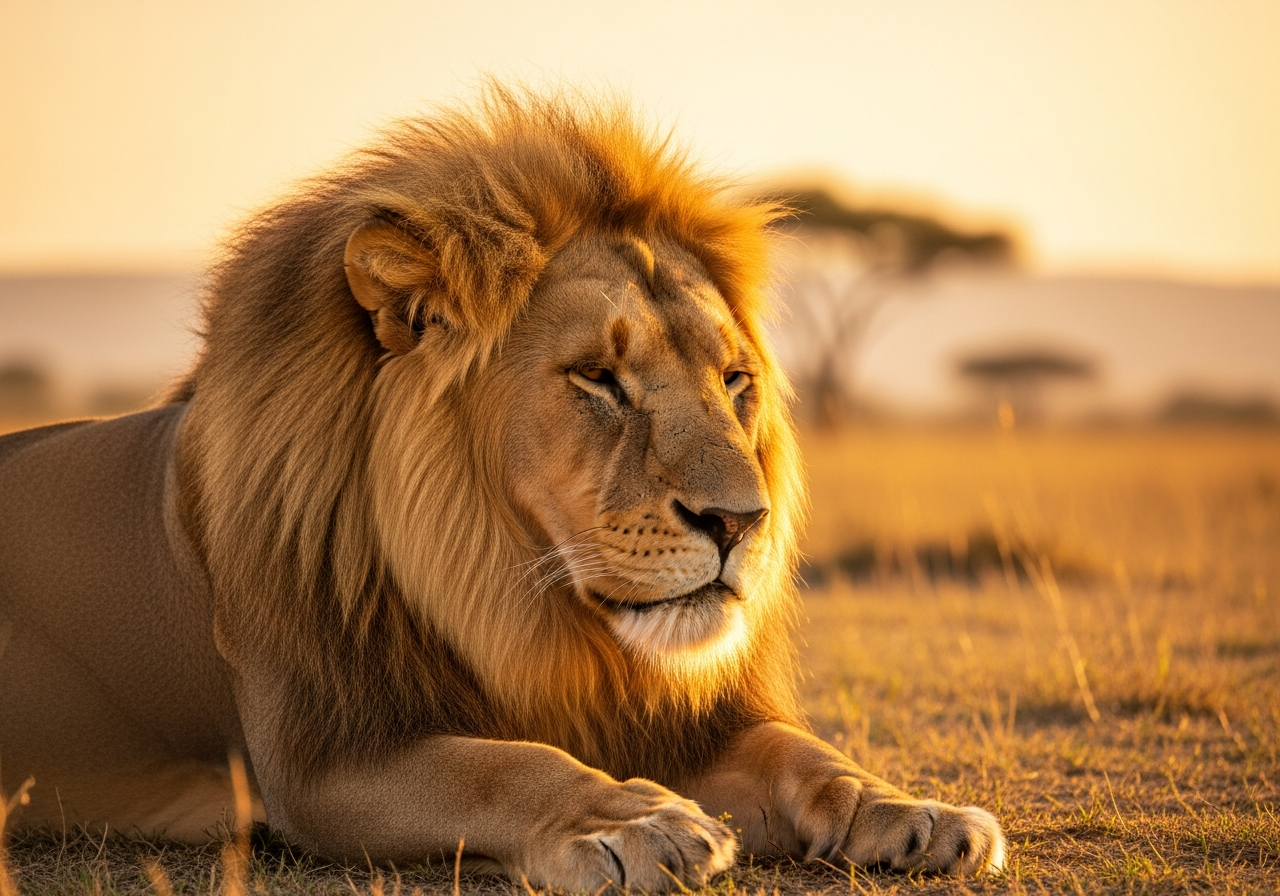
Today lions live mainly across parts of sub-Saharan Africa, in savanna, grassland, and open woodland. A separate population of Asiatic lions survives in and around India’s Gir Forest. Their historic range was far larger, including North Africa and parts of Asia.
At a glance
| Core range | Sub-Saharan Africa |
|---|---|
| Asia | Gir Forest region, India (Asiatic lion) |
| Habitats | Savanna, grassland, open woodland |
| Trend | Large historic range contraction |
Where do most African lions live?
Southern Africa holds about 48% of Africa’s lions and East Africa about 47% in the 2023 IUCN roll-up; Central and West Africa together are a small remainder. Density tracks prey biomass and human pressure, not a country’s safari marketing. Namibia’s desert lions show flexibility when prey and water remain. Outside reserves, livestock conflict and fragmentation keep shrinking usable range.
Outside reserves, conflict with livestock keepers and habitat fragmentation continue to shrink usable range.
Where do Asiatic lions live?
The Asiatic lion (Panthera leo persica / Asiatic population) is now concentrated in the Gir landscape of Gujarat. Conservation success has increased numbers from a severe historic bottleneck, but a single-region population remains vulnerable to disease and disaster — hence ongoing discussions about additional habitats.
What does a landscape need to hold lions?
Lions need adequate wild prey, cover for stalking, water access, and enough space to avoid constant conflict with people. They are not rainforest specialists; open and semi-open ecosystems suit their hunting style best.
Where did lions used to live — and why did that map shrink?
Cave art and historical records place lions across North Africa, southeastern Europe, and southwest Asia. Those populations vanished under hunting pressure and habitat conversion over centuries. The modern map is a remnant: islands of suitable habitat inside a growing human footprint.
West and Central African lions are especially fragmented, with small populations that may need genetic and management attention distinct from southern and eastern strongholds. Transfrontier parks that allow wildlife to move across borders help maintain viable numbers where fences would otherwise isolate prides.
Urban readers sometimes assume lions are “everywhere in Africa.” In reality, most Africans never see a wild lion; the species is concentrated in protected and semi-protected landscapes. Understanding that geography is essential for realistic conservation funding and tourism planning.
Most of Africa has no wild lions
IUCN’s 2023–2024 assessments put remaining range at roughly 6% of the historic footprint. Southern and East African parks hold most of the ~22,000–25,000 African lions; West Africa’s remnant is tiny. India’s Gir population (~670 subadults and adults in the 2020 Gujarat count cited by IUCN) is a second, isolated story.
Corridors and community conservancies matter more than another poster of the Serengeti. Donate to habitat protection via WARN
Checked 13 August 2026 against the IUCN lion assessment. New national counts will move the map; they will not restore North Africa or the Balkans.
Sources
FAQs
Where do lions live in the wild?
Today, mainly in parts of sub-Saharan Africa — savanna, grassland, and open woodland — with a separate Asiatic population in and around India’s Gir Forest. IUCN assessments put remaining range at about 6% of the historic footprint. Most African countries and most Africans never see a wild lion. Strongholds include Tanzania, Kenya, Botswana, and South Africa’s large protected areas.
Do lions live in the jungle?
They are not rainforest specialists. Open and semi-open ecosystems suit stalking better than closed canopy. Gir is dry deciduous forest and scrub, not equatorial jungle. Desert-adapted lions in Namibia show how flexible the species can be when prey and water remain. “Jungle lion” is a storybook image, not the modern map.
Did lions ever live in Europe?
Yes, historically. Cave art and records place lions across North Africa, southeastern Europe, and southwest Asia. Hunting and habitat conversion erased those populations over centuries. The modern map is remnant islands, not a continuous belt. Reintroduction talk is not the same as a restored European population.
Are African and Asiatic lions different?
They are the same species with regional differences. The Asiatic population is long-isolated and managed as its own conservation unit in Gujarat. IUCN’s 2023 assessment cited about 670 subadult and adult lions in India (Gujarat Forest Department 2020) versus roughly 22,000–25,000 in Africa. Tiny range means disease or disaster is an existential risk.
Who this page is for. This page is native range and habitat, not a sighting hotline.