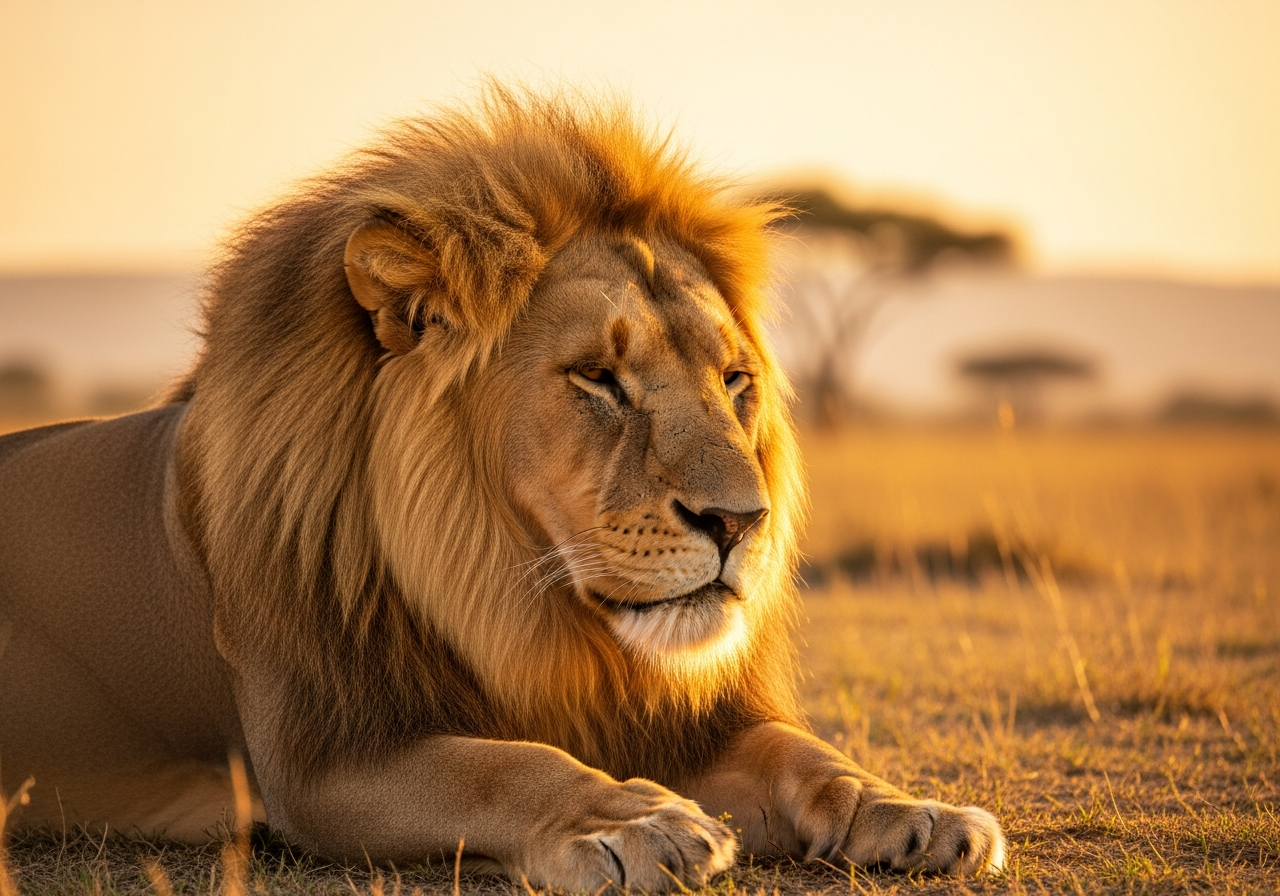
Quick answer
Lions can kill a person. Order-of-magnitude figures put deaths around 100–200 a year — a planning range, not a census — mostly in rural East and Southern Africa. Most lions still avoid people. On safari inside a vehicle the risk is very low; the danger is on foot. IUCN: Vulnerable, not Endangered. Figures checked 13 August 2026.
How dangerous are lions, really?
There is no doubt a lion can kill a person. Healthy, well-fed prides with wild prey treat humans as something to avoid, not as food. Attacks cluster around injury, empty game, and people outdoors at night — they are not random. Kruger densities are not Gir Forest: Asiatic lions are a remnant in India, not a second Kruger. Lions are Vulnerable, not Endangered.
| Human deaths per year | Estimated ~100–200, mostly in Africa — planning range, not a census |
| Where most attacks happen | Rural East & Southern Africa (e.g. Tanzania, Mozambique) |
| Typical triggers | Injury, worn teeth, prey loss, people outdoors at night |
| Risk on safari (in vehicle) | Very low — lions ignore vehicles |
| Risk on foot | High — never run; back away slowly |
| Most infamous case | The Tsavo man-eaters, Kenya, 1898 |
| IUCN status | Vulnerable globally — not Endangered |
When do encounters turn dangerous?
Man-eating is almost always a symptom. Broken or abscessed teeth, porcupine quills, snare wounds, or old age can stop a lion catching fast prey — a person is slower. Where wild herbivores have been hunted out, lions are pushed toward livestock and the people guarding them. Drought and disease among prey raise the same risk. Attacks spike at night and during harvest, when people sleep in fields. Once an individual learns that humans are easy prey, the behaviour can persist in a pride.
What can they actually do?
A large male can weigh up to about 250 kg, sprint around 80 km/h in short bursts, and carry canines around 7 cm. Cooperative hunting lets a pride take buffalo that a singleton might not. Vulnerable is an extinction label, not temperament. Status does not make a cat safe to approach.
What actually keeps people safe?
On a guided safari the rules are simple: stay inside the vehicle, remain seated, keep limbs in. Lions read the jeep as one uninteresting shape. Do not stand up, lean out, or get out near a pride. On foot, never run — running can trigger a chase. Face the animal, look large, back away slowly, never turn your back. Communities cut attacks by sleeping behind solid walls, keeping livestock in reinforced bomas at night, and not walking alone after dark — measures that also protect lions from retaliatory killing.
Were the Tsavo lions typical?
No. The Tsavo man-eaters of 1898 were two maneless males that preyed on workers building a railway bridge in Kenya. The death toll is disputed: contemporary accounts claimed 135 victims; chemical analysis of the remains a century later suggested a figure closer to 35. Either way, the pair halted construction for months. Even more deadly was a group of lions in the Njombe district of Tanganyika (now Tanzania) in the 1930s and 1940s, blamed for a far larger number of deaths over several years before being hunted down. These are extreme outliers — a learned behaviour in a few animals, not a species default.
WARN’s habitat appeal describes proposed partner work — not Kruger lion camps and not Gir Forest..
Sources
Lion FAQs
Are lions dangerous?
They can kill a person. Order-of-magnitude figures put deaths around 100–200 a year, mostly in rural East and Southern Africa — a planning range, not a census, because many attacks go unrecorded. Most lions still avoid people. IUCN: Vulnerable, not Endangered. Figures checked 13 August 2026.
Are lions dangerous on safari?
Inside a vehicle the risk is very low. Lions treat the jeep as one large object and generally ignore it. Danger rises on foot — standing up, leaning out, or getting out near a pride. Follow the guide. Do not run. This is not a Kruger-only story; Asiatic lions are a remnant in India.
What were the Tsavo man-eaters?
Two maneless male lions that killed railway workers in Kenya in 1898 while a bridge was built over the Tsavo River. Contemporary claims ran to 135 victims; later analysis of the remains suggested closer to 35. Injury, prey disease and easy access to workers are the working explanations — not a species-wide taste for people.
What actually helps besides staying in the vehicle?
Prey, night-safe housing, and livestock bomas so communities are not forced into revenge. World Animal Rescue Network’s habitat appeal describes proposed partner work — not Kruger lion camps and not Gir Forest..
Who this page is for. This page is realistic risk, not medical advice after a bite or attack.