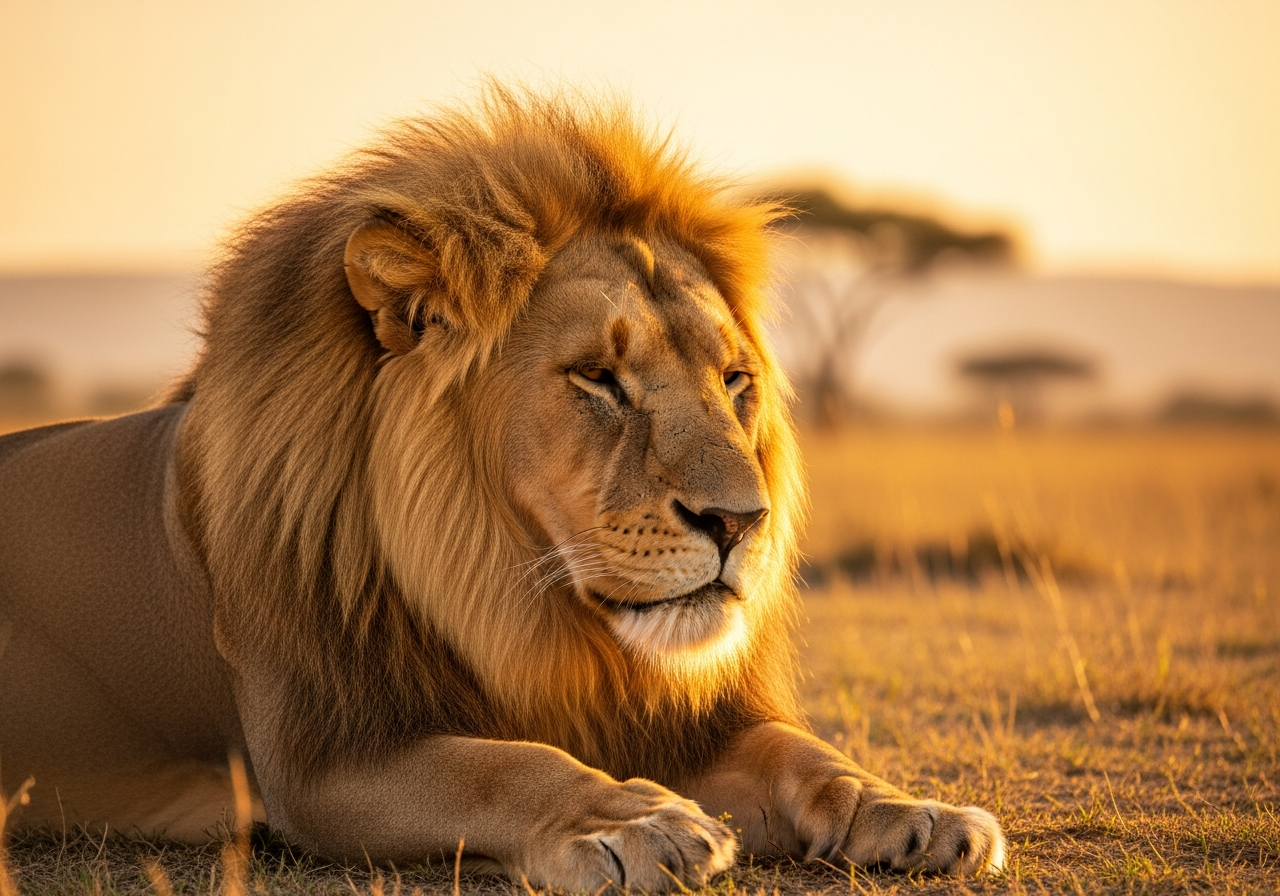
Quick answer
Lions are obligate carnivores. They mainly eat medium and large ungulates such as zebra, wildebeest, buffalo, and antelope, and they also scavenge kills from other predators. Pride cooperation lets them take larger prey than a lone cat usually could.
At a glance
| Diet type | Carnivore (meat) |
|---|---|
| Common prey | Zebra, wildebeest, buffalo, antelope |
| Hunting | Cooperative stalks and ambushes |
| Scavenging | Common — including hyena or leopard kills |
What do lions eat across their range?
In East African savannas, migratory wildebeest and zebra often dominate when available. Elsewhere lions take whatever ungulates are abundant — warthog, impala, and, rarely, young giraffe or elephant. That flexibility is not a zoo menu: it tracks local prey biomass. When people overhunt those herds, lions shift toward livestock and the conflict cycle starts.
Asiatic lions in India’s Gir Forest hunt chital, sambar, and nilgai among other prey, reflecting local ungulate communities rather than African migration cycles.
Who hunts in a pride, and who eats first?
Lionesses typically coordinate the hunt. Males may participate or arrive to claim a share; dominance and hunger influence who feeds first. Cubs eat after adults in many observed sequences, which is one reason cub mortality rises when food is scarce.
A large buffalo or giraffe carcass can feed a pride for days, reducing the need for daily high-risk hunts.
Do lions scavenge?
Lions both steal and lose carcasses in competition with spotted hyenas and other carnivores. Scavenging is normal ecology, not “laziness.” Never feed wild lions — it creates dangerous habituation and is illegal in many places.
How much meat does a pride need?
Adult lions may consume several kilograms of meat in a sitting after a large kill, then fast while digesting. Over a week, intake depends on pride size, cub numbers, and hunting success. Periods of scarcity push prides toward riskier prey or more scavenging. Hydration comes largely from prey tissues plus waterholes when available.
Bone, hide, and viscera are used differently than in a butcher shop: lions shear meat with carnassial teeth, and hyenas or vultures often finish what remains. This multi-species cleanup is a normal part of savanna food webs. Lions are not “wasteful” in an ecological sense when they leave a carcass — competitors recycle the rest.
Diet studies using scat analysis and direct observation show strong preference for medium-to-large ungulates when those species are common. Where prey is depleted by human hunting, lions may shift toward livestock, escalating conflict. Conserving wild prey is therefore inseparable from conserving lions.
Why prey recovery is lion conservation
A pride that cannot find wildebeest or zebra will take cattle. That is ecology, not a character flaw. Conserving wild ungulates is therefore the same job as conserving lions. Memorising a prey list without protecting those herds does not keep lions on the landscape.
Habitat protection through World Animal Rescue Network describes proposed partner programmes that keep wild landscapes working — not a WARN-run lion enclosure. Unrestricted gifts go where partners need them.
If you travel, choose operators that do not bait kills for photos. A habituated pride that expects vehicles or meat is a conflict waiting to happen.
Sources
FAQs
What do lions eat?
Lions are obligate carnivores. Across East African savannas the staple is medium and large ungulates — zebra, wildebeest, buffalo, and antelope — plus scavenging from hyenas or other cats. Asiatic lions in Gir take chital, sambar, and nilgai. Livestock appears when wild prey is depleted, which is a conflict signal, not a preferred menu.
Do lions eat every day?
Not necessarily. After a large buffalo or giraffe carcass a pride may feed and rest for days. During scarcity they go longer between meals and take riskier hunts. Adult intake is several kilograms at a sitting, then a fast while digesting. Hydration comes largely from prey tissues plus waterholes.
Do male and female lions hunt the same way?
Lionesses typically coordinate the stalk. Males may join, especially on large prey, or arrive to claim a share. Dominance and hunger influence feeding order; cubs often eat after adults, which is one reason cub mortality rises when food is scarce. Both sexes can hunt; the stereotype is incomplete.
Should people feed lions?
No. Feeding wild lions is unsafe, illegal in many parks, and creates dangerous habituation. Baiting for photos trains prides to approach vehicles. This page is natural history, not a husbandry sheet. Never throw food from a safari vehicle.
Who this page is for. This page is about wild diet. Skip it if you need a captive feeding plan from a veterinarian.