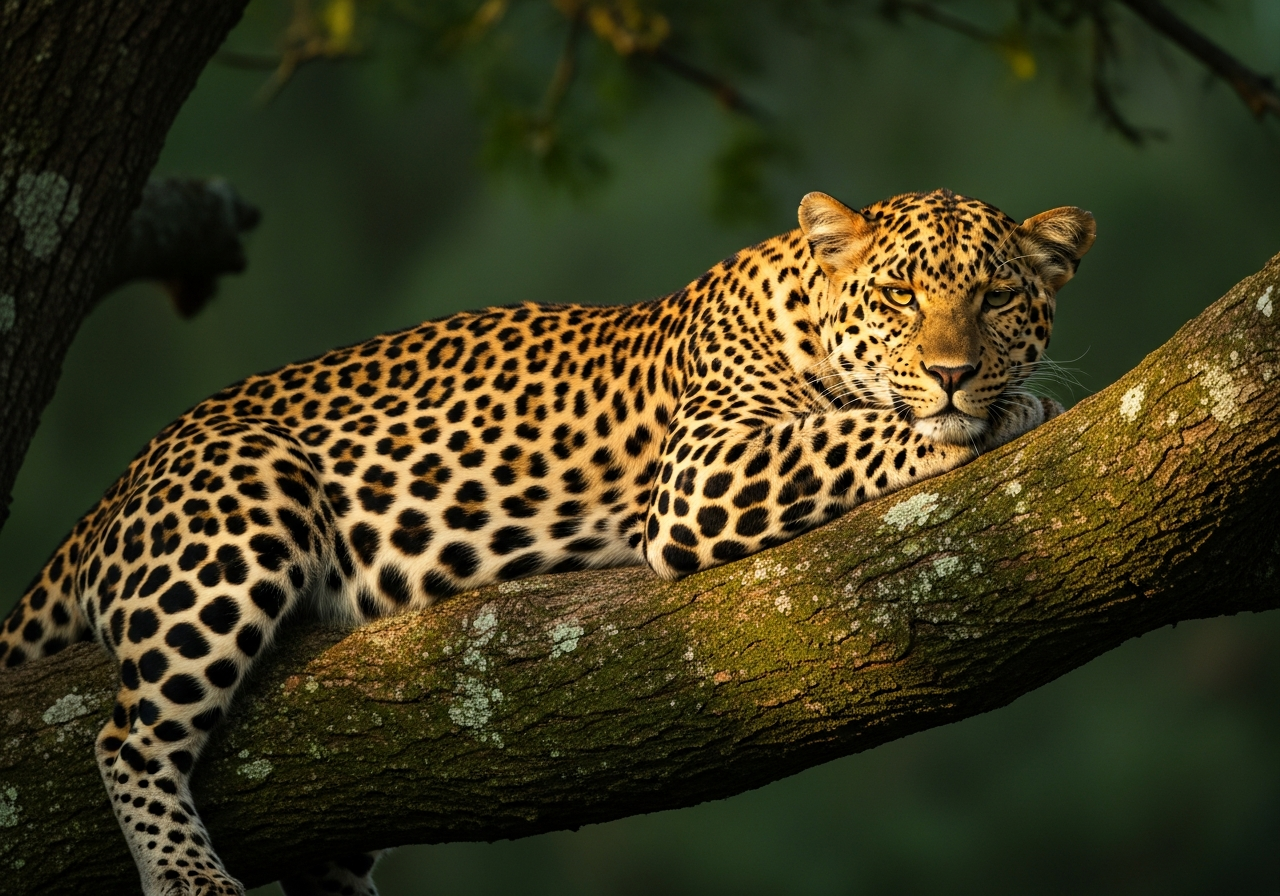
Quick answer
Leopards live in forest, savanna, mountains and scrub across much of sub-Saharan Africa and parts of Asia. The map is huge and full of holes — widely cited African historic-range loss is around two-thirds. They are not snow leopards. IUCN: Vulnerable. Figures checked 13 August 2026.
Africa and Asia — which cover?
From rainforest and miombo to dry scrub and the edges of cities, wherever prey and daytime cover remain. “Forest, savanna, mountains and scrub” without the holes was the thin version of this page. Amur leopards occupy a temperate-forest sliver; Arabian leopards occupy desert mountains.
What microhabitats do they use?
Thickets, rocky kopjes, riverine trees for caching, and any cover that hides a day bed. City-edge hunting is a map of lost wild prey, not proof they “prefer” suburbs.
How do people shrink the map?
Clearing cover, emptying ungulates, snares, and revenge killing. This is not a suburban-deer story even when a cat takes a goat. West African fragments are not Kruger.
What does Vulnerable geography require?
Prey and cover in the remaining blocks, and honesty about CR subspecies. Watch from a vehicle or a hide; never bait. A wide map is not an all-clear.
Do trees expand the map?
They let leopards keep a kill in lion country. They do not reconnect West Africa to the Cape.
Does solitary life shrink the map?
Adults overlap little. Each isolated block needs enough prey for several home ranges. WARN’s habitat appeal describes proposed partner work — not a tiger appeal.
Sources
Leopard FAQs
Where do leopards live?
Forest, savanna, mountains and scrub across much of sub-Saharan Africa and parts of Asia — still a huge map, with large holes punched in historic range. They are not snow leopards, not jaguars, and not a farms-and-suburbs species even when they hunt at city edges. IUCN: Vulnerable as a species.
Do leopards live in the same places as snow leopards?
Almost never as a shared alpine map. Snow leopards occupy high-Asian cliffs. Panthera pardus occupies lower forest and savanna. Clouded leopards are a third lineage in Southeast Asian forest. Mixing the pins mixes the threats.
Have they lost range?
Yes. Widely cited assessments put African historic-range loss around two-thirds. West African and North African populations are in especially bad shape. A Kruger density is not a West African all-clear. Amur leopards survive in a sliver of the Russian Far East and northeast China.
What actually protects leopard range?
Prey, cover, and less conflict killing. World Animal Rescue Network describes plans for habitat-protection partnerships — not a tiger appeal and not Amur field camps.
Who this page is for. This page is native range and habitat, not a sighting hotline.