The king penguin (Aptenodytes patagonicus) is a bird of the penguin family, Spheniscidae, in the order Sphenisciformes.
Quick answer
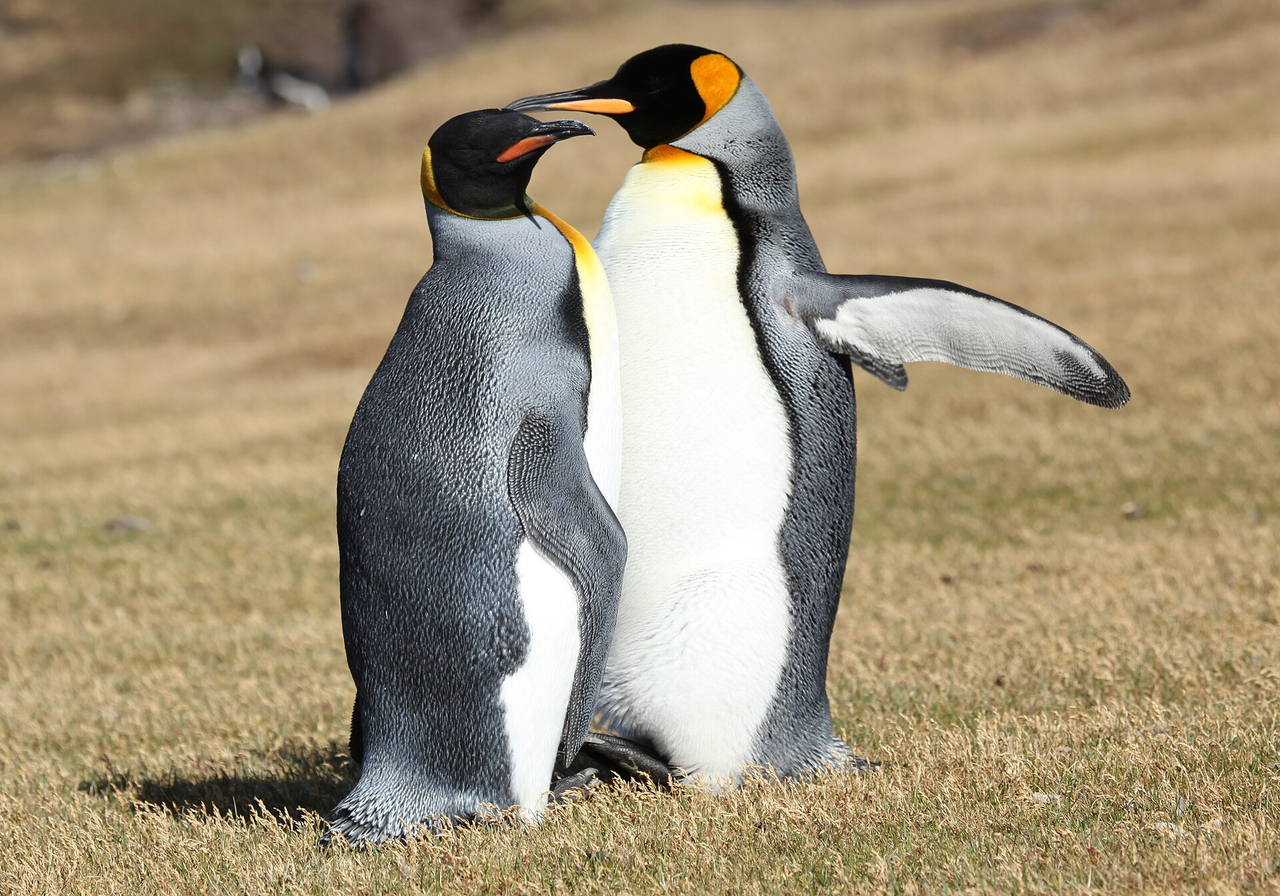
The king penguin (Aptenodytes patagonicus) is the second-largest penguin after the emperor, standing 85–95 cm tall and averaging about 11.8 kg. It breeds on sub-Antarctic islands such as South Georgia, Crozet and Kerguelen, and has bright orange ear patches and an orange flush on the chest. It does not build a nest: parents carry the single egg on their feet. It is listed as Least Concern.
Top questions about the King Penguin
King Penguin facts at a glance
- Weight 12 kg
- Length 90 cm
| Scientific name | Aptenodytes patagonicus |
|---|---|
| Diet | Mainly lanternfish; also squid |
| Habitat | Beaches and valleys of sub-Antarctic islands |
| Height | 85–95 cm |
| Weight | 9.3–17.3 kg (average about 11.8 kg) |
| Lifespan | Up to 26 years in captivity; wild data limited |
| Conservation status | Least Concern (IUCN Red List, assessed 2020) |
| Kingdom | Animalia |
|---|---|
| Phylum | Chordata |
| Class | Aves |
| Order | Sphenisciformes |
| Family | Spheniscidae |
| Genus | Aptenodytes |
Where it lives
The king penguin (Aptenodytes patagonicus) is native to Sub-Antarctic islands from Tierra del Fuego and the Falklands to South Georgia, Prince Edward, Crozet, Kerguelen, Heard and Macquarie islands. — recorded across South America, Antarctica, Oceans in this guide’s range summary.
For occurrence records, see GBIF species search and sources below.
How big is a king penguin?
An adult king penguin measures 90 cm long — about 52% of the height of an average adult person (1.73 m) — and weighs around 12 kg, about 17% of an average adult’s body weight (70 kg).
Length vs an average adult’s height (to scale)
What is a group of king penguins called?
Group name (collective noun)
A group of King Penguins is called a colony. It is also known as a rookery.
Baby name
A baby King Penguin is called a chick.
Explore more animal collective nouns and baby animal names .
King or emperor?
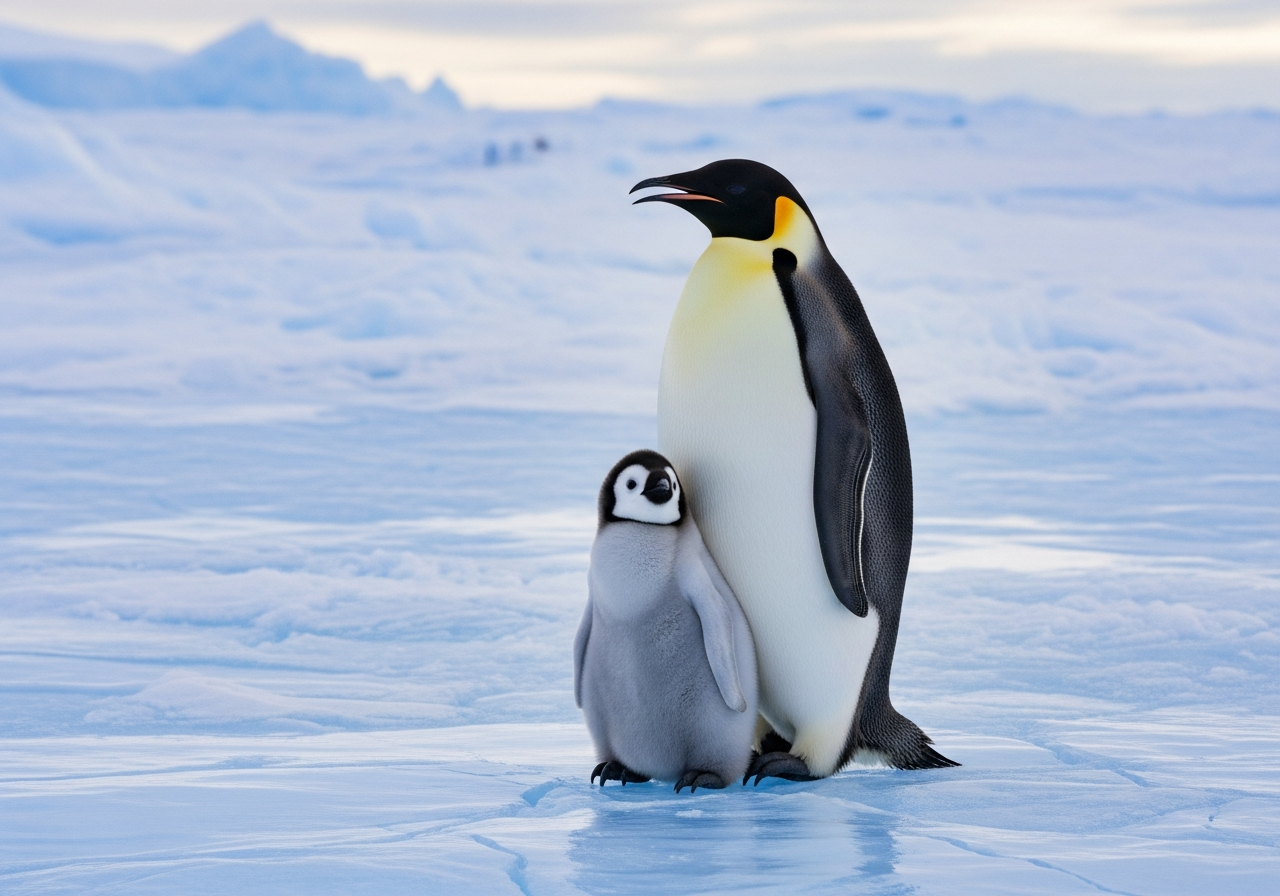
King penguins look like smaller emperor penguins. Kings have brighter, sharply defined orange ear patches that wrap round to the throat, an orange-tinted upper chest and a longer, more slender bill. Emperors are larger, have paler yellow ear patches and breed on Antarctic sea ice, while kings breed on sub-Antarctic islands.
Eggs on feet
Kings do not build nests. Each pair lays one egg, which the parents take turns to hold on their feet under a fold of skin called the brood patch. Raising a chick takes more than a year, the longest breeding cycle of any penguin, so a pair can raise at most two chicks every three years.
Where they breed
Colonies are found on Tierra del Fuego, the Falkland Islands, South Georgia, the South Sandwich Islands, Prince Edward, Crozet, Kerguelen, Heard and Macquarie islands. Some colonies hold hundreds of thousands of birds. Outside the breeding season they range widely around the Antarctic Polar Front.
Status
BirdLife International lists the king penguin as Least Concern (2020) with an increasing trend, after recovering from 19th- and early 20th-century hunting for oil. Warming seas that push its lanternfish prey further south are a concern for the future.
Explore the King Penguin
Close relatives
- Emperor Penguin Same genus
- Little Penguin Same family
- African Penguin Same family
- Gentoo Penguin Same family
Range & geography
Did you know? King Penguin facts
- Kings and emperors are the only penguins that incubate their egg on their feet.
- A king penguin's breeding cycle lasts more than a year, the longest of any penguin.
Conservation status of the King Penguin
The king penguin (Aptenodytes patagonicus) is listed as Least Concern on the IUCN Red List. Least Concern (LC) is the IUCN's lowest-risk category, assigned to widespread, abundant species that have been evaluated and found not to be threatened. It does not mean a species faces no pressures — only that it is not currently at risk of extinction.
King Penguin (Aptenodytes patagonicus) was most recently assessed for the IUCN Red List in 2020. Look up on the IUCN Red List .
Frequently asked questions about the King Penguin
What is the difference between a king penguin and an emperor penguin?
Emperors are bigger and breed on Antarctic sea ice in winter. Kings are smaller, breed on sub-Antarctic islands and have brighter orange ear patches.
How big is a king penguin?
85–95 cm tall and 9.3–17.3 kg, making it the second-largest penguin.
Why are baby king penguins brown and fluffy?
King penguin chicks grow thick brown down to survive the sub-Antarctic winter. It is so different from the adults that early explorers thought the chicks were a separate species.
Where do king penguins live?
On sub-Antarctic islands including South Georgia, the Falklands, Crozet, Kerguelen and Macquarie.
What is a group of king penguins called?
A group of King Penguins is called a colony. It is also known as a rookery.
What is a baby king penguin called?
A baby King Penguin is called a chick.
Sources & references
This guide is compiled and reviewed against established zoological and conservation references. Key sources for the King Penguin:
-
IUCN Red List of Threatened Species
Conservation status (Least Concern) reflects the IUCN Red List category for Aptenodytes patagonicus, most recently assessed in 2020.
-
iNaturalist — observations & photos
Search citizen-science observations and community IDs for Aptenodytes patagonicus. Useful for range checks and recent sightings — not a substitute for formal Red List status.
-
GBIF — occurrence data
Global Biodiversity Information Facility species search for Aptenodytes patagonicus. Explore published occurrence records used in range research.
-
eBird — bird observations
Cornell Lab eBird target search for King Penguin. Check recent checklists and seasonal abundance where birders report this species.
- BirdLife International (2026). Species factsheet: King Penguin Aptenodytes patagonicus. BirdLife DataZone. Checked 1 November 2026.
IUCN Red List category Least Concern (assessed 2020), population estimate and trend.
- Animal Diversity Web: Aptenodytes patagonicus. University of Michigan Museum of Zoology.
Size, lifespan and diet.
- Tobias, J. A. et al. (2022). AVONET: morphological, ecological and geographical data for all birds. Ecology Letters 25: 581–597. doi:10.1111/ele.13898
Average body mass.
- Gill, F., Donsker, D. & Rasmussen, P. (Eds). IOC World Bird List v15.2.
English and scientific name, classification and range.
-
Global Animal Guide editorial standards
How we research, source, review, and update every guide for accuracy.