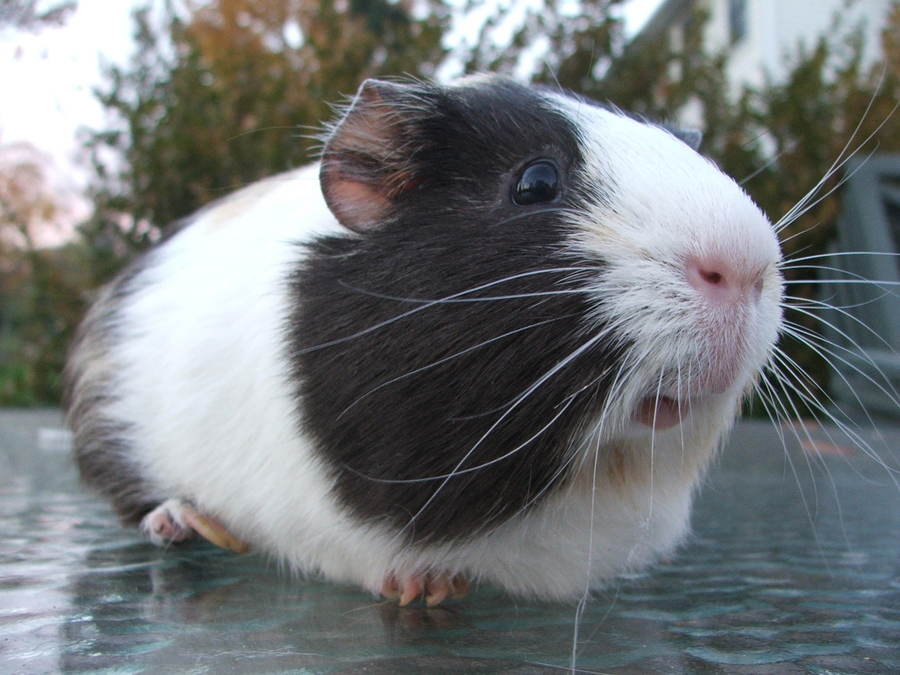
Guinea Pig
Cavia porcellus
Quick answer
Guinea pigs are domesticated rodents from the Andes, kept worldwide as gentle pets that need company, unlimited hay, and vitamin C in their diet. They live 5–7 years, communicate with wheeks and purrs, and unlike many rodents cannot manufacture their own vitamin C.
Guinea Pig facts at a glance
| Scientific name | Cavia porcellus |
|---|---|
| Diet | Herbivore — hay, fresh vegetables, and guinea-pig pellets with vitamin C |
| Habitat | Domestic worldwide; wild cavies in South America |
| Lifespan | 5–7 years (occasionally 8+ with excellent care) |
| Weight | 700–1,200 g (1.5–2.6 lb) |
| Top speed | Up to 8 km/h (5 mph); quick bursts when startled |
| Conservation status | Domesticated (IUCN) |
| Kingdom | Animalia |
|---|---|
| Phylum | Chordata |
| Class | Mammalia |
| Order | Rodentia |
| Family | Caviidae |
| Genus | Cavia |
Where it lives
Domesticated from wild cavies of the Andes; kept as pets and livestock worldwide, with feral populations in some temperate regions.
What is a group of guinea pigs called?
Group name (collective noun)
A group of Guinea Pigs is called a herd.
Baby name
A baby Guinea Pig is called a pup.
Explore more animal collective nouns and baby animal names .
Diet and scurvy risk
Like humans, guinea pigs cannot synthesise vitamin C and need daily fresh vegetables such as bell pepper and leafy greens alongside unlimited timothy hay and fortified pellets. Teeth grow continuously and are worn down by chewing hay and fibrous food. Without vitamin C they develop scurvy, which is fatal if untreated.
Andean domestication
Indigenous peoples of the Andes domesticated guinea pigs thousands of years ago for food and ritual use. Today they are beloved pets in Europe and the Americas, with dozens of coat varieties from smooth American to long-haired Peruvians.
Housing and handling
Guinea pigs need spacious, well-ventilated enclosures with hiding places, not wire floors that hurt feet. They startle easily but generally tolerate gentle handling once accustomed to people. Regular nail trims and weight checks help catch health problems early.
Dig deeper into the Guinea Pig
- Guinea Pig Facts 4
Dig deeper into guinea pig — guinea pig facts 4.
- Guinea Pig Facts 5
Dig deeper into guinea pig — guinea pig facts 5.
- How Long do Guinea Pig Live?
Dig deeper into guinea pig — how long do guinea pig live.
- What do Guinea Pig Eat
Dig deeper into guinea pig — what do guinea pig eat.
- Where do Guinea Pig Live?
Dig deeper into guinea pig — where do guinea pig live.
Explore the Guinea Pig
Compare
Range & geography
Did you know? Guinea Pig facts
- Guinea pigs are domesticated rodents from the Andes, kept worldwide as gentle pets that need company, unlimited hay, and vitamin C in their diet.
- No. Guinea pigs are social and should live with at least one compatible companion, preferably of the same sex or neutered mixed pairs.
- Typically 5–7 years, longer than hamsters or mice. Good diet, hay, and veterinary care support a longer life.
- Daily bell pepper, cucumber, lettuce, and herbs are popular. Avoid iceberg lettuce, potato, and rhubarb. Introduce new foods gradually.
- Guinea pigs are larger, diurnal, need vitamin C, and require companions. Hamsters are smaller, nocturnal, solitary, and have shorter lifespans.
- Conservation: Domesticated (IUCN).
Diet & feeding
Guinea Pig feeds primarily as a herbivore — hay, fresh vegetables, and guinea-pig pellets with vitamin c. Guinea pigs evolved as prey animals living in groups and should never be kept alone — a solitary guinea pig becomes lonely and stressed. Same-sex pairs or small groups work well, with careful introductions. They co
Adaptations
- Guinea pigs evolved as prey animals living in groups and should never be kept alone — a solitary guinea pig becomes lonely and stressed. Same-sex pairs or small groups work well, with careful introductions. They communicate through wheeking (food excitement), purring, chutting, and rumble-strutting during dominance displays.
- Like humans, guinea pigs cannot synthesise vitamin C and need daily fresh vegetables such as bell pepper and leafy greens alongside unlimited timothy hay and fortified pellets. Teeth grow continuously and are worn down by chewing hay and fibrous food. Without vitamin C they develop scurvy, which is fatal if untreated.
Behaviour & ecology
- Guinea pigs evolved as prey animals living in groups and should never be kept alone — a solitary guinea pig becomes lonely and stressed. Same-sex pairs or small groups work well, with careful introductions. They communicate through wheeking (food excitement), purring, chutting, and rumble-strutting during dominance displays.
- Like humans, guinea pigs cannot synthesise vitamin C and need daily fresh vegetables such as bell pepper and leafy greens alongside unlimited timothy hay and fortified pellets. Teeth grow continuously and are worn down by chewing hay and fibrous food. Without vitamin C they develop scurvy, which is fatal if untreated.
- Indigenous peoples of the Andes domesticated guinea pigs thousands of years ago for food and ritual use. Today they are beloved pets in Europe and the Americas, with dozens of coat varieties from smooth American to long-haired Peruvians.
Communication
- Guinea Pig uses scent, posture, and vocal signals to mark territory and coordinate social behaviour.
- Communication intensity often peaks during breeding seasons and territorial disputes.
Habitat & range
Domestic worldwide; wild cavies in South America
Ecological role
Guinea Pig shapes vegetation through grazing or browsing and serves as prey for larger predators where ranges overlap.
Frequently asked questions about the Guinea Pig
Can guinea pigs live alone?
No. Guinea pigs are social and should live with at least one compatible companion, preferably of the same sex or neutered mixed pairs.
How long do guinea pigs live?
Typically 5–7 years, longer than hamsters or mice. Good diet, hay, and veterinary care support a longer life.
What fruits and vegetables can guinea pigs eat?
Daily bell pepper, cucumber, lettuce, and herbs are popular. Avoid iceberg lettuce, potato, and rhubarb. Introduce new foods gradually.
Guinea pig vs hamster?
Guinea pigs are larger, diurnal, need vitamin C, and require companions. Hamsters are smaller, nocturnal, solitary, and have shorter lifespans.
Do guinea pigs bite?
They rarely bite unless frightened or in pain. Most communicate discomfort by freezing or a gentle nip rather than aggressive biting.
What is a group of guinea pigs called?
A group of Guinea Pigs is called a herd.
What is a baby guinea pig called?
A baby Guinea Pig is called a pup.
Sources & references
This guide is compiled and reviewed against established zoological and conservation references. Key sources for the Guinea Pig:
-
IUCN Red List of Threatened Species
Conservation status (Domesticated) reflects the IUCN Red List category for Cavia porcellus.
- IUCN Red List — Cavia porcellus.
Conservation status (Domesticated) and population trends.
- Animal Diversity Web — Cavia porcellus. University of Michigan Museum of Zoology.
Life history, morphology, and range.
- Wikipedia — Guinea Pig.
General taxonomy and overview (cross-check primary sources).
-
Global Animal Guide editorial standards
How we research, source, review, and update every guide for accuracy.

Social herd animals
Guinea pigs evolved as prey animals living in groups and should never be kept alone — a solitary guinea pig becomes lonely and stressed. Same-sex pairs or small groups work well, with careful introductions. They communicate through wheeking (food excitement), purring, chutting, and rumble-strutting during dominance displays.