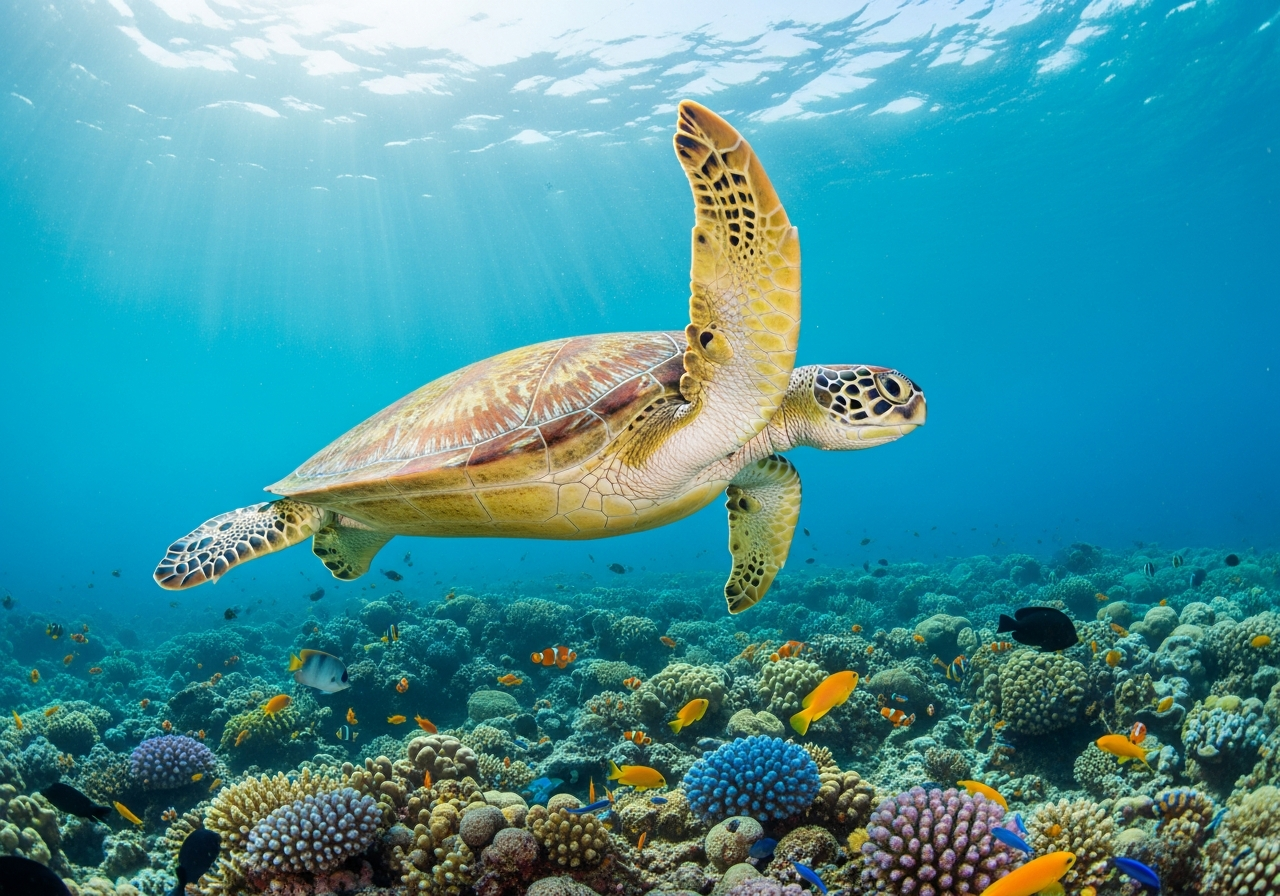
Status update, 19 September 2026: IUCN’s specialist group lists green turtles as Least Concern globally (2025). Regional risk and national legal protections vary.
Quick answer
Green turtles live in tropical and subtropical coastal seas, especially shallow water with seagrass. Females nest on natal beaches. They are not hawksbills. IUCN: Least Concern globally (2025). Figures checked 13 August 2026.
Tropical coasts — which cover?
Shallow seagrass, algae flats, and the beaches females use at night. “Tropical and subtropical coastal seas” without the holes was the thin version of this page. A Pacific meadow is not an Atlantic rookery.
What microhabitats do they use?
Grazing beds, rest sites on the bottom, and dark nesting sand. Lights and seawalls punch holes in beaches. A snorkel trail is not proof they “prefer” people.
How do people shrink the map?
Dredging meadows, drowning turtles in gear, harvesting eggs, and lighting beaches. This is not a farms-and-suburbs story. Nets and coastal hotels empty this map.
What does Conservation geography require?
Linked feeding grounds and natal beaches, plus gear that does not drown adults. Watch from a distance; never feed. A wide tropical pin is not an all-clear.
Does seagrass lock the map?
Yes. Adults follow meadows. Lose the grass and the pin goes with it.
Is a worldwide map an all-clear?
No. WARN’s sea-turtle appeal describes proposed partner work — not nesting beaches.
Sources
Green Sea Turtle FAQs
Where do green sea turtles live?
Tropical and subtropical coastal seas worldwide, especially shallow water with seagrass. Females come ashore only to nest, often on the beach where they hatched. They are not hawksbills and not sea-snakes. IUCN: Least Concern globally (2025). Figures checked 13 August 2026.
Do they live on the same reefs as hawksbills?
Ranges overlap on tropical coasts; the feeding map differs. Greens need seagrass meadows; hawksbills need sponge-rich reefs. Mixing the pins mixes the threats. A coral garden is not a seagrass all-clear, and a busy beach is not a meadow census.
Have they lost range?
Yes. Coastal development, lights, and dredged meadows punch holes in a once-wide tropical map. “Tropical and subtropical coastal seas” without those holes was the thin version. Nesting sand can look busy while feeding grounds empty. WARN does not run those beaches.
What actually protects green turtle range?
Dark beaches, standing seagrass, and less bycatch. World Animal Rescue Network’s sea-turtle appeal describes proposed partner coastal work. Do not map them to a tiger appeal. WARN does not run nesting beaches. They are not hawksbills.
Who this page is for. This page is native range and habitat, not a sighting hotline.