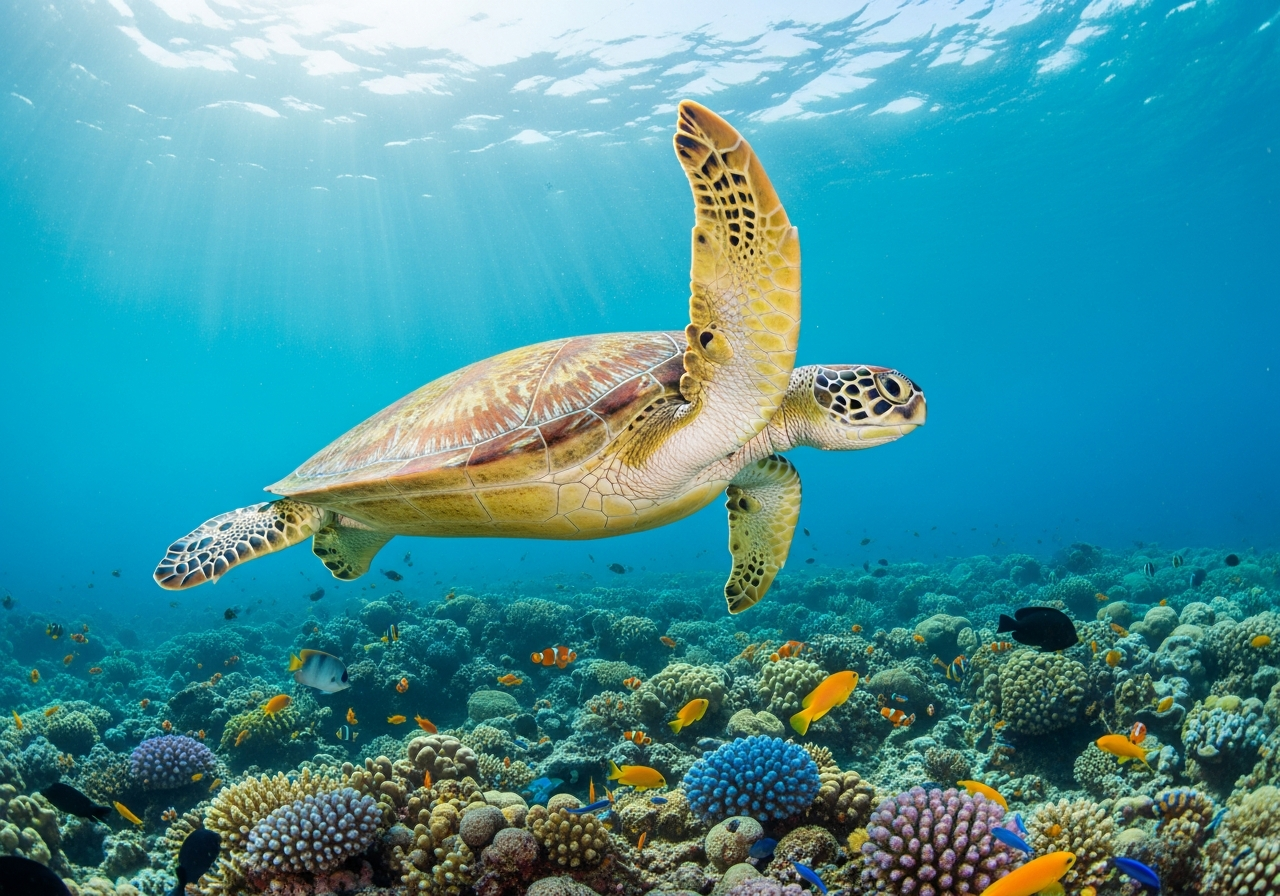
Status update, 19 September 2026: IUCN’s specialist group lists green turtles as Least Concern globally (2025). Regional risk and national legal protections vary.
Quick answer
Adult green turtles graze seagrass and algae. Juveniles take more animal prey before that switch. They are not hawksbills. Never feed wild turtles. Figures checked 13 August 2026.
What do green turtles actually eat?
Seagrass and algae as adults. “Herbivore as adults” without the juvenile mix and the hawksbill contrast was the template line. They are not sponge specialists.
How do green turtles forage?
They crop shallow meadows, often returning to the same beds. A serrated jaw edges seagrass; it does not pry sponges from crevices. Tourist feeding stations are habituation, not grazing.
What do they do to the food web?
Grazing keeps seagrass meadows from silting and overgrowing. Empty that role and the bed declines. Diet conservation is meadow conservation.
Should you feed wild green turtles?
No. Never feed wild green turtles. Bycatch is the human story, not a picnic. Handouts create the next boat strike.
Does migration change the menu?
Females commute between feeding grounds and natal beaches. The adult menu stays seagrass wherever the meadow is. A magnetic commute is not a hawksbill sponge run.
Does the body lock the menu?
Yes. WARN’s sea-turtle appeal describes proposed partner work — not nesting beaches.
Sources
Green Sea Turtle FAQs
What do green sea turtles eat?
Adults graze seagrass and algae on tropical and subtropical coasts. Hatchlings and juveniles take more animal prey before that switch. They are not sponge specialists like hawksbills. Named for green fat, not the shell. Never feed wild turtles. Figures checked 13 August 2026.
Why are they called green if the shell is not?
The name refers to greenish body fat, often linked to the seagrass diet, not a green carapace. Mixing that with hawksbill tortoiseshell produces a false jewellery story. A seagrass grazer is not a reef sponge-eater and not a sea-snake.
How does diet link to conservation?
Empty seagrass meadows cannot hold a marine grazer. Bycatch removes the adults that keep meadows cropped. The species is IUCN Least Concern globally (2025). A boat handout is not restoration. Do not map them to a tiger or orangutan appeal. They are not hawksbills.
What actually helps their food web?
Standing seagrass meadows and less bycatch. World Animal Rescue Network’s sea-turtle appeal describes proposed partner coastal work — not nesting beaches. Never offer lettuce or fish scraps to a wild green turtle as a photo prop.
Who this page is for. This page is about wild diet. Skip it if you need a captive feeding plan from a veterinarian.