Quick answer
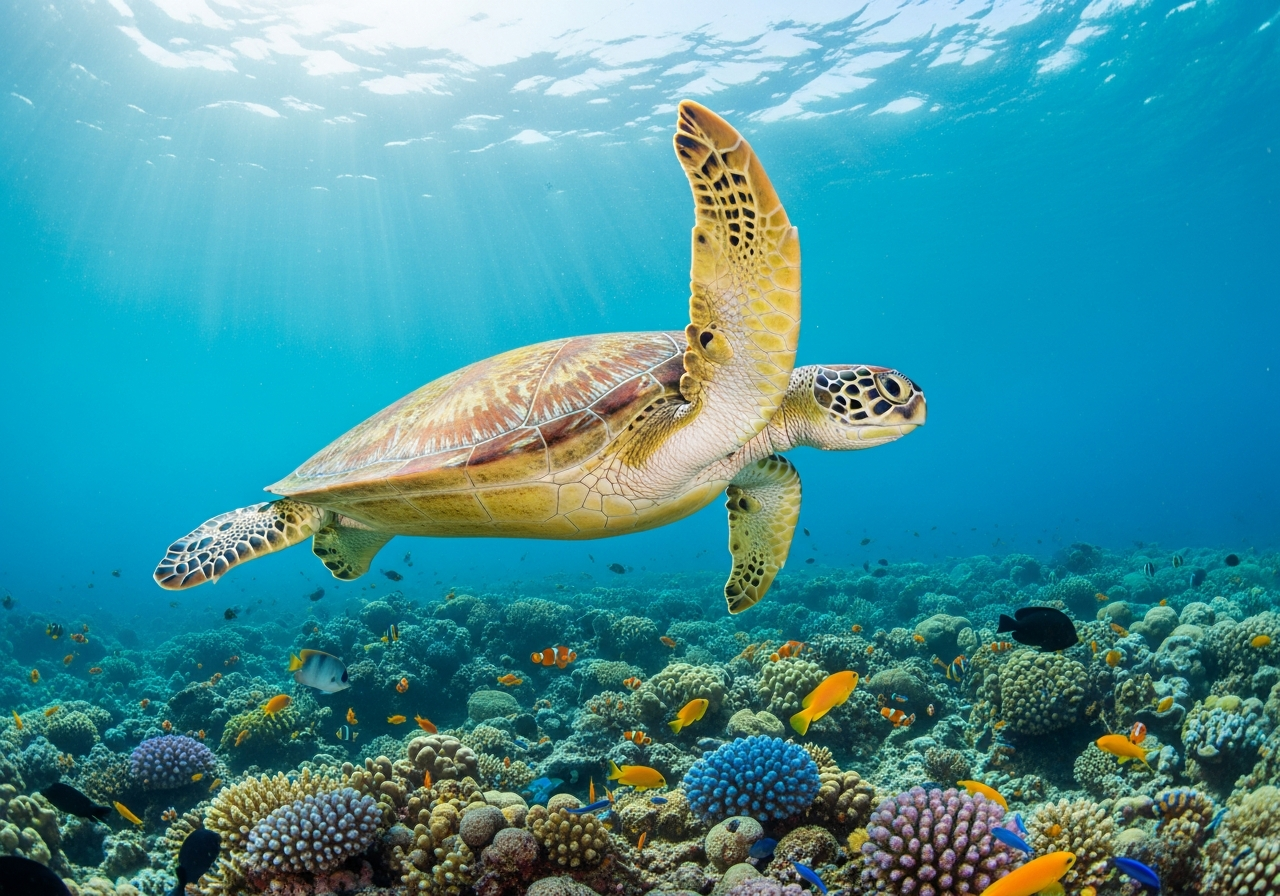
The green sea turtle is a large marine reptile found in warm oceans worldwide, named for the greenish color of its body fat rather than its shell. Adults are unusual among sea turtles in being mostly herbivorous, grazing on seagrass and algae. They migrate long distances between feeding grounds and the beaches where they hatched, and can live 70 to 80 years or more.
Key takeaway
The green sea turtle is a large marine reptile found in warm oceans worldwide, named for the greenish color of its body fat rather than its shell. Adults are unusual among sea turtles in being mostly herbivorous, grazing on seagrass and algae. They migrate long distances between feeding grounds and the beaches where they hatched, and can live 70 to 80 years or more.
Green Sea Turtle overview
Green Sea Turtle (Chelonia mydas) is a reptile listed here as Endangered. Typical weight Up to 160 kg (350 lb); lifespan around 70–80+ years.
Green Sea Turtle ecology
Diet: Herbivore as adults (seagrass, algae). Habitat: Tropical and subtropical coastal seas. Movement and social systems reflect those pressures across the native range.
Green Sea Turtles and people
Learn before you travel or keep related pets. Wild green sea turtles are not toys; captive care needs species-specific husbandry.
Status and further reading
Conservation label in our guides: Endangered. See the full Green Sea Turtle profile for taxonomy, FAQs, and related topic guides on this site.
Behavior and migration
Green sea turtles undertake some of the longest migrations of any reptile, traveling hundreds or thousands of kilometers between feeding areas and nesting beaches. Remarkably, females return to the very beach where they hatched to lay their own eggs, navigating using the Earth's magnetic field.
Diet
Hatchlings and juveniles eat a mix of animals and plants, but adults switch to a largely herbivorous diet of seagrass and algae. This grazing keeps seagrass meadows healthy, making green turtles important to coastal ecosystems.
Sources
Green Sea Turtle FAQs
What are key facts about green sea turtles?
The green sea turtle is a large marine reptile found in warm oceans worldwide, named for the greenish color of its body fat rather than its shell. Adults are unusual among sea turtles in being mostly herbivorous, grazing on seagrass and algae. They migrate long distances between feeding grounds and the beaches where they hatched, and can live 70 to 80 years or more.
What is the scientific name of the green sea turtle?
Chelonia mydas — used in research and conservation listings for green sea turtles.
What do green sea turtles eat?
Green Sea Turtles eat seagrass, algae, with seasonal and regional variation in Tropical and subtropical coastal seas.
Where do green sea turtles live?
They are associated with Tropical and subtropical coastal seas. Local presence depends on food, cover, and human land use.
What is the conservation status of green sea turtles?
Listed in our guides as Endangered. Check the IUCN Red List and national assessments for the latest formal category.