Quick answer
Fleas are tiny, wingless insects that live as parasites on the bodies of mammals and birds, feeding on their blood. They are renowned for their jumping ability, able to leap many times their own body length thanks to powerful hind legs and a spring-like protein. Fleas can be a nuisance to pets and people and can transmit disease, and they are found nearly worldwide.
Key takeaway
Fleas are tiny, wingless insects that live as parasites on the bodies of mammals and birds, feeding on their blood. They are renowned for their jumping ability, able to leap many times their own body length thanks to powerful hind legs and a spring-like protein. Fleas can be a nuisance to pets and people and can transmit disease, and they are found nearly worldwide.
Flea overview
Flea (Siphonaptera) is a insect listed here as Least Concern. Typical weight about 5e-7 kg; lifespan around Several weeks to a few months.
Flea ecology
Diet: Hematophagous (blood of mammals and birds). Habitat: On the bodies of host animals worldwide. Movement and social systems reflect those pressures across the native range.
Fleas and people
Learn before you travel or keep related pets. Wild fleas are not toys; captive care needs species-specific husbandry.
Status and further reading
Conservation label in our guides: Least Concern. See the full Flea profile for taxonomy, FAQs, and related topic guides on this site.
Built for jumping
Fleas are famous for their extraordinary jumps, able to leap distances and heights many times their own body length. The power comes from a rubber-like protein called resilin that stores energy and releases it like a spring. This lets a flea launch onto a passing host with explosive acceleration.
A parasitic lifestyle
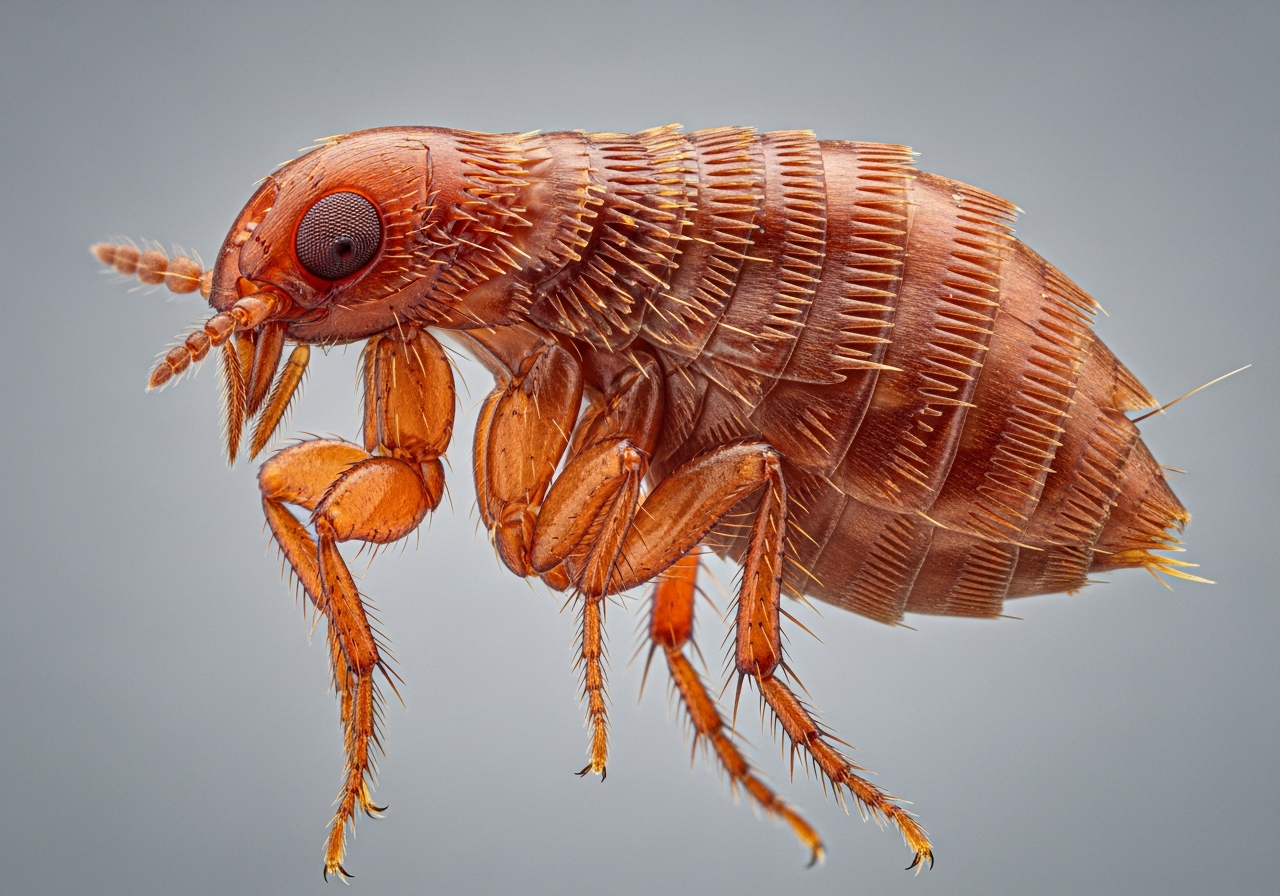
Fleas are external parasites that feed on the blood of mammals and birds, with each species often favoring particular hosts. Their bodies are flattened from side to side, helping them slip easily through fur and feathers, and backward-pointing bristles make them hard to remove. Mouthparts adapted for piercing skin let them feed on blood.
Sources
Flea FAQs
What are key facts about fleas?
Fleas are tiny, wingless insects that live as parasites on the bodies of mammals and birds, feeding on their blood. They are renowned for their jumping ability, able to leap many times their own body length thanks to powerful hind legs and a spring-like protein. Fleas can be a nuisance to pets and people and can transmit disease, and they are found nearly worldwide.
What is the scientific name of the flea?
Siphonaptera — used in research and conservation listings for fleas.
What do fleas eat?
Fleas eat blood of mammals and birds, with seasonal and regional variation in On the bodies of host animals worldwide.
Where do fleas live?
They are associated with On the bodies of host animals worldwide. Local presence depends on food, cover, and human land use.
What is the conservation status of fleas?
Listed in our guides as Least Concern. Check the IUCN Red List and national assessments for the latest formal category.