Quick answer
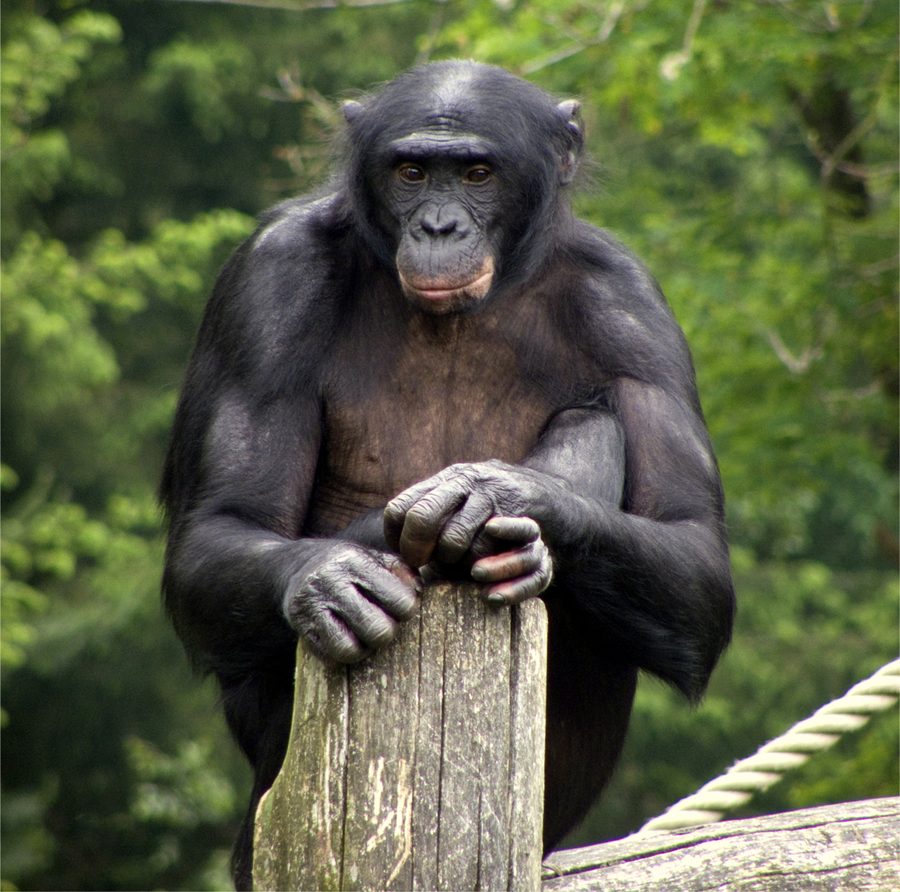
Bonobos are great apes found only in the Democratic Republic of Congo, closely related to chimpanzees but generally less aggressive, with female-led social bonds and extensive use of social behaviour to resolve conflict. Listed Endangered, they weigh 30–50 kg and face habitat loss and bushmeat hunting.
Key takeaway
Bonobos are great apes found only in the Democratic Republic of Congo, closely related to chimpanzees but generally less aggressive, with female-led social bonds and extensive use of social behaviour to resolve conflict. Listed Endangered, they weigh 30–50 kg and face habitat loss and bushmeat hunting.
Bonobo overview
Bonobo (Pan paniscus) is a mammal listed here as Endangered. Typical weight 30–50 kg (66–110 lb); females slightly smaller; lifespan around 40–50 years in the wild.
Bonobo ecology
Diet: Omnivore — fruit, leaves, seeds, and occasional small mammals. Habitat: Lowland and swamp forests south of the Congo River. Movement and social systems reflect those pressures across the native range.
Bonobos and people
Learn before you travel or keep related pets. Wild bonobos are not toys; captive care needs species-specific husbandry.
Status and further reading
Conservation label in our guides: Endangered. See the full Bonobo profile for taxonomy, FAQs, and related topic guides on this site.
Female-centred society
Bonobo groups are led by strong female alliances that cooperate to manage aggression and access food. Females migrate between groups and form bonds that reduce male dominance compared with chimpanzees. Social grooming and play are central to group cohesion.
Congo River isolation
Bonobos evolved separately from chimpanzees after the Congo River formed a barrier roughly two million years ago. They occupy forests exclusively south of the river in the DRC — a range far smaller and more fragmented than that of chimps.
Sources
Bonobo FAQs
What are key facts about bonobos?
Bonobos are great apes found only in the Democratic Republic of Congo, closely related to chimpanzees but generally less aggressive, with female-led social bonds and extensive use of social behaviour to resolve conflict. Listed Endangered, they weigh 30–50 kg and face habitat loss and bushmeat hunting.
What is the scientific name of the bonobo?
Pan paniscus — used in research and conservation listings for bonobos.
What do bonobos eat?
Bonobos eat fruit, leaves, seeds, and occasional small mammals, with seasonal and regional variation in Lowland and swamp forests south of the Congo River.
Where do bonobos live?
They are associated with Lowland and swamp forests south of the Congo River. Local presence depends on food, cover, and human land use.
What is the conservation status of bonobos?
Listed in our guides as Endangered. Check the IUCN Red List and national assessments for the latest formal category.