Quick answer
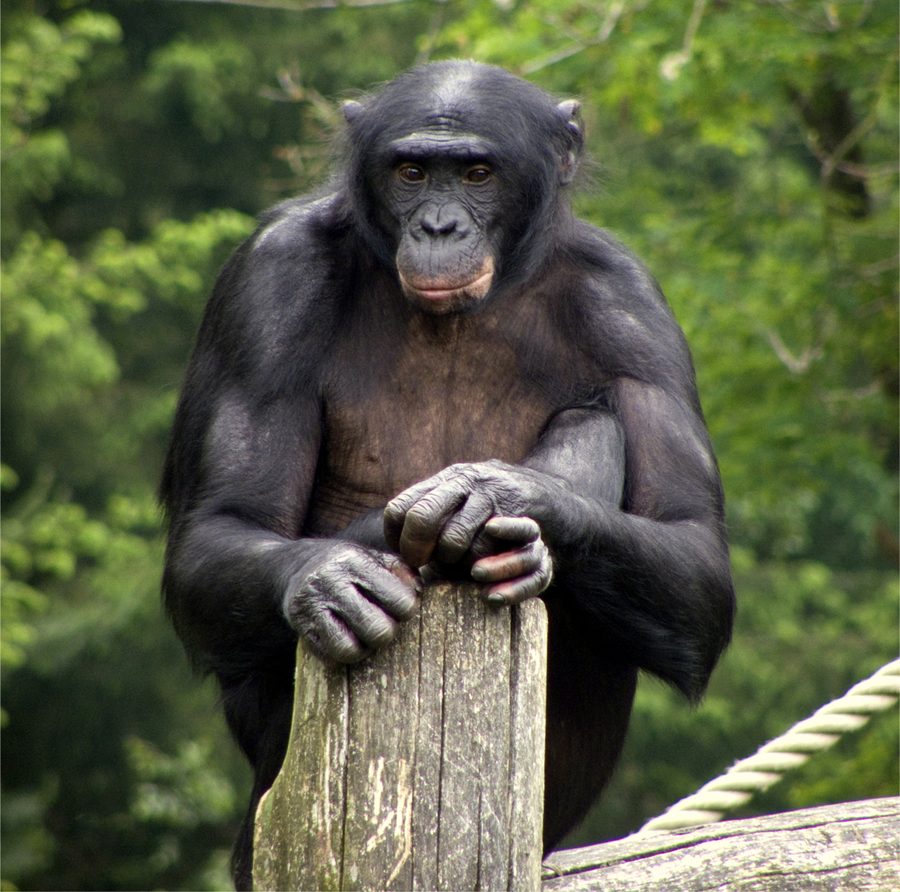
Yes. Bonobos (Pan paniscus) are IUCN Endangered and live only in DRC, south of the Congo River. Salonga National Park, the largest stronghold, held an estimated 8,244–18,308 mature animals in a 2024 analysis — not a species-wide census. Figures checked 13 August 2026.
Are bonobos Endangered or just “rare chimps”?
Endangered, as their own species. They are not a chimpanzee subspecies. Female-centred groups and less lethal aggression than chimps are real; they do not cancel bushmeat. IUCN’s last full assessment (2016) already called the trend declining.
What is driving the decline?
Commercial bushmeat, logging, and the long shadow of conflict in DRC — even though killing bonobos is illegal. Disease from people is a risk wherever habituation grows. Ranking those threats changes by forest block. A Kinshasa market is not a Salonga ranger post.
Is Salonga an all-clear?
No. The 2024 paper found a possible non-significant decline and called for vigilance. Bonobos were rarer near villages and more often near ranger posts. Seventy percent of estimated range is still poorly surveyed. A stronghold is not a finished recovery.
What actually helps?
Fund rangers, keep the park intact, and cut bushmeat demand. WARN’s country programmes fund partner veterinary and rescue work in-range. Do not send bonobo readers to an orangutan appeal. WARN does not run bonobo camps.
Does intelligence protect them?
No. Mirror tests and captive tool use do not stop a snare. Wild foraging is still fruit-first. Language-research fame is not a Salonga budget.
Why is one country a trap?
The entire wild population lives in DRC. There is no second continent to absorb a war or a market shock. That is why Endangered is the honest word, and why “we saved the peaceful ape” has to be re-earned in patrols, not posters.
Sources
Bonobo FAQs
Are bonobos endangered?
Yes. IUCN lists bonobos (Pan paniscus) as Endangered. They live only in the Democratic Republic of the Congo, south of the Congo River. A 2024 survey of Salonga National Park — the largest stronghold — estimated 8,244–18,308 mature animals there. About 70% of historic range remains poorly surveyed, so there is no honest single global headcount. Figures checked 13 August 2026.
How many bonobos are left?
Do not treat “fewer than 20,000” as a census. Salonga plus its corridor holds on the order of 8,000–18,000 mature bonobos (Bessone et al. 2024). That is ~27% of suitable habitat. The rest of the map is mostly uncounted. Bushmeat, logging and conflict still decide local survival.
Are bonobos the same as chimpanzees?
No. They are a separate Endangered species. Chimpanzees live north and west of the Congo River; bonobos only south of it in DRC. Female-centred groups and less lethal aggression than chimps are real differences, not a reason they are safe. Do not map either to an orangutan appeal.
What actually helps bonobos?
Keep Salonga and other forests standing, stop bushmeat, and fund rangers. World Animal Rescue Network describes proposed veterinary and rescue work via country programmes. WARN does not run bonobo camps.
Who this page is for. This page explains IUCN-style status. Skip it if you need an emergency wildlife-rescue number.