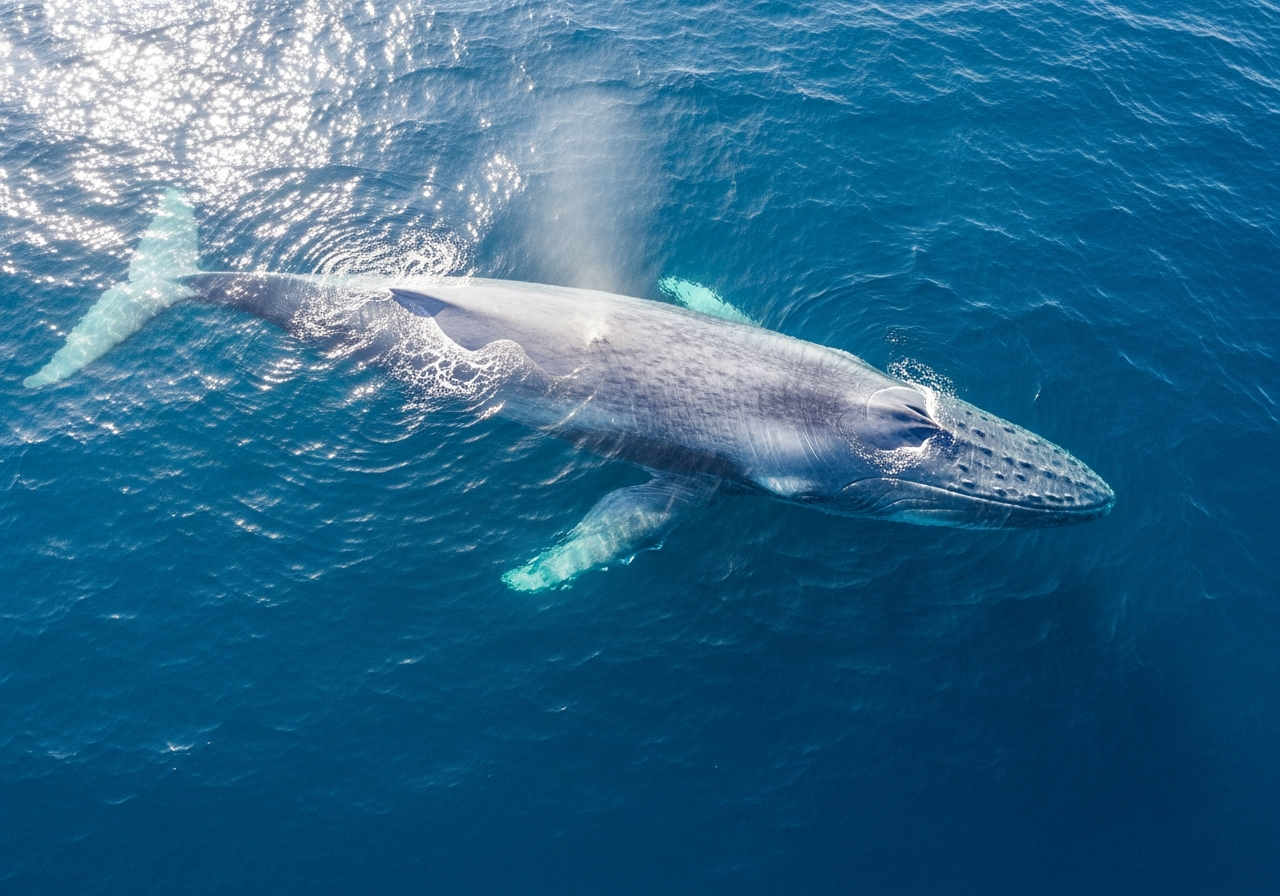
Quick answer
Blue whales live in open oceans worldwide, tracking krill between feeding and breeding grounds. A widely cited remnant is about 10,000–25,000 — roughly 3–11% of 1911. Antarctic B. m. intermedia is Critically Endangered. They are not sharks. Figures checked 13 August 2026.
Worldwide — which water?
All major oceans, with seasonal moves toward krill. “Open oceans worldwide” without the density hole after whaling was the thin version of this page. They are mammals, not a tropical-only fish.
What microhabitats do they use?
Productive fronts and swarms dense enough to repay a lunge — not harbours, not reefs, not a suburban-deer story. A calm-day surface feed is a krill map, not proof they “prefer” people.
How do people shrink the map?
Whaling already did the emptying. Ships, ropes and noise keep punching holes in the recovery. This is not farms-and-suburbs. Antarctic waters still hold a Critically Endangered subspecies, not a rebuilt herd.
What does Endangered geography require?
Slower ships on feeding grounds and honesty about CR subspecies. Watch from a distance; never feed. A wide outline is not an all-clear when the remnant is 3–11% of 1911.
Does krill set the pins?
Yes. Up to about 4 tonnes on a feeding day pulls them onto the same productive water that shipping uses. The diet writes the collision map.
Do calls need empty ocean?
They need quieter basins. WARN’s donate page funds wildlife-protection partners — not whale research ships.
Sources
Blue Whale FAQs
Where do blue whales live?
Open oceans worldwide, migrating between colder, krill-rich feeding grounds and lower-latitude breeding areas. They are not whale sharks and not a farms-and-suburbs species. Antarctic B. m. intermedia is Critically Endangered. Species IUCN Endangered (2018), trend Increasing. Figures checked 13 August 2026.
Do they live in the same places as whale sharks?
Sometimes the same warm basin, never as the same animal. Whale sharks stay in tropical and subtropical water. Blue whales also use cold feeding grounds, including the Southern Ocean. Mixing the pins mixes the threats — and a fish snorkel with a baleen recovery.
Have they lost range?
Whaling emptied basins more than it redrew the outline. A widely cited global remnant is about 10,000–25,000 — roughly 3–11% of 1911. A busy feeding lunge is not an Antarctic all-clear. The map is still wide; the density is not.
What actually protects blue whale range?
Krill on the feeding grounds, slower ships, and quieter water so calls still travel. A wide outline is not an all-clear at 3–11% of 1911. World Animal Rescue Network’s donate page funds wildlife-protection partners — not whale research ships.
Who this page is for. This page is native range and habitat, not a sighting hotline.