Quick answer
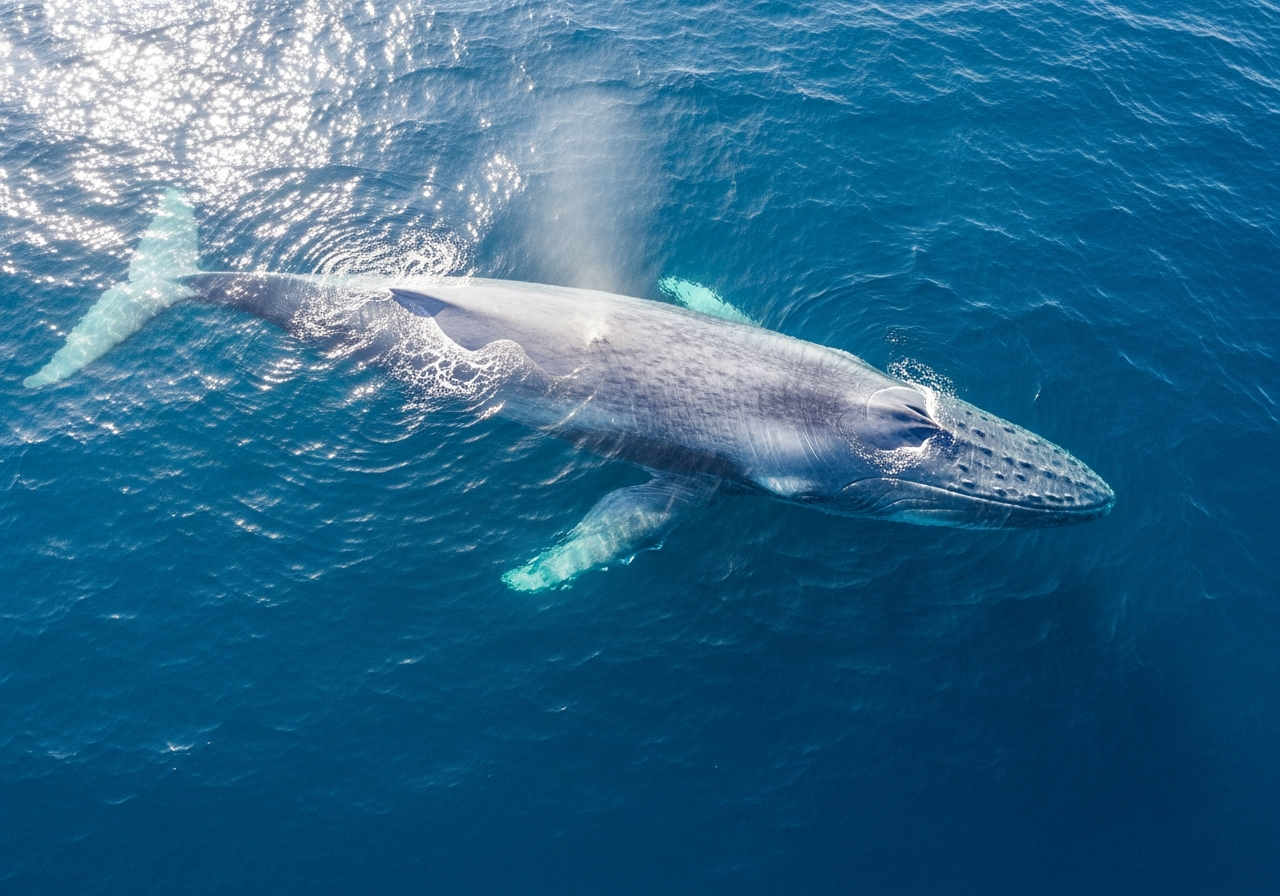
Blue whales often live about 80–90 years. Ship strikes and entanglement cut some lives shorter. The species is Endangered (2018), trend Increasing; Antarctic B. m. intermedia is Critically Endangered. They are not sharks. Figures checked 13 August 2026.
How long do blue whales live in the wild?
Treat 80–90 years as a planning range for whales that are not struck first. The 10,000–25,000 remnant is a count of survivors, not an age table. Captive “managed population” copy does not belong on this species.
What shortens blue whale lives?
Ship strikes, entanglement, and the missing old animals left by twentieth-century whaling. Roadkill and suburban conflict are the wrong metaphors. Ranking threats changes by basin — a Pacific lane is not the Antarctic remnant.
What helps blue whales live longer?
Slower ships where they feed, and gear that does not wrap a fluke. Veterinary care in a tank is not the recovery plan. Never bait a wild whale.
How do life stages change the risk?
Calves grow fast on milk — tens of kilograms a day — and still die to ships. Each lost calf is a multi-year hole. Ear-plug ageing belongs in papers, not as a tourist guessing game.
Does a loud call add years?
It finds mates across basins until noise fills the band. Calls are not anti-strike. A silenced feeding ground still kills on the surface.
Why does Endangered status still truncate averages?
Because strikes and ropes still cut lives short of 80–90, and Antarctic whales remain CR. WARN’s donate page funds wildlife-protection partners — not whale research ships.
Sources
Blue Whale FAQs
How long do blue whales live?
Treat about 80–90 years as a planning range for whales that reach adulthood. Ship strikes, entanglement and the whaling legacy cut many lives shorter. The species is IUCN Endangered (2018), trend Increasing. They are not sharks. A named aquarium whale is not an Antarctic census.
Why do some die young?
Collisions and gear, plus calves that never reach the 80-year label. Industrial whaling already removed the oldest age classes. Recovery can add years only where ships slow down. Ranking those threats changes by basin — a Pacific lane is not the Antarctic remnant.
Do Antarctic blue whales live the same span?
Treat the same planning range of about 80–90 years. B. m. intermedia is Critically Endangered, so few animals get the chance to fill it. A North Pacific sighting is not a Southern Ocean age table. WARN does not run those surveys.
What actually helps them live longer?
Slower ships on feeding grounds and fewer ropes in the water. Increasing is not an 80-year guarantee for Antarctic calves. World Animal Rescue Network’s donate page funds wildlife-protection partners — not whale research ships. eligible.
Who this page is for. This page is a species lifespan range. Skip it if you need a prognosis for one named animal.