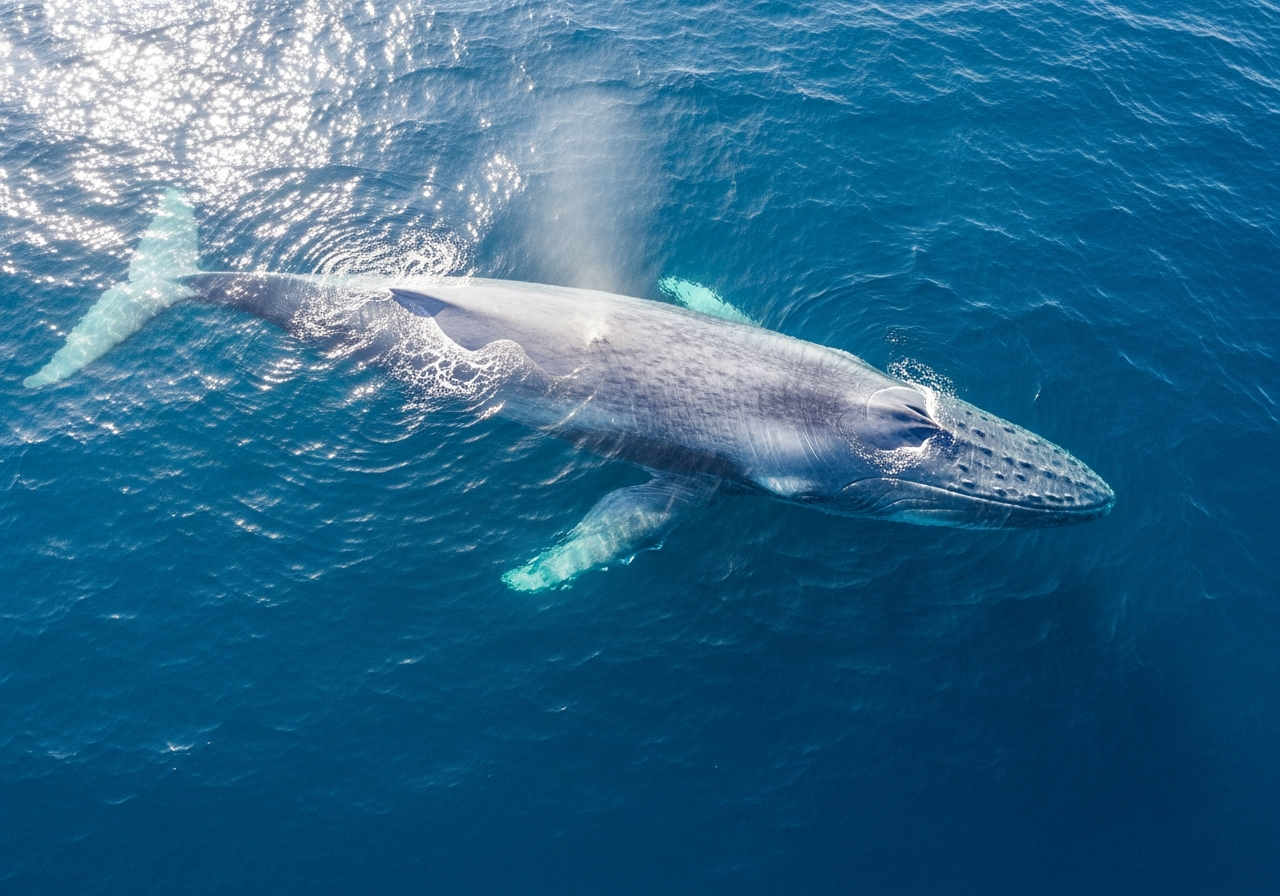
Quick answer
IUCN lists blue whales (Balaenoptera musculus) as Endangered (2018), trend Increasing. A widely cited planning range is about 10,000–25,000 — roughly 3–11% of 1911. Antarctic B. m. intermedia is Critically Endangered. They are not sharks. Figures checked 13 August 2026.
Are blue whales Endangered or recovering?
Both. The species is Endangered with an Increasing trend. Antarctic B. m. intermedia is Critically Endangered. “Listed in our guides as Endangered” without 1911’s remnant and the subspecies split was the thin version of this page. They are not whale sharks.
What still threatens them?
Ship strikes, entanglement in fishing gear, and ocean noise — on top of the commercial-whaling legacy. Ranking those threats changes by basin. A quiet feeding lunge is not a shipping-lane recovery.
Is 10,000–25,000 an all-clear?
No. That is a planning range, about 3–11% of 1911. Some populations are rebuilding; the Antarctic subspecies is not a postcard success. Increasing is not Least Concern.
What actually helps?
Slower ships on feeding grounds, fewer ropes in the water, less noise. WARN’s donate page funds wildlife-protection partners — not whale research ships.
Does a krill diet make them safe?
No. They can take up to about 4 tonnes of krill on a feeding day. That filter does not stop a container ship. Anatomy is not anti-strike policy.
Does a loud call protect them?
It lets them speak across basins until engine noise fills the band. Low-frequency calls are a fact of the species, not a shipping exemption.
Sources
Blue Whale FAQs
Are blue whales endangered?
Yes. IUCN lists the blue whale (Balaenoptera musculus) as Endangered (2018), with a global trend of Increasing after industrial whaling. A widely cited planning range is about 10,000–25,000 animals — roughly 3–11% of 1911 abundance. The Antarctic subspecies B. m. intermedia is Critically Endangered. Figures checked 13 August 2026.
How many blue whales are left?
Treat 10,000–25,000 as a planning range, not a weekly census. Recovery is real and uneven — about 3–11% of 1911 abundance. Antarctic blue whales remain a Critically Endangered remnant. A surface lunge on a calm day is not a Southern Ocean all-clear.
Are blue whales the same as whale sharks?
No. Blue whales are baleen mammals — the largest animals ever. Whale sharks are filter-feeding fish. Mixing them produces the false story that a spotted-shark snorkel protects an Antarctic subspecies. They are not pets and not sharks. Do not map them to a tourism queue.
What actually helps blue whales?
Slow ships on feeding grounds, cut entanglement, and keep industrial noise from drowning calls. Increasing is not Least Concern. World Animal Rescue Network’s donate page funds wildlife-protection partners. WARN does not run whale research ships.
Who this page is for. This page explains IUCN-style status. Skip it if you need an emergency wildlife-rescue number.