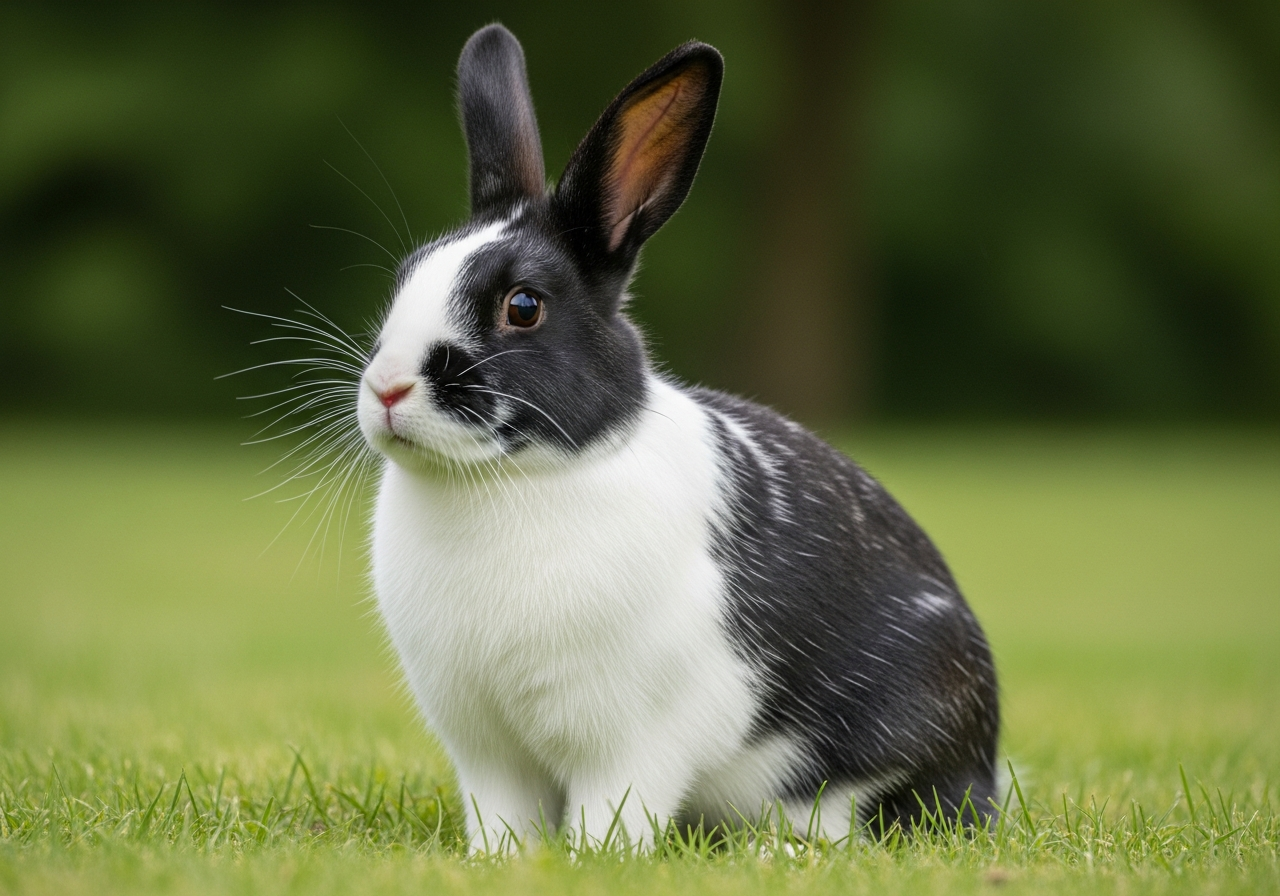
Dutch
Quick answer
The Dutch rabbit is a small breed weighing about 1.5–2.5 kg, instantly known by its distinctive two-tone saddle markings, and ranks among the oldest and most even-tempered, calm, and friendly domestic rabbits.
Dutch at a glance
| Origin | Netherlands and England |
|---|---|
| Size | Small (1.5–2.5 kg) |
| Weight | 1.5–2.5 kg (3.5–5.5 lb) |
| Lifespan | 8–12 years |
| Coat | Short, glossy flyback coat; low grooming needs |
| Temperament | Calm, friendly, easygoing |
| Good with | Families, children, first-time owners |
History of the Dutch
The Dutch rabbit traces to England in the 19th century, developed from rabbits imported from the Netherlands through the Belgian meat trade, particularly the Brabander breed. English breeders refined its striking banded color pattern, and by the late 1800s the Dutch was one of the most popular breeds in Europe. It remained a leading exhibition and pet rabbit for generations and helped form the foundation of several other modern breeds through its widespread use.
Interesting facts about the Dutch
- The Dutch is one of the oldest and historically most popular domestic rabbit breeds.
- Its signature markings include a white blaze, saddle, and colored cheeks and hindquarters.
- Despite the name, the modern breed was largely refined by English breeders.
- The Dutch has been used to help develop many other rabbit breeds.
Common health issues in the Dutch and how to help
Like all rabbit breeds, the Dutch can be more prone to a few specific health conditions. Knowing the early signs helps you act quickly — always consult a qualified vet for diagnosis and treatment.
Dental malocclusion
What it is: Misaligned or overgrown teeth can make eating painful and cause drooling or weight loss.
How to help: Unlimited hay supports natural wear, and a vet can trim teeth and check the mouth regularly.
Gastrointestinal stasis
What it is: GI stasis is a serious slowdown of the gut, often seen as a rabbit that stops eating or producing droppings.
How to help: A high-hay diet and hydration help prevent it, and prompt veterinary care is essential because it can quickly become life-threatening.
Uterine disease
What it is: Unspayed female rabbits have a high risk of uterine disease, including cancer, as they age.
How to help: Spaying by a rabbit-savvy vet greatly reduces this risk and supports a longer life.
This is general information for owners, not veterinary advice. If you are worried about your rabbit's health, contact your vet.
Frequently asked questions about the Dutch
What are the markings of a Dutch rabbit?
Dutch rabbits have a characteristic banded pattern: a white front and blaze with colored cheeks and ears, and a colored rear saddle, typically split evenly by a white band.
Are Dutch rabbits good for beginners?
Yes. Dutch rabbits are calm, friendly, and easygoing, and their manageable size and steady temperament make them a popular choice for families and first-time owners.
How long do Dutch rabbits live?
Dutch rabbits are fairly long-lived, commonly reaching 8 to 12 years with a good diet, proper housing, and regular veterinary care.