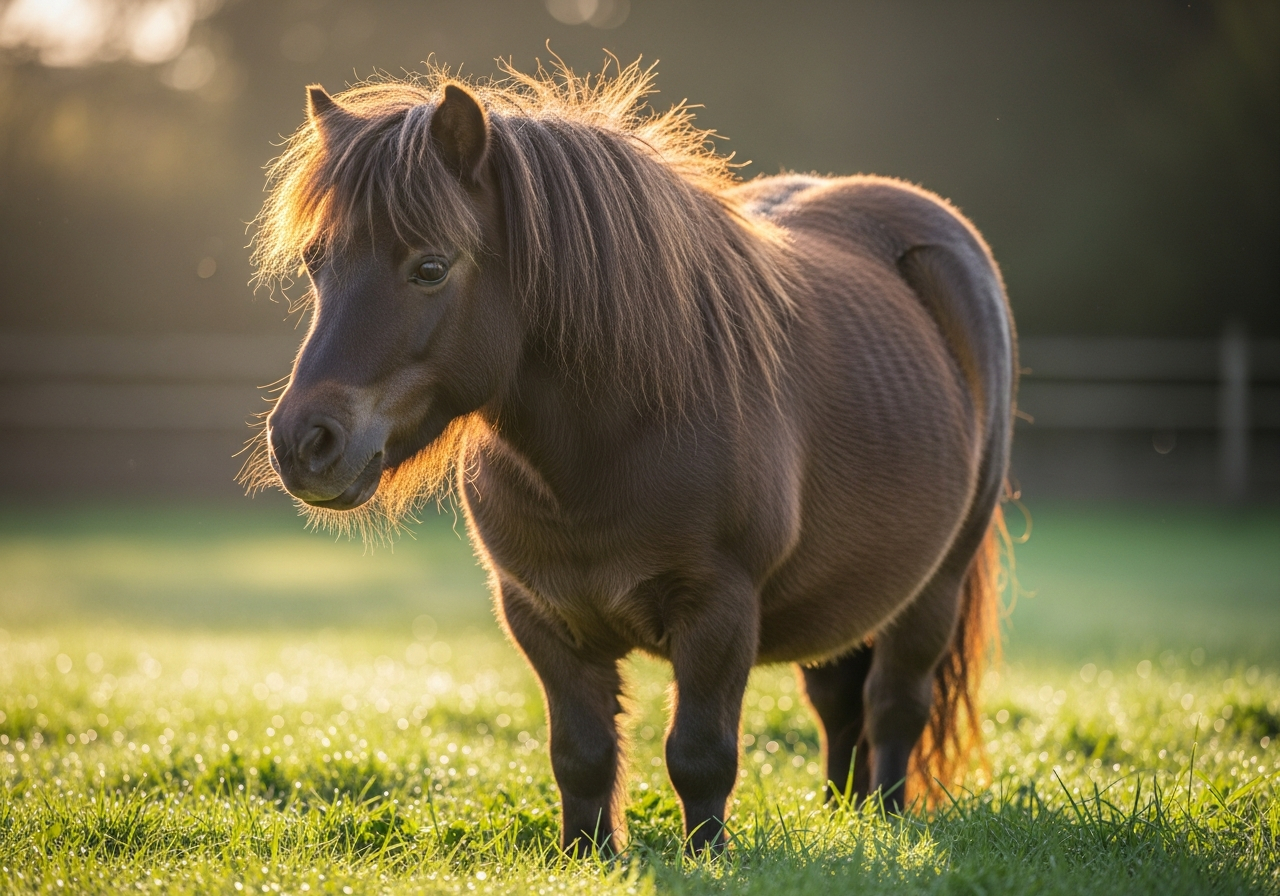
Shetland Pony
Quick answer
The Shetland Pony is a tiny but exceptionally strong and hardy breed from Scotland's Shetland Isles, prized for its intelligence, bold personality, and role as a favorite first mount for children.
Shetland Pony at a glance
| Origin | Scotland (Shetland Isles) |
|---|---|
| Size | Up to 11.2 hands |
| Weight | 180–200 kg (400–450 lb) |
| Lifespan | 25–35 years |
| Coat | Dense double coat that grows long in winter; thick mane and tail need grooming |
| Temperament | Clever, bold, friendly |
| Good with | Small children, families, and first-time young riders |
History of the Shetland Pony
The Shetland Pony developed on the harsh, windswept Shetland Isles off northern Scotland, where limited food and severe weather shaped a small, immensely strong, and hardy animal. For centuries islanders used Shetlands for hauling peat, plowing, and transport. During the Industrial Revolution many were sent to work in British coal mines as pit ponies. Today the Shetland is cherished worldwide as a children's riding and driving pony, valued for its toughness, cleverness, and big personality.
Interesting facts about the Shetland Pony
- Pound for pound, Shetlands are among the strongest of all horse breeds.
- Many worked underground as pit ponies in British coal mines.
- Their thick winter coat helps them survive harsh island weather.
- Despite small size, they can be clever and strong-willed.
Common health issues in the Shetland Pony and how to help
Like all horse breeds, the Shetland Pony can be more prone to a few specific health conditions. Knowing the early signs helps you act quickly — always consult a qualified vet for diagnosis and treatment.
Laminitis
What it is: Shetlands are prone to obesity and laminitis, a painful hoof inflammation often linked to rich grass and shown by reluctance to move or a rocked-back stance.
How to help: A vet can diagnose it and manage it with diet, hoof care, and limited grazing.
Dental problems
What it is: Overgrown or uneven teeth can make eating difficult and cause weight loss or dropped feed.
How to help: Regular veterinary dental checks and floating keep the mouth healthy.
Hyperlipemia
What it is: Overweight small ponies can develop hyperlipemia, a serious build-up of fats in the blood, especially when stressed or off feed.
How to help: Prompt veterinary care and careful, steady weight management reduce the risk.
This is general information for owners, not veterinary advice. If you are worried about your horse's health, contact your vet.
Frequently asked questions about the Shetland Pony
Are Shetland ponies good for children?
Yes. Shetland ponies are a popular first mount for small children due to their small size, but their cleverness and strong will mean they need confident handling.
How strong are Shetland ponies?
Shetlands are extremely strong for their size, able to pull up to twice their own body weight, which is why they were once used as pit ponies in mines.
How long do Shetland ponies live?
Shetland ponies are long-lived, often reaching 25 to 35 years with good care, longer than many larger horse breeds.