Friesian
Quick answer
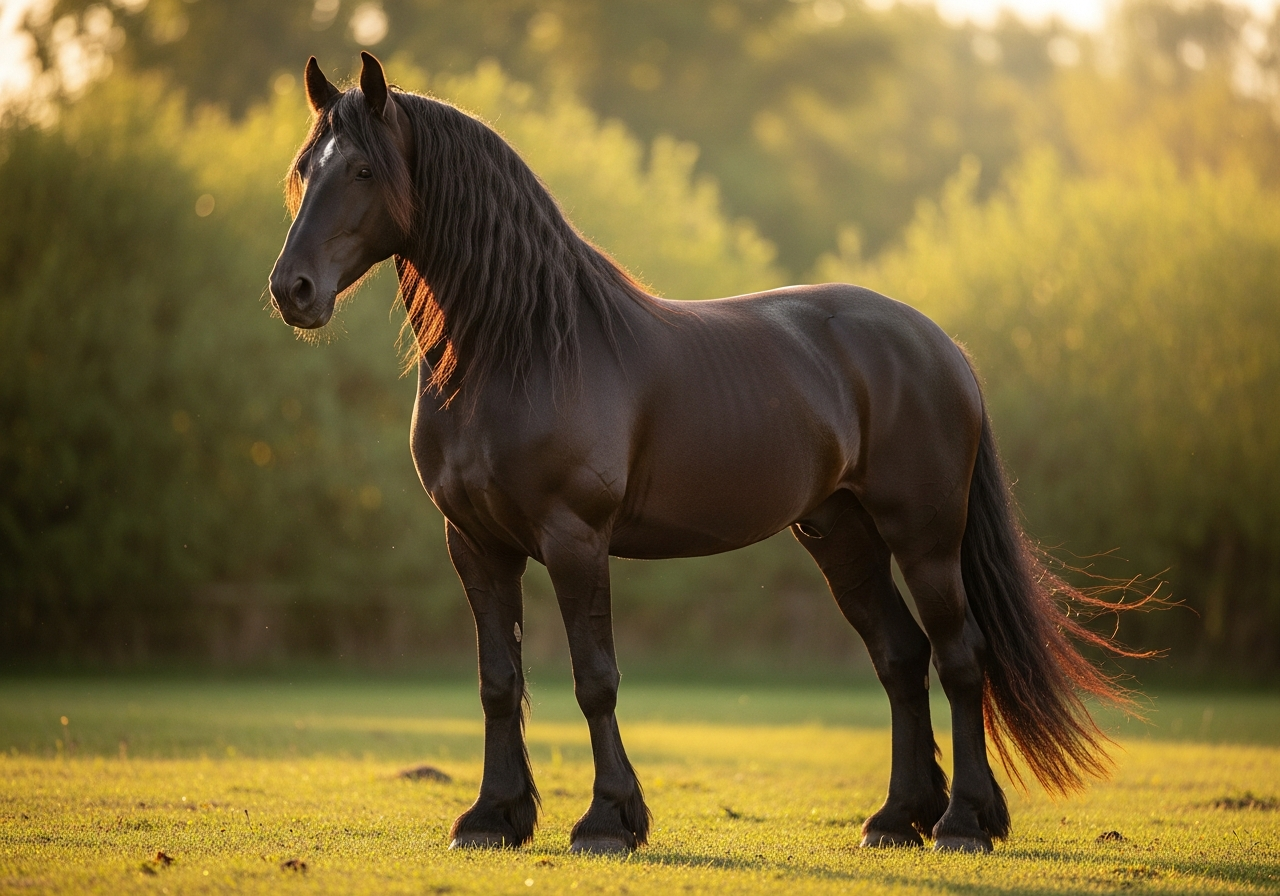
The Friesian is a striking jet-black baroque breed from the Netherlands, known for its flowing mane, feathered legs, and elegant high-stepping movement, making it a favorite in dressage, driving, and film.
Friesian at a glance
| Origin | Netherlands (Friesland) |
|---|---|
| Size | 15–17 hands |
| Weight | 540–635 kg (1,200–1,400 lb) |
| Lifespan | 16–18 years |
| Coat | Always black with thick, long mane, tail, and leg feathering; needs frequent grooming |
| Temperament | Gentle, willing, expressive |
| Good with | Dressage and driving enthusiasts, intermediate and experienced riders |
History of the Friesian
The Friesian originates from Friesland in the northern Netherlands, where it has existed for centuries as a strong, agile horse used in war and farm work. During the Middle Ages it carried armored knights, and Andalusian blood added refinement during Spanish occupation. The breed nearly went extinct in the early 20th century, dwindling to just a few stallions before careful revival. Today the Friesian is celebrated for its beauty, kind temperament, and powerful presence in dressage and carriage driving.
Interesting facts about the Friesian
- Friesians are almost always solid black, with white markings rarely allowed.
- The breed nearly went extinct in the early 1900s with only a few stallions left.
- Their dramatic looks make them popular in films and historical productions.
- They once carried armored knights into battle during the Middle Ages.
Common health issues in the Friesian and how to help
Like all horse breeds, the Friesian can be more prone to a few specific health conditions. Knowing the early signs helps you act quickly — always consult a qualified vet for diagnosis and treatment.
Inherited conditions
What it is: The Friesian's relatively small gene pool means a few inherited conditions, such as dwarfism and hydrocephalus, occur within certain lines.
How to help: Reputable breeders use genetic testing, and a vet can advise on screening before breeding decisions.
Colic and digestive sensitivity
What it is: Friesians can be prone to digestive upset and colic, shown by restlessness, pawing, or going off feed.
How to help: Steady feeding routines, fresh water, and prompt veterinary care reduce the risk.
Skin issues under feathering
What it is: Thick leg feathering can trap moisture and lead to skin irritation or pastern dermatitis.
How to help: Keeping the legs clean and dry helps, and a vet can treat persistent or infected cases.
This is general information for owners, not veterinary advice. If you are worried about your horse's health, contact your vet.
Frequently asked questions about the Friesian
Are Friesian horses always black?
Friesians are almost always solid black, and the breed registry strongly discourages white markings, though some horses fade slightly in sunlight.
What are Friesian horses used for?
Friesians excel in dressage and carriage driving, and their dramatic appearance also makes them popular for film, parades, and pleasure riding.
Are Friesian horses good for beginners?
Friesians are gentle and willing, but their size and energy mean they are usually best suited to intermediate riders, though calm individuals can suit confident novices.