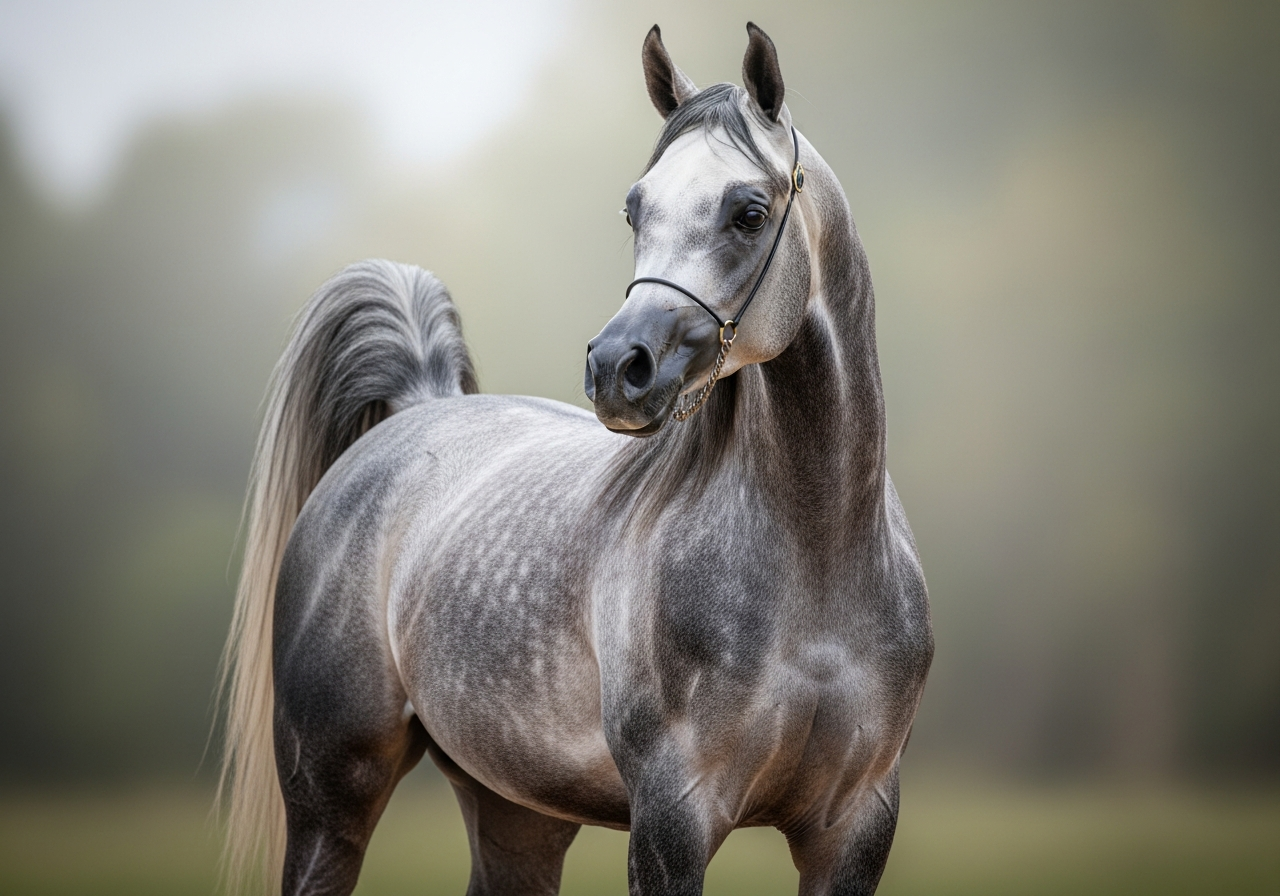
Arabian
Quick answer
The Arabian is one of the oldest and most influential horse breeds, recognized by its dished face and high tail carriage, and celebrated for outstanding endurance, intelligence, beauty, and a famously strong bond with people.
Arabian at a glance
| Origin | Arabian Peninsula |
|---|---|
| Size | 14.1–15.1 hands |
| Weight | 360–450 kg (800–1,000 lb) |
| Lifespan | 25–30 years |
| Coat | Fine, silky coat with thin skin; sleek and easy to groom |
| Temperament | Spirited, intelligent, loyal |
| Good with | Experienced riders, endurance competitors, and devoted owners |
History of the Arabian
The Arabian originated thousands of years ago among the Bedouin tribes of the Arabian Peninsula, who bred the horses for stamina, soundness, and loyalty in harsh desert conditions. Treasured as prized possessions, Arabians were often kept close to their owners' tents. Their blood has shaped countless modern breeds, including the Thoroughbred. Carried across the world through trade, war, and conquest, the Arabian remains a foundation horse and an enduring symbol of equine elegance.
Interesting facts about the Arabian
- Arabians often have one fewer rib and tail vertebra than other horse breeds.
- Their blood influenced the Thoroughbred and many other modern breeds.
- They dominate long-distance endurance racing thanks to exceptional stamina.
- The distinctive dished profile and arched neck make them instantly recognizable.
Common health issues in the Arabian and how to help
Like all horse breeds, the Arabian can be more prone to a few specific health conditions. Knowing the early signs helps you act quickly — always consult a qualified vet for diagnosis and treatment.
Colic
What it is: Colic is abdominal pain that can range from mild to serious and is a leading equine emergency, often shown by restlessness, pawing, or going off feed.
How to help: Consistent feeding, fresh water, and routine deworming reduce the risk, and any signs warrant prompt veterinary attention.
Gastric ulcers
What it is: Active, sensitive horses can develop gastric ulcers, which may show as picky eating, mild colic, or a dull coat.
How to help: A vet can diagnose them by gastroscopy and manage them with feeding changes, more turnout, and reduced stress.
Inherited conditions
What it is: Arabians can carry a few inherited disorders within certain bloodlines, so screening matters when breeding.
How to help: Reputable breeders use DNA testing to avoid producing affected foals, and a vet can advise on confirming carrier status.
This is general information for owners, not veterinary advice. If you are worried about your horse's health, contact your vet.
Frequently asked questions about the Arabian
Why are Arabian horses so famous?
Arabians are famous for being one of the oldest breeds, their striking dished face, exceptional endurance, and the fact that their bloodlines influenced most modern horse breeds.
Are Arabian horses good for beginners?
Arabians are intelligent and sensitive, so they are usually better suited to experienced or confident riders, though well-trained individuals can be gentle and loyal companions.
What are Arabian horses best at?
Arabians excel at endurance riding and long-distance racing due to their stamina, and they also perform well in showing, dressage, and pleasure riding.