Teddy
Quick answer
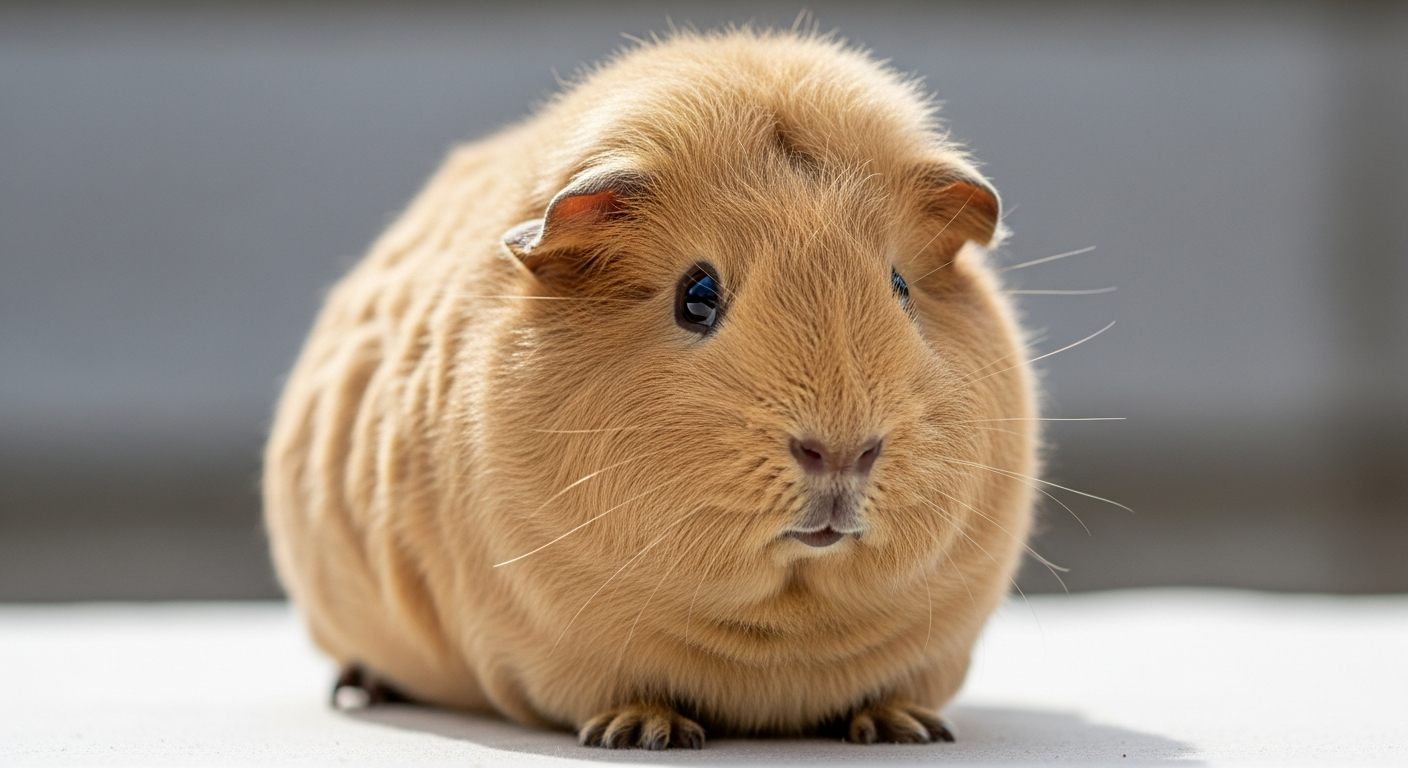
The Teddy is a short-haired guinea pig breed with a dense, fuzzy coat that stands away from the body, giving it a plush, toy-like look. Friendly and easy to groom, it is a popular choice for families and first-time owners.
Teddy at a glance
| Origin | United States |
|---|---|
| Size | Medium (700–1,200 g) |
| Weight | 700–1,200 g (1.5–2.6 lb) |
| Lifespan | 5–7 years |
| Coat | Short, dense, springy coat; low to moderate grooming |
| Temperament | Friendly, calm, cuddly |
| Good with | Families, children, first-time owners |
History of the Teddy
The Teddy emerged in the United States as a result of a natural genetic mutation that produced a dense, kinked coat standing out from the body. Breeders developed the trait into a recognized breed prized for its soft, springy fur and resemblance to a stuffed teddy bear. The coat is short overall, making the Teddy far easier to groom than long-haired breeds while still offering a distinctive plush texture. It has become a well-loved companion guinea pig.
Interesting facts about the Teddy
- The Teddy's coat stands up and away from the body, giving it a fluffy, toy-like look.
- Its fur is the result of a natural genetic mutation rather than crossbreeding.
- Teddies have a slightly upturned nose often described as a Roman nose.
- Their short coat makes them much easier to groom than long-haired breeds.
Common health issues in the Teddy and how to help
Like all guinea pig breeds, the Teddy can be more prone to a few specific health conditions. Knowing the early signs helps you act quickly — always consult a qualified vet for diagnosis and treatment.
Vitamin C deficiency (scurvy)
What it is: Teddies cannot make their own vitamin C, so a deficiency can cause swollen joints, a rough coat, lethargy, and reduced appetite.
How to help: Offer fresh greens, hay, and a vet-recommended vitamin C source daily, and see a vet promptly if you notice stiffness or weakness.
Dry skin and mites
What it is: The dense coat can be prone to dryness and mange mites, leading to flaky skin, itching, scratching, and hair loss.
How to help: Check the skin during grooming and consult a vet if you see itching or bald patches, as a vet can diagnose mites and prescribe treatment.
Dental (overgrown teeth)
What it is: Continuously growing teeth can overgrow without enough to gnaw, causing drooling, dropped food, and weight loss.
How to help: Provide unlimited grass hay for natural wear and have a vet check the teeth regularly so any overgrowth can be managed.
This is general information for owners, not veterinary advice. If you are worried about your guinea pig's health, contact your vet.
Frequently asked questions about the Teddy
Why is it called a Teddy guinea pig?
Its dense, springy coat stands up from the body, giving it a soft, fluffy appearance that resembles a plush teddy bear.
Are Teddy guinea pigs easy to care for?
Yes. Their short coat needs only light grooming, and their calm, friendly nature makes them a great choice for families and beginners.
Do Teddy guinea pigs need special grooming?
Their dense coat benefits from occasional brushing to remove loose hair and debris, but it is far lower-maintenance than long-haired breeds.