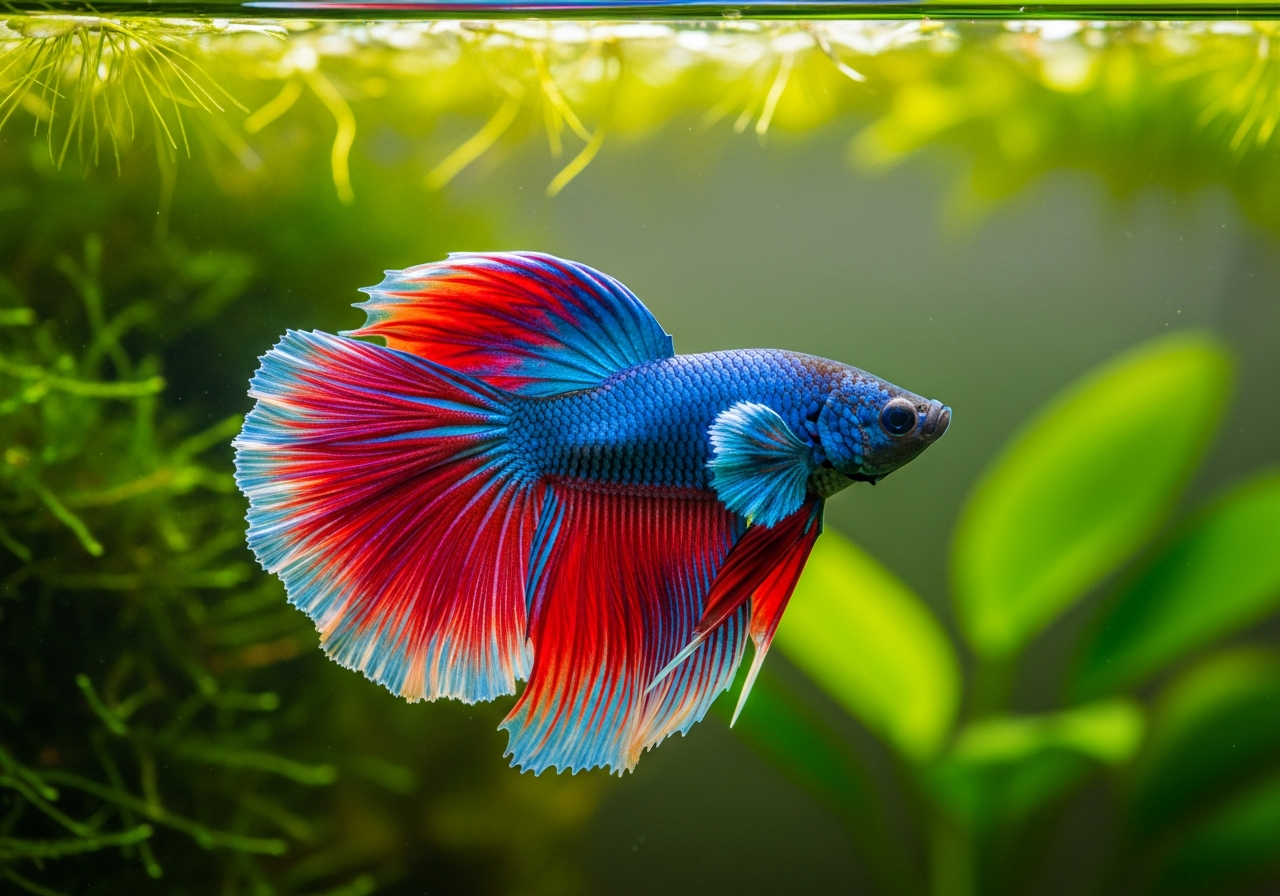
Betta (Siamese Fighting Fish)
Quick answer
The Betta, or Siamese fighting fish, is a small, brilliantly colored fish prized for its long flowing fins and bold personality. Males must be kept singly because they are territorial, and they thrive in a heated, gently filtered tank with stable, clean water.
Betta (Siamese Fighting Fish) at a glance
| Origin | Southeast Asia (Thailand and the Mekong basin); a global aquarium fish |
|---|---|
| Size | Small (about 6-7 cm) |
| Weight | A few grams |
| Lifespan | About 2-4 years |
| Appearance | Vivid reds, blues, and multicolors with long, flowing fins; the delicate fins can tear and need clean, snag-free decor |
| Temperament | Bold, curious, territorial toward other bettas |
| Good with | Beginner aquarists with a heated tank; best kept alone or with carefully chosen peaceful tankmates |
History of the Betta (Siamese Fighting Fish)
The Betta comes from the warm, slow waters of Southeast Asia, including the rice paddies and floodplains of Thailand and the wider Mekong region. It was kept for centuries in its homeland, where its feisty nature toward rivals made it a famous display fish long before it spread worldwide. Generations of selective breeding produced the vivid colors and dramatic fin shapes seen today, from veiltails to halfmoons. It remains one of the most recognizable aquarium fish on the planet.
Interesting facts about the Betta (Siamese Fighting Fish)
- Bettas can gulp air at the surface using a special labyrinth organ.
- Males build bubble nests at the water surface when they are comfortable.
- Selective breeding has produced many fin types, from veiltail to halfmoon.
- They are intelligent enough to learn to recognize the person who feeds them.
Common health issues in the Betta (Siamese Fighting Fish) and how to help
Like all fish breeds, the Betta (Siamese Fighting Fish) can be more prone to a few specific health conditions. Knowing the early signs helps you act quickly — always consult a qualified vet for diagnosis and treatment.
Fin rot
What it is: Fin rot is a common bacterial or fungal condition, often linked to poor water quality, that causes the fins to fray, darken, or recede.
How to help: Keeping the water clean and well maintained is the best prevention, and an aquatic or exotics vet can advise on treatment if the fins continue to deteriorate.
Ich (white spot)
What it is: Ich is a parasite that appears as tiny white spots on the body and fins, with affected fish often flicking against surfaces.
How to help: Stable, clean, warm water reduces outbreaks, and a vet can confirm the diagnosis and recommend a safe treatment plan if spots appear.
Swim bladder problems
What it is: Bettas can develop swim bladder issues that leave them floating, sinking, or struggling to stay upright, sometimes after overfeeding or constipation.
How to help: Feeding small, appropriate portions and good water quality help, and a vet can check for underlying causes if buoyancy problems persist.
This is general information for owners, not veterinary advice. If you are worried about your fish's health, contact your vet.
Frequently asked questions about the Betta (Siamese Fighting Fish)
Can two male bettas live together?
No, two male bettas should never share a tank because they are territorial and will fight, often seriously. Each male needs his own space, and even females need careful introductions in a large, planted tank.
Do bettas need a heater?
Yes, bettas are tropical fish and do best in heated water kept at a stable, warm temperature. Cold or fluctuating water stresses them and makes illness more likely.
How big a tank does a betta need?
A betta should have a properly filtered, heated tank rather than a tiny bowl, with several liters of stable water. More space makes water quality easier to maintain and keeps the fish healthier.