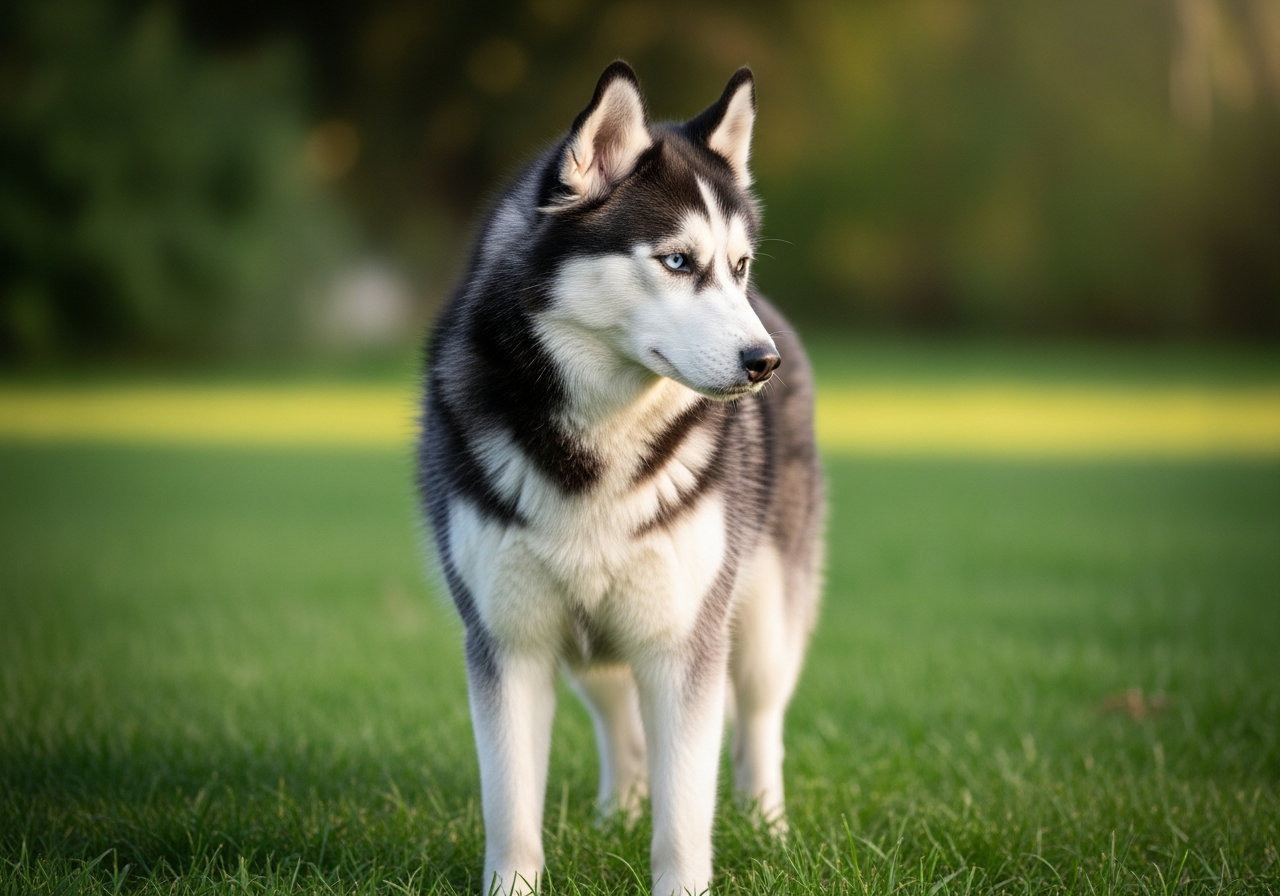
Siberian Husky
Quick answer
The Siberian Husky is a medium, athletic sled dog from Siberia, known for striking eyes and a friendly, energetic nature. Built for endurance running, it needs lots of exercise and is famously sociable, even with strangers.
Siberian Husky at a glance
| Origin | Siberia (Russia) |
|---|---|
| Size | Medium (16–27 kg) |
| Weight | 16–27 kg (35–60 lb) |
| Lifespan | 12–15 years |
| Coat | Thick double coat; sheds heavily, especially during seasonal blows |
| Temperament | Outgoing, energetic, mischievous |
| Good with | Active, experienced owners and homes with secure fenced yards |
History of the Siberian Husky
The Siberian Husky was developed by the Chukchi people of northeastern Siberia, who bred it as an endurance sled dog to pull light loads over vast frozen distances. The dogs lived closely with families, contributing to their friendly nature. In 1908 Huskies were imported to Alaska for sled racing, and the breed gained fame in 1925 during a lifesaving serum run to Nome. Recognized by the American Kennel Club in 1930, it remains a popular companion and working dog.
Interesting facts about the Siberian Husky
- Siberian Huskies can run long distances pulling sleds in temperatures far below freezing.
- Some Huskies have two different-colored eyes, a trait called heterochromia.
- They are known for being talkative, howling and 'talking' rather than barking much.
- Huskies famously delivered lifesaving serum to Nome, Alaska, in 1925.
Not ready to bring a dog home yet? You can still adopt a dog symbolically through World Animal Rescue Network — a small gift that funds food, vaccines, and vet care for rescued street dogs.
Common health issues in the Siberian Husky and how to help
Like all dog breeds, the Siberian Husky can be more prone to a few specific health conditions. Knowing the early signs helps you act quickly — always consult a qualified vet for diagnosis and treatment.
Inherited eye conditions
What it is: Huskies can be prone to eye issues such as cataracts and progressive retinal atrophy, which may cloud vision or reduce sight over time.
How to help: Regular eye checks help catch changes early, and a vet or eye specialist can advise on management; testing breeding dogs reduces the risk.
Hip dysplasia
What it is: This joint condition develops when the hip forms imperfectly, sometimes causing stiffness or limping as the dog ages.
How to help: A vet can assess the joints and recommend weight control and appropriate exercise to keep them comfortable.
Zinc-responsive dermatosis
What it is: Some Huskies struggle to absorb zinc well, which can cause crusty, flaky skin around the face and paws.
How to help: A vet can diagnose it and manage it with dietary adjustments and supplementation to keep the skin healthy.
This is general information for owners, not veterinary advice. If you are worried about your dog's health, contact your vet.
Frequently asked questions about the Siberian Husky
Are Siberian Huskies good family dogs?
Yes, Siberian Huskies are friendly and good with children, making them affectionate family dogs. Their high energy and tendency to roam, however, suit active, experienced owners best.
Do Huskies need a lot of exercise?
Yes, Siberian Huskies need substantial daily exercise. Bred to run for hours, they require vigorous activity and mental stimulation to stay happy and avoid destructive behavior.
Are Siberian Huskies good guard dogs?
No, Siberian Huskies make poor guard dogs. They are friendly toward almost everyone, including strangers, so they are unlikely to act protectively.