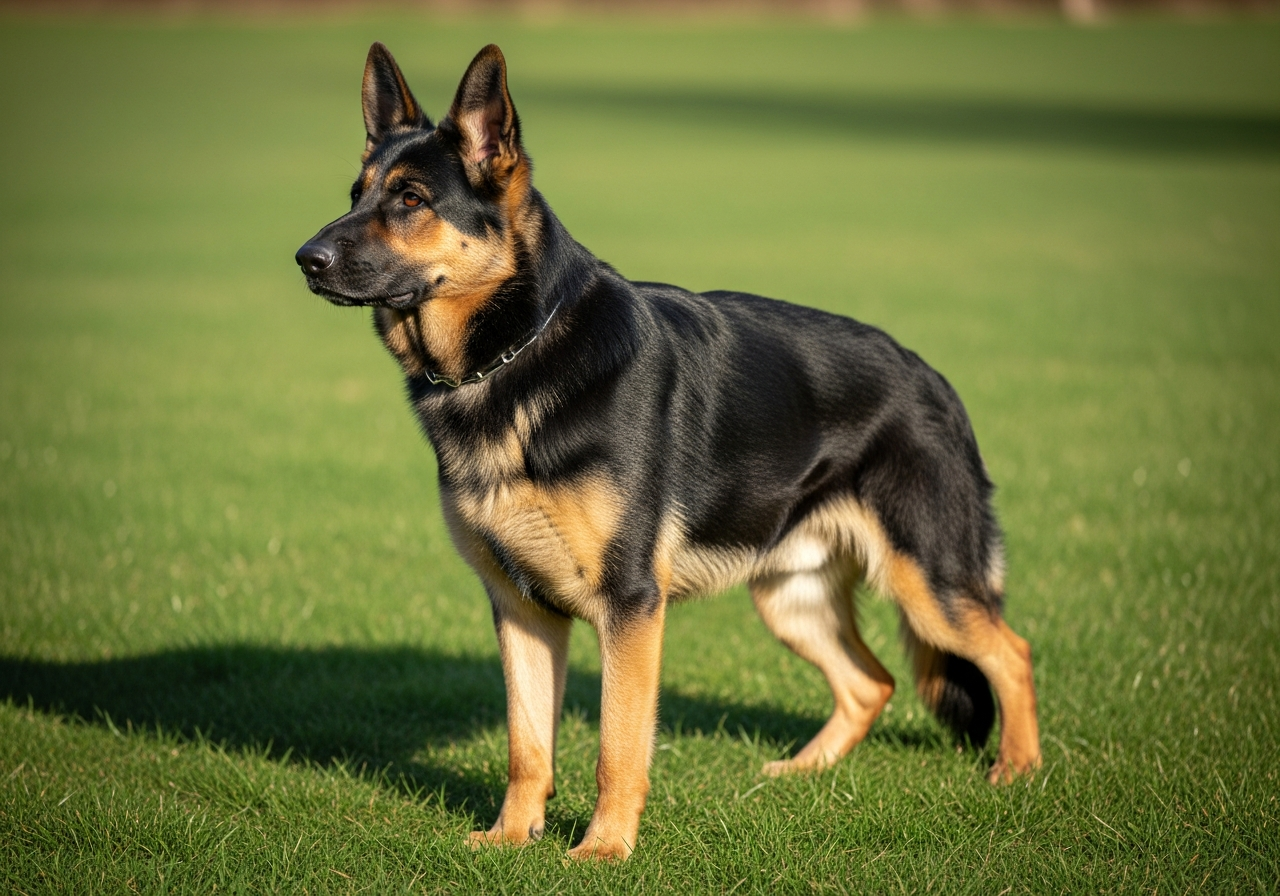
German Shepherd
Quick answer
The German Shepherd is a large, intelligent working dog from Germany, prized for loyalty, confidence, and courage. Highly trainable and versatile, it serves widely in police, military, and assistance roles while remaining a devoted family guardian.
German Shepherd at a glance
| Origin | Germany |
|---|---|
| Size | Large (22–40 kg) |
| Weight | 22–40 kg (49–88 lb) |
| Lifespan | 9–13 years |
| Coat | Medium double coat; sheds heavily and needs regular brushing |
| Temperament | Loyal, confident, courageous |
| Good with | Experienced owners, active families, working and protection roles |
History of the German Shepherd
The German Shepherd was developed in Germany in the late 1800s by Captain Max von Stephanitz, who sought to create the ideal herding and working dog. In 1899 he registered the first dog, Horand von Grafrath, founding the breed. Selected for intelligence, strength, and trainability, German Shepherds quickly moved beyond herding into police and military work. Their service in both World Wars spread their fame worldwide, and they remain a leading working and companion breed.
Interesting facts about the German Shepherd
- German Shepherds were among the first dogs trained as guide dogs for the blind.
- They consistently rank as one of the most intelligent and trainable breeds.
- The breed has starred in film, including the famous canine actor Rin Tin Tin.
- Their keen noses make them top choices for police and search work.
Not ready to bring a dog home yet? You can still adopt a dog symbolically through World Animal Rescue Network — a small gift that funds food, vaccines, and vet care for rescued street dogs.
Common health issues in the German Shepherd and how to help
Like all dog breeds, the German Shepherd can be more prone to a few specific health conditions. Knowing the early signs helps you act quickly — always consult a qualified vet for diagnosis and treatment.
Hip and elbow dysplasia
What it is: These inherited joint conditions develop when the joints form abnormally, sometimes causing stiffness, limping, or difficulty rising.
How to help: A vet can diagnose it with exams and X-rays and manage it through weight control, measured exercise, and supportive care; health-screened parents lower the risk.
Degenerative myelopathy
What it is: This is a slowly progressive spinal cord condition seen in some older German Shepherds, leading to gradual weakness in the hind legs.
How to help: A vet can help diagnose it and recommend physiotherapy and mobility support to keep the dog comfortable and active for as long as possible.
Bloat (gastric dilatation-volvulus)
What it is: Bloat is a sudden, serious condition where the stomach fills with gas and may twist, causing a swollen belly, restlessness, and retching.
How to help: It is an emergency that needs immediate veterinary care; feeding smaller meals and avoiding hard exercise right after eating can reduce the risk.
This is general information for owners, not veterinary advice. If you are worried about your dog's health, contact your vet.
Frequently asked questions about the German Shepherd
Are German Shepherds good family dogs?
Yes, German Shepherds can be excellent family dogs. They are loyal and protective of their household, though early socialization and consistent training are important given their size and drive.
Are German Shepherds easy to train?
Yes, German Shepherds are highly trainable. Their intelligence and eagerness to work make them quick learners, which is why they excel in police, military, and service roles.
Do German Shepherds need a lot of exercise?
Yes, German Shepherds are high-energy dogs that need substantial daily exercise plus mental stimulation. Without enough activity they may develop boredom-related behavior problems.