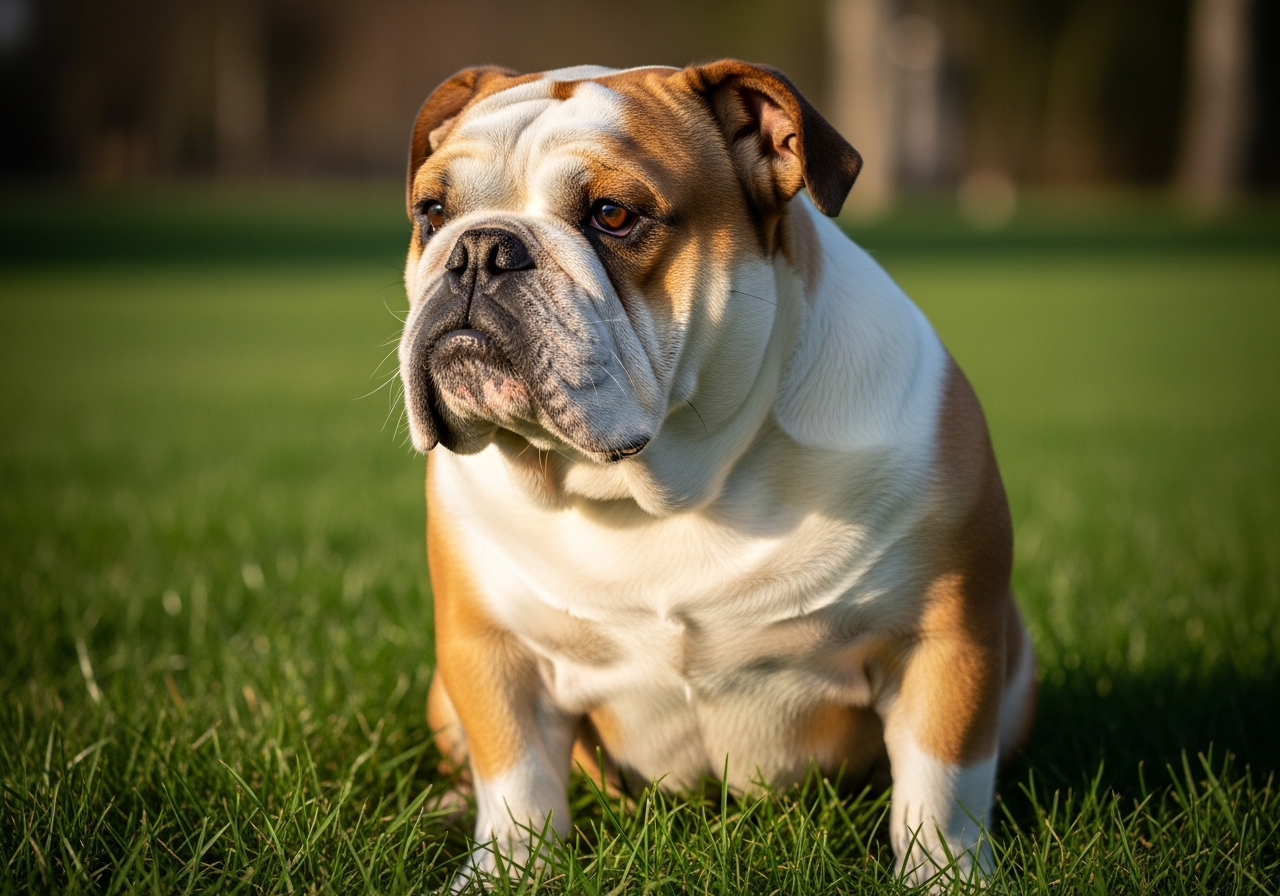
Bulldog
Quick answer
The Bulldog is a stocky, wrinkled medium dog from England, famous for its calm, friendly nature. Once a fierce sporting dog, today's English Bulldog is a gentle, affectionate companion and an enduring symbol of determination.
Bulldog at a glance
| Origin | England |
|---|---|
| Size | Medium (18–25 kg) |
| Weight | 18–25 kg (40–55 lb) |
| Lifespan | 8–10 years |
| Coat | Short smooth coat; minimal shedding but facial wrinkles need regular cleaning |
| Temperament | Calm, courageous, friendly |
| Good with | Families, apartment dwellers, calmer households |
History of the Bulldog
The Bulldog originated in England, where it was bred for the brutal sport of bull-baiting, gripping bulls by the nose with its powerful jaws. When the practice was banned in 1835, the breed faced extinction. Devoted enthusiasts redirected breeding toward a gentler temperament while keeping the distinctive stocky build and wrinkled face. The modern Bulldog became a calm companion and a national symbol of British tenacity, widely recognized and beloved around the world today.
Interesting facts about the Bulldog
- Bulldogs were originally bred for bull-baiting before the sport was banned in 1835.
- Their flat faces mean they can overheat quickly and tire in warm weather.
- Many Bulldog puppies are born by cesarean due to their large heads.
- The Bulldog is a national symbol often associated with British determination.
Not ready to bring a dog home yet? You can still adopt a dog symbolically through World Animal Rescue Network — a small gift that funds food, vaccines, and vet care for rescued street dogs.
Common health issues in the Bulldog and how to help
Like all dog breeds, the Bulldog can be more prone to a few specific health conditions. Knowing the early signs helps you act quickly — always consult a qualified vet for diagnosis and treatment.
Brachycephalic airway syndrome
What it is: Their flat faces can make breathing harder, leading to noisy breathing, snoring, and low tolerance for heat and exercise.
How to help: Keeping them cool, lean, and calm in warm weather helps, and a vet can assess severity and discuss options if breathing is notably affected.
Skin fold dermatitis
What it is: Moisture and bacteria can collect in their facial and body wrinkles, causing redness, irritation, or odor.
How to help: Gently cleaning and drying the folds helps prevent flare-ups, and a vet can treat irritation and suggest a routine.
Hip dysplasia
What it is: Bulldogs commonly have hip joints that form imperfectly, which can cause stiffness or a rolling gait.
How to help: A vet can assess the joints and advise on weight management and appropriate exercise to keep them comfortable.
This is general information for owners, not veterinary advice. If you are worried about your dog's health, contact your vet.
Frequently asked questions about the Bulldog
Are Bulldogs aggressive?
No, modern Bulldogs are not aggressive. Despite their fierce history, they have been bred for a calm, friendly, and affectionate temperament that suits family life.
Do Bulldogs have breathing problems?
Yes, Bulldogs often have breathing difficulties because of their flat faces and short airways. They can overheat easily and should avoid strenuous activity in hot weather.
How much exercise does a Bulldog need?
Bulldogs need only moderate, gentle exercise such as short daily walks. They tire quickly and should avoid heat, making them well suited to relaxed homes.