Safe identification workflow
- Keep your distance: Most US garden snakes are harmless and flee when approached. Stand at least six feet away and use binoculars or a zoom lens.
- Note the overall pattern: Stripes, blotches, rings, or solid colour narrow the possibilities quickly — garter snakes have lengthwise stripes; rat snakes are dark with faint blotches.
- Look at the head shape: Harmless species typically have heads only slightly wider than the neck. A distinctly triangular head may indicate a venomous pit viper — treat with extra caution.
- Watch behaviour: Rat snakes climb well; garter snakes hunt in damp borders; ring-necked snakes curl their tails when disturbed; rough green snakes stay in shrubs.
- Photograph and compare: Take a clear photo from a safe distance and compare to this guide or a regional field reference before deciding whether professional help is needed.
6 common harmless US garden snakes
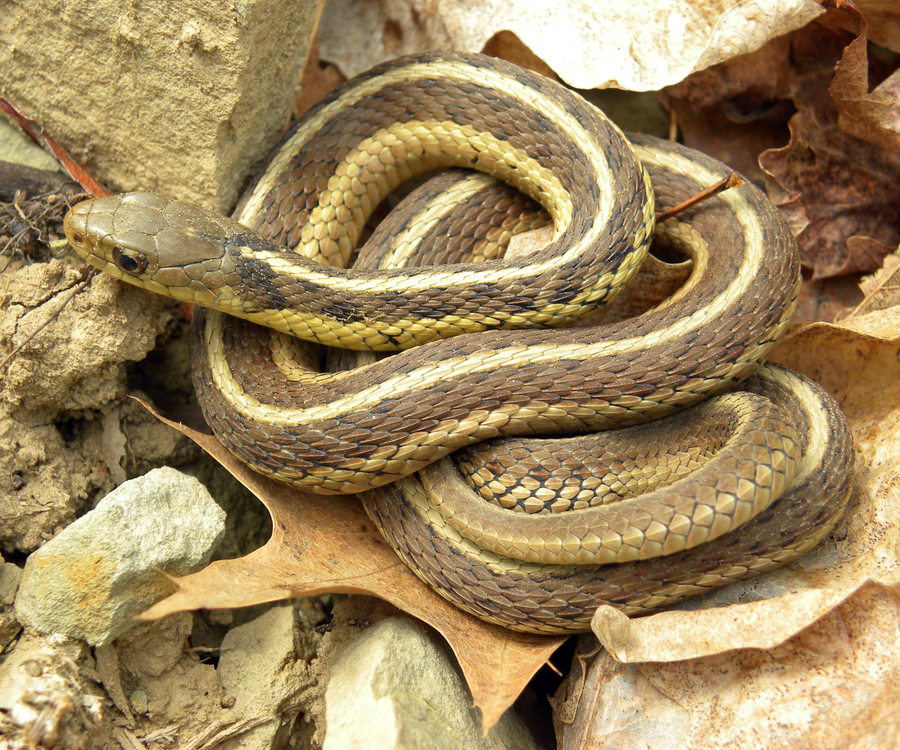
Garter Snake
Thamnophis sirtalis and allies- Size
- Medium (~46–66 cm)
- Key marks
- Slender with lengthwise stripes — usually one central and two lateral; colour varies from greenish to brown or black
- Habitat
- Lawns, compost heaps, pond edges, and vegetable beds
- Behaviour
- Active by day; may release a musk when handled; eats slugs, worms, and small frogs
- Safety
- Non-venomous; common and beneficial pest controller
Rat Snake
Pantherophis obsoletus complex- Size
- Large (~107–183 cm)
- Key marks
- Adults often black or dark grey with faint blotches; juveniles grey with bold dark blotches; white chin and throat
- Habitat
- Woodland edges, barns, attics, and sunny rock walls
- Behaviour
- Excellent climber; may freeze or rattle tail in leaf litter; eats rodents and bird eggs
- Safety
- Non-venomous; often mistaken for rattlesnakes when tail-vibrating
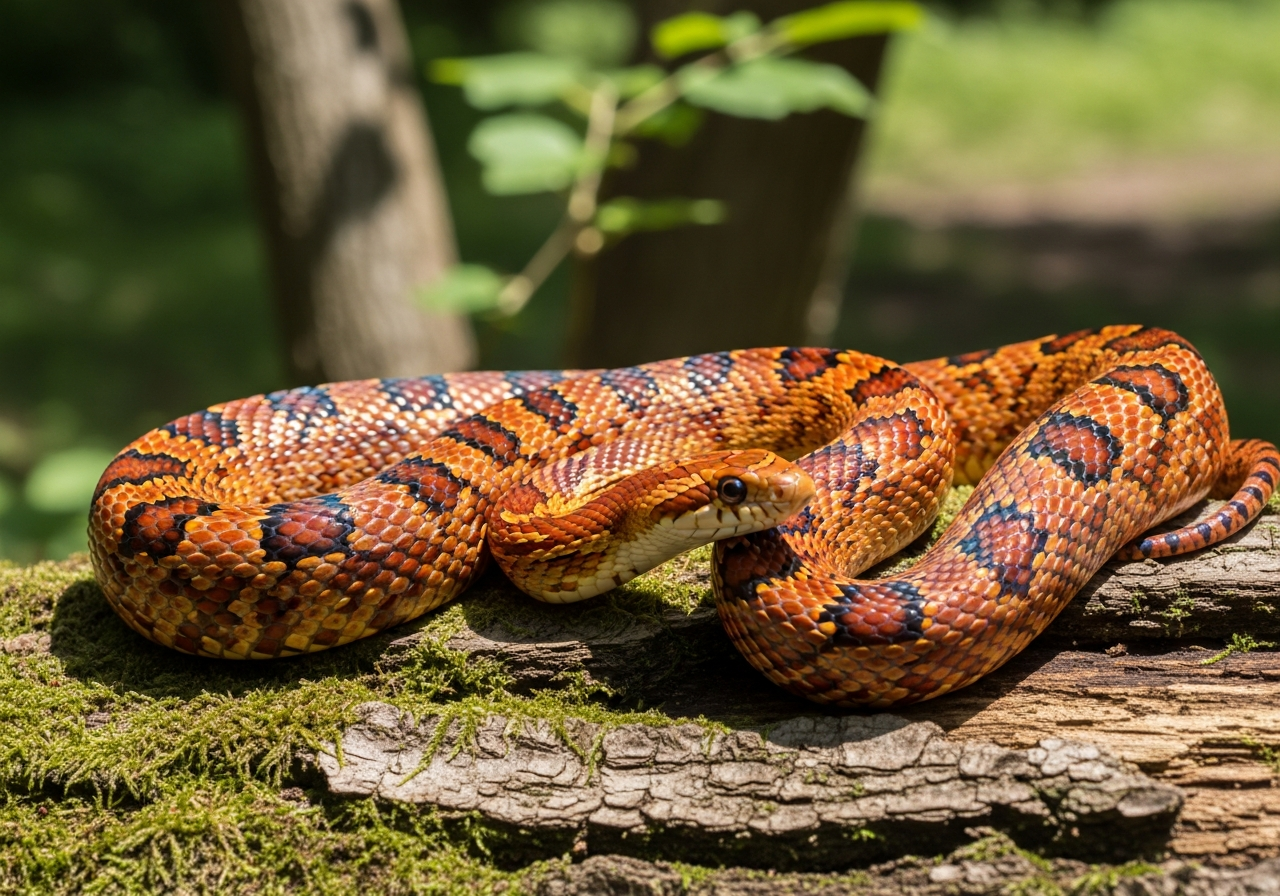
Corn Snake
Pantherophis guttatus- Size
- Medium (~90–152 cm)
- Key marks
- Orange or reddish ground colour with dark red blotches outlined in black; belly checkered black and white
- Habitat
- Southeastern US — fields, pine woods, and outbuildings
- Behaviour
- Nocturnal hunter of rodents; docile when encountered; popular in captivity
- Safety
- Non-venomous; one of the most harmless and recognizable US snakes
Kingsnake
Lampropeltis getula and allies- Size
- Medium (~90–122 cm)
- Key marks
- Glossy black or brown with white or yellow chain-like bands; smooth scales
- Habitat
- Woodland, farmland, and suburban edges across much of the US
- Behaviour
- Immune to rattlesnake venom; eats other snakes, rodents, and eggs
- Safety
- Non-venomous; a welcome predator of pest species including venomous snakes
Ring-necked Snake
Diadophis punctatus- Size
- Small (~25–38 cm)
- Key marks
- Slate grey or olive above with a bright yellow or orange ring around the neck; belly yellow to red
- Habitat
- Moist leaf litter, logs, and stone walls in eastern and central US
- Behaviour
- Secretive; curls tail to show bright underside when threatened; rarely seen in open
- Safety
- Non-venomous; rear-fanged but harmless to humans
Rough Green Snake
Opheodrys aestivus- Size
- Slender (~56–81 cm)
- Key marks
- Bright grass-green above, pale yellow or white below; keeled scales give a slightly rough texture
- Habitat
- Shrubs, vines, and low branches near water in the southeastern US
- Behaviour
- Strictly arboreal; freezes to mimic a vine; eats insects and spiders
- Safety
- Non-venomous; extremely gentle — rarely bites even when handled
When to call a professional
Contact a licensed wildlife remover or local animal control if you encounter a venomous species — rattlesnakes, copperheads, cottonmouths, or coral snakes — inside your home, garage, shed, or anywhere children and pets regularly play. Also seek help if a large snake you cannot identify refuses to leave a high-traffic area. Never attempt to kill, capture, or relocate venomous snakes yourself; most bites happen during such attempts.
- Rattlesnake: Triangular head, vertical pupils, heat-sensing pits, and a rattle at the tail tip (may be silent in young snakes).
- Copperhead: Hourglass-shaped crossbands on a coppery body; common in eastern and central US woodland edges.
- Cottonmouth: Heavy dark body, white mouth lining shown when threatened; found near water in the southeastern US.
- Coral snake: Red, yellow, and black rings — remember "red touch yellow, kill a fellow" for US species. Rare in gardens but requires expert handling.
Living peacefully with garden snakes
Keep grass trimmed, seal gaps under sheds and porches, and remove wood piles near play areas to reduce hiding spots. A healthy population of garter snakes and kingsnakes actually lowers the chance of venomous species moving in, because kingsnakes prey on rattlesnakes. If you spot a harmless snake, step back and let it pass — it will usually disappear within minutes.
Garden snake ID: FAQs
Are garden snakes in the US dangerous?
Most snakes found in US gardens are non-venomous and pose no threat to people or pets. Garter snakes, rat snakes, kingsnakes, and corn snakes are common, harmless visitors that control rodents and slugs. Always observe from a distance and never assume a snake is safe to handle.
How can I tell a venomous snake from a harmless one?
In the US, venomous pit vipers such as rattlesnakes, copperheads, and cottonmouths have triangular heads, vertical pupils, and often a rattle or heat-sensing pits between eye and nostril. Harmless species usually have rounded pupils and heads no wider than the neck. These rules are not foolproof — when in doubt, keep your distance and call a professional.
When should I call a professional for a snake?
Call a licensed wildlife remover or your local animal control if you see a rattlesnake, copperhead, cottonmouth, or coral snake inside your home, garage, or a high-traffic area where children and pets play. Also call if you cannot identify the snake and it will not leave on its own. Do not attempt to kill or capture venomous snakes yourself.
Should I remove a harmless snake from my garden?
Harmless garden snakes provide free pest control — eating slugs, mice, and insects. If one is in an inconvenient spot, gently spray it with a garden hose from a distance and it will usually move on. Relocation by a professional is an option, but leaving a garter or rat snake in place benefits your garden.
Why does a rat snake rattle its tail?
Rat snakes vibrate their tails rapidly in dry leaves to mimic a rattlesnake — a bluff to scare predators. They have no rattle and are completely non-venomous. Check for a triangular head and rattles before assuming the snake is venomous.
Sources & references
Identification marks and calls are compiled from established field guides and ornithological references for North America.
-
RSPB wildlife guides
UK and international bird identification.
-
Cornell Lab — All About Birds
Photos, calls, and ID tips for North American species.
-
iNaturalist
Community-verified species observations worldwide.
- Global Animal Guide editorial standards