Quick ID workflow
- Keep your distance: All UK snakes are protected by law. Stand at least two metres away and use binoculars or a zoom lens.
- Note the overall pattern: Adders have dark zigzag backs; grass snakes have yellow collar marks; slow worms look like smooth bronze snakes without a defined head.
- Look at the head shape: Grass snakes have a yellow collar behind the head. Adders have a distinct triangular head and vertical pupils — Britain's only venomous snake.
- Watch behaviour: Grass snakes swim well and may play dead; adders bask in sunny spots and move with a heavy sideways gait; slow worms hide under logs.
- Photograph and compare: Take a clear photo from a safe distance. If bitten by an adder, keep calm, immobilise the limb, and seek hospital care.
UK garden reptiles
Grass Snake
Natrix helvetica- Size
- Medium to large (~90–150 cm)
- Key marks
- Olive-green to grey-brown with dark spots; distinctive yellow-and-black collar behind head; round pupils
- Habitat
- Gardens with ponds, compost heaps, and long grass — strongest swimmer of UK snakes
- Behaviour
- Hunts frogs and fish; may hiss and play dead if cornered; non-venomous and harmless
- Safety
- Non-venomous; protected — do not harm or capture
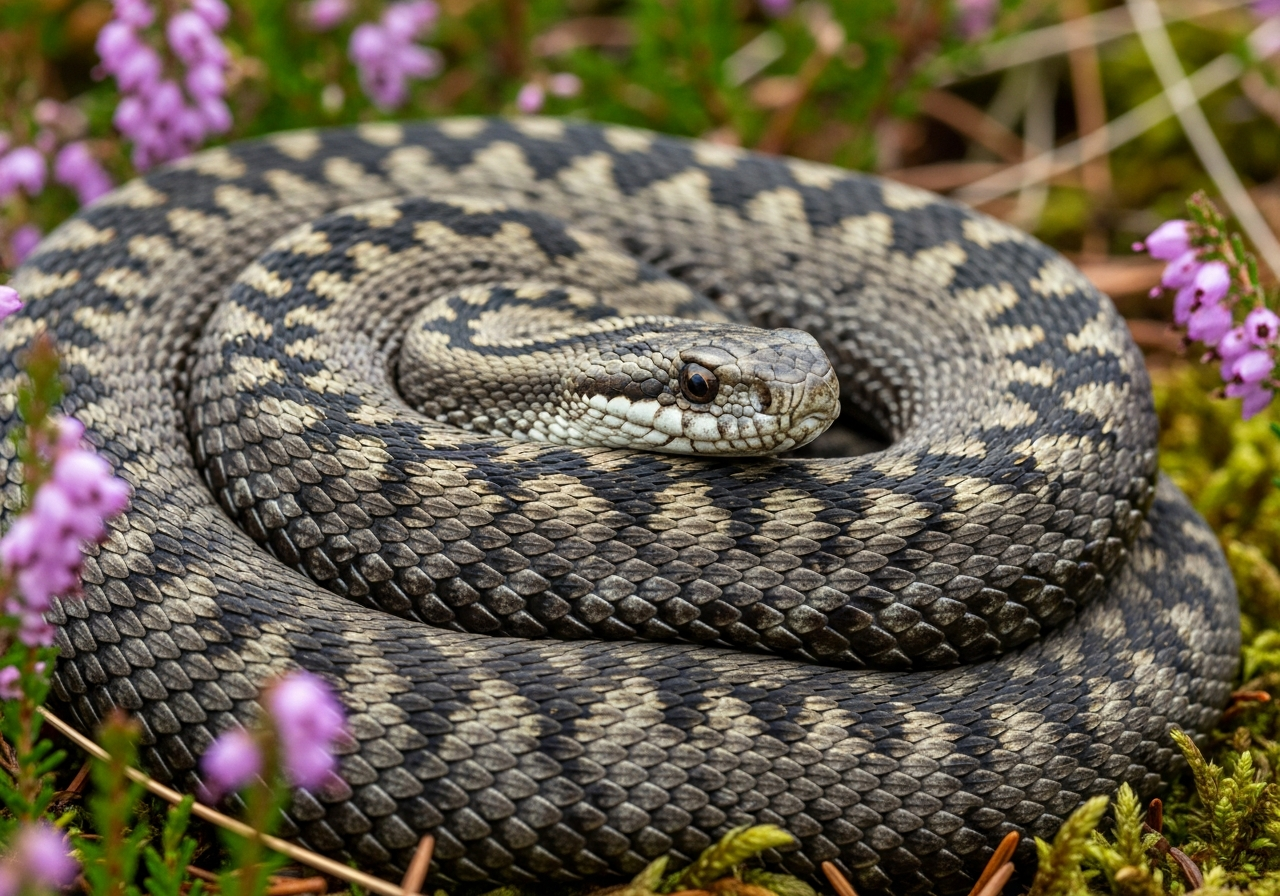
Adder
Vipera berus- Size
- Medium (~60–80 cm)
- Key marks
- Dark zigzag stripe along back; reddish-brown or grey body; distinct triangular head; vertical pupils
- Habitat
- Heathland, moorland, woodland edges, and sunny banks — rarely deep in urban gardens but possible on rural fringes
- Behaviour
- Basks in sunny spots; moves away if it hears vibration; bites only if stepped on or handled
- Safety
- Britain's only venomous snake — bites need hospital assessment; usually not life-threatening to healthy adults
Slow Worm
Anguis fragilis- Size
- Medium (~40–50 cm)
- Key marks
- Legless lizard — smooth bronze or gold skin, no neck collar, blinks with eyelids (snakes cannot blink)
- Habitat
- Compost heaps, warm borders, and log piles in gardens across England and Wales
- Behaviour
- Sheds tail if grabbed; slow-moving; eats slugs and insects
- Safety
- Non-venomous legless lizard — harmless and beneficial; protected
Smooth Snake
Coronella austriaca- Size
- Medium (~60–70 cm)
- Key marks
- Grey-brown with dark spots in rows; faint crown mark on head; very rare — confined to southern heathland
- Habitat
- Heathland in Dorset, Hampshire, Surrey, and West Sussex — extremely unlikely in a typical garden
- Behaviour
- Constricts small prey; secretive and non-aggressive
- Safety
- Non-venomous; rare and protected — report sightings to local wildlife trusts
UK garden snake ID: FAQs
Are there venomous snakes in UK gardens?
The adder is Britain's only venomous snake. Bites are rare and usually happen when a snake is stepped on or picked up. Most garden snake sightings are harmless grass snakes or slow worms.
How do I tell a grass snake from an adder?
Grass snakes have a yellow collar, round pupils, and a more slender head. Adders have a zigzag back pattern, a triangular head, and vertical pupils. Adders are heavier-bodied and move differently.
Is a slow worm a snake?
No — slow worms are legless lizards. They have eyelids (snakes cannot blink), shed skin in pieces, and are smooth bronze or gold without a snake-like pattern.
What should I do if bitten by an adder?
Keep calm, immobilise the bitten limb, remove jewellery before swelling, and go to A&E. Do not suck the wound, apply a tourniquet, or attempt to catch the snake.
Are UK snakes protected?
Yes — all native UK reptiles are protected under the Wildlife and Countryside Act. It is illegal to kill, injure, or sell them without a licence.
Sources & references
Identification marks and calls are compiled from established field guides and ornithological references for the UK.
-
RSPB wildlife guides
UK and international bird identification.
-
Cornell Lab — All About Birds
Photos, calls, and ID tips for North American species.
-
iNaturalist
Community-verified species observations worldwide.
- Global Animal Guide editorial standards