Quick ID by ear
- Note the time of night: Tawny owls call mainly at dusk; great horned owls hoot from early evening; screech owls whinny after dark.
- Count the syllables: Four to five low hoots suggest great horned; a single drawn-out screech points to barn owl; rhythmic 'hoo-hoo' pairs fit tawny owl.
- Listen for rhythm and pitch: Great horned hoots are deep and spaced; barn owl screams are piercing and unbroken; screech owl whinnies rise and fall like a horse.
- Check the habitat: Woodland edges favour great horned and tawny; open farmland suits barn owls; suburban trees host screech owls.
- Record and compare: Use a phone voice memo from indoors and compare to species profiles below — wind and distance distort live impressions.
Common owl calls — US and UK
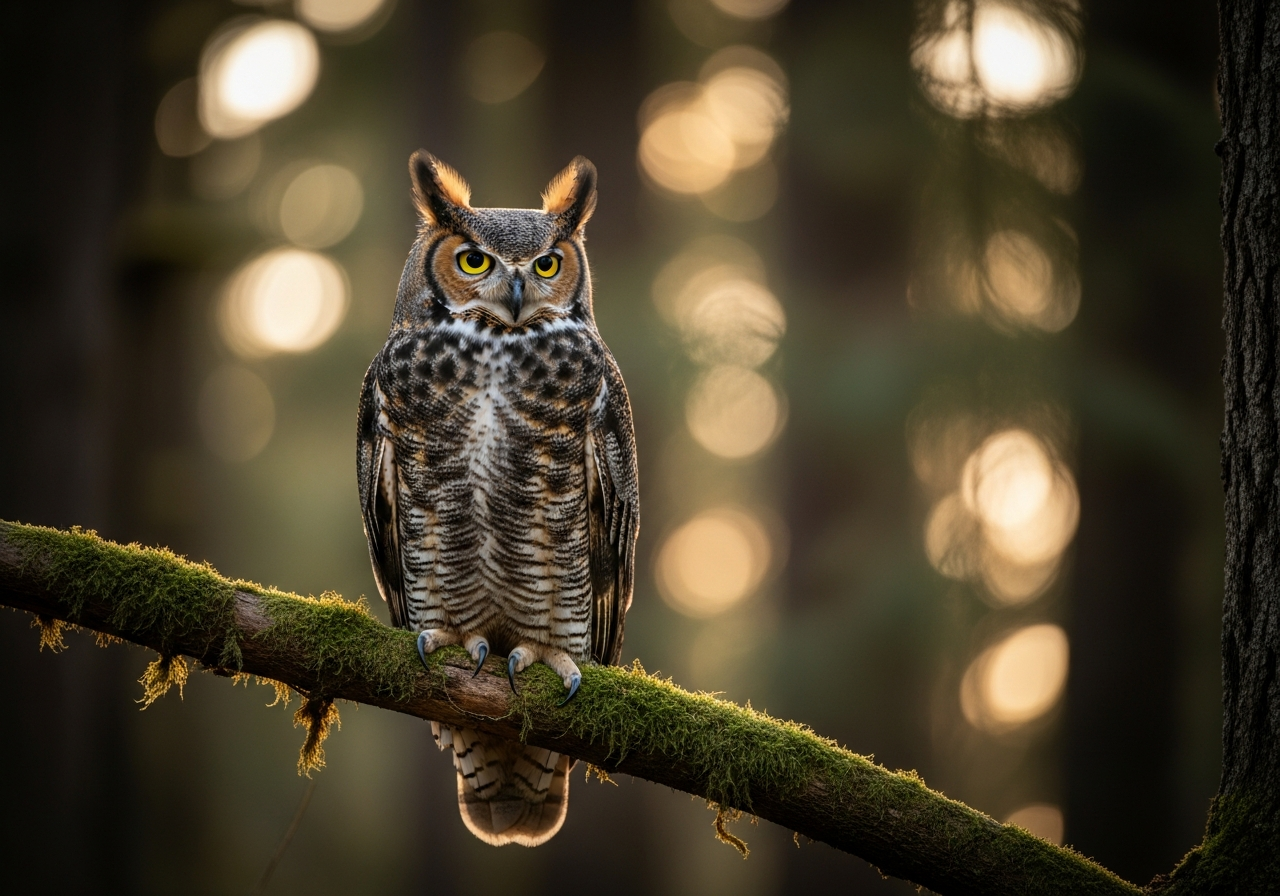
Great Horned Owl
North AmericaBubo virginianus
- Sound
- Deep, resonant 'hoo-hoo-hoo HOO-HOO' — five syllables with the last two louder; also bill snaps and hisses when threatened
- When
- Year-round; most vocal October–December during courtship and territory defence
- Habitat
- Woodland, parks, and suburban edges from Alaska to South America
- ID tip
- The classic Hollywood owl hoot — low enough to carry through forest
- Listen
-
Listen: great horned owl hoot (Wikimedia Commons)
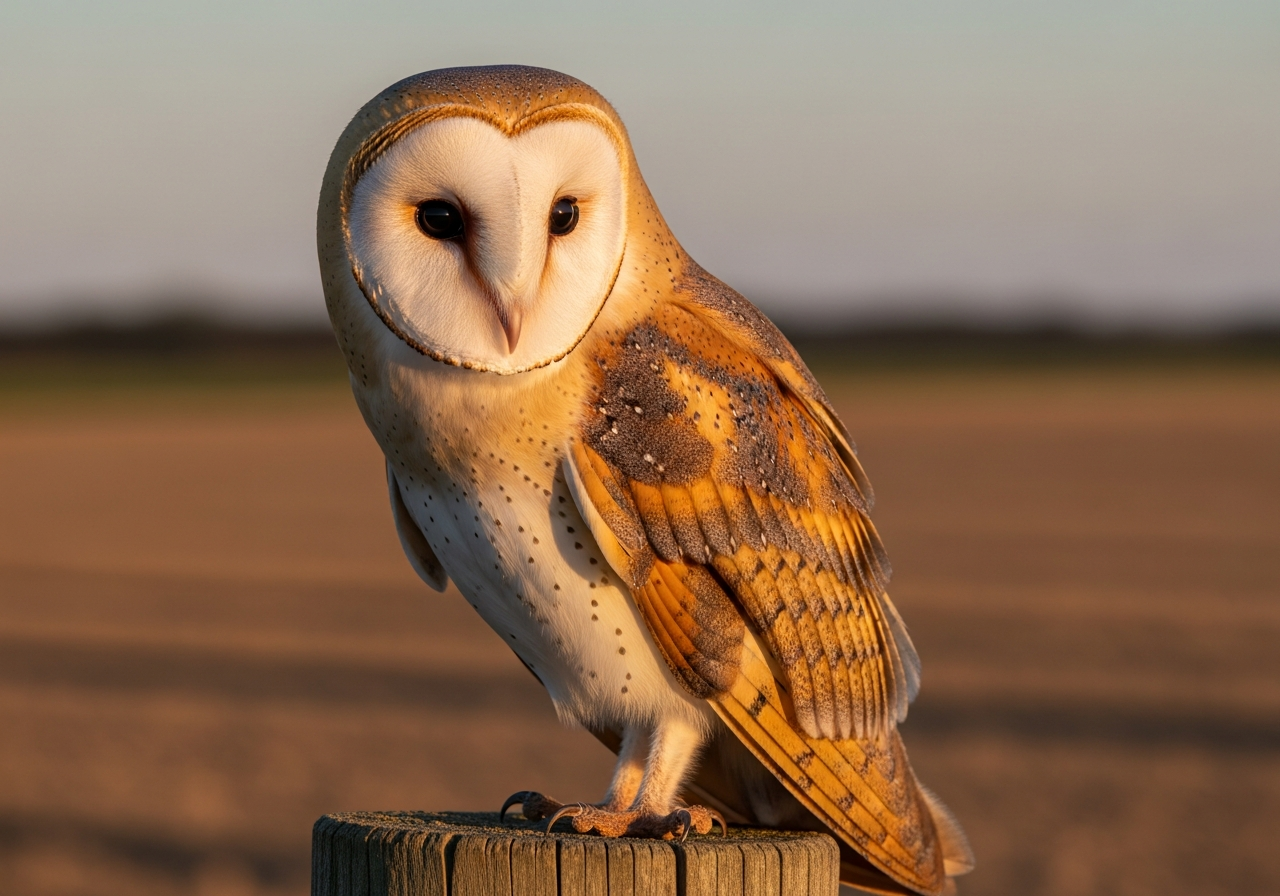
Barn Owl
US, UK, and worldwideTyto alba
- Sound
- Long, harsh screech or shriek — not a hoot at all; also hisses and snores at the nest
- When
- Year-round; screeches most at dusk and on moonlit nights while hunting
- Habitat
- Open farmland, marshes, and barns — hunts low over fields
- ID tip
- That eerie night scream over fields is almost always a barn owl, not a fox
- Listen
-
Listen: barn owl screech (Wikimedia Commons)
Tawny Owl
United Kingdom and EuropeStrix aluco
- Sound
- Familiar 'hoo-hoo, hoo-hoo' — a rhythmic two-syllable call; also sharp 'kewick' contact notes
- When
- Year-round; autumn territorial calling peaks September–November
- Habitat
- Deciduous and mixed woodland, parks, and large gardens across Britain
- ID tip
- The owl of English literature — male hoots, female answers with a sharper kewick
Eastern Screech Owl
Eastern USMegascops asio
- Sound
- Descending whinny like a horse — a trembling trill that drops in pitch; also a monotone trill on one note
- When
- Year-round; whinnies most in late winter and spring during breeding season
- Habitat
- Suburban trees, orchards, and woodland edges east of the Rockies
- ID tip
- Small owl, big voice — the whinny is unmistakable once heard
Western Screech Owl
Western USMegascops kennicottii
- Sound
- Rhythmic bouncing ball series — 'po-po-po-po-po' accelerating then slowing; softer than the eastern whinny
- When
- Year-round; calls most at night from February through May
- Habitat
- Riparian woodland, deserts with saguaro, and suburban parks in the West
- ID tip
- Do not expect a screech — the bouncing-ball call surprises most listeners
Sounds that mimic owls
- Fox scream vs barn owl: Both pierce the night, but fox screams are shorter and more variable; barn owl shrieks are longer and more consistent in pitch.
- Dove coo vs owl hoot: Mourning doves coo softly at dawn; owl hoots are deeper, slower, and come after dark.
- Frog vs screech owl: Some tree frogs trill on one note; screech owl whinnies descend in pitch like a horse.
Supporting owls near you
Leave dead standing trees where safe, avoid rodent poisons that accumulate in owl prey, and keep outdoor lights dim — excessive lighting reduces the hunting success of barn owls over fields. Nest boxes sized for screech owls or barn owls can attract breeding pairs where natural cavities are scarce.
Owl sounds: FAQs
What owl makes a screeching sound at night?
In both the US and UK, the barn owl is the classic night screecher — a long, harsh, piercing shriek quite unlike the hooting most people expect. In eastern North America, eastern screech owls also make a whinnying trill that can sound unsettling but is not a scream.
What does a great horned owl sound like?
Great horned owls produce a deep, slow series of four to five hoots — 'hoo-hoo-hoo HOO-HOO' — with the final notes loudest. The call carries well through woodland and is often heard on calm autumn and winter nights across North America.
What owl hoots in UK gardens?
The tawny owl is the familiar British hooter — a rhythmic 'hoo-hoo, hoo-hoo' heard from woodland and parkland after dark. Little owls give a short yelping call but hoot less prominently. Barn owls screech rather than hoot.
Why do owls call at night?
Owls call to defend territory, attract mates, and communicate with their partner. Calling peaks during courtship — autumn for tawny owls, late winter for great horned and screech owls. Hearing an owl does not mean danger; it means healthy habitat nearby.
Can I tell screech owl species apart by ear?
Yes, in most cases. Eastern screech owls whinny — a descending horse-like trill. Western screech owls bounce — a rhythmic 'po-po-po' series that speeds up then slows. Both also give monotone trills, but the whinny versus bounce distinction is reliable where ranges overlap in the Southwest.
Sources & references
Identification marks and calls are compiled from established field guides and ornithological references for temperate regions worldwide.
-
RSPB wildlife guides
UK and international bird identification.
-
Cornell Lab — All About Birds
Photos, calls, and ID tips for North American species.
-
iNaturalist
Community-verified species observations worldwide.
- Global Animal Guide editorial standards