Quick ID workflow
- Estimate the size: Compare to a silvereye (tiny), fantail (small), or kererū (large pigeon).
- Check for native vs introduced: Tui, fantail, kererū, and bellbird are native; blackbirds and sparrows were introduced from Europe.
- Watch tail behaviour: Fantails fan and flick their tails constantly; tui fly with loud whirring wingbeats.
- Listen for the call: Tui mimic and chime; bellbirds ring clearly; morepork call at night with a double 'more-pork'.
- Note the bill: Tui and bellbirds have curved nectar-sipping bills; kererū have stout fruit-eating bills.
10 common New Zealand garden birds
Tui
Prosthemadera novaeseelandiae- Size
- Medium (~30 cm)
- Key marks
- Dark iridescent blue-green with white throat tufts (poi); curved bill; white wing flash in flight
- Sound
- Chimes, clicks, wheezes, and mimicry — one of NZ's most complex songs
- When
- Year-round across New Zealand; common in gardens with flowering trees
- Food
- Nectar, fruit, and insects — visits flax, kōwhai, and sugar-water feeders
Fantail (Pīwakawaka)
Rhipidura fuliginosa- Size
- Small (~16 cm)
- Key marks
- Grey head, white eyebrows, rufous or grey body; constantly fans and flicks tail
- Sound
- High 'cheet-cheet' calls; chattering when foraging
- When
- Year-round across New Zealand; follows people and lawnmowers for disturbed insects
- Food
- Flying insects — hawks from branches and fences; does not visit seed feeders
Kererū (NZ Pigeon)
Hemiphaga novaeseelandiae- Size
- Large (~51 cm)
- Key marks
- Plump green-bronze pigeon with white breast; loud wingbeats in flight; clumsy in trees
- Sound
- Heavy wing claps; quiet 'ku-ku' calls
- When
- Year-round across New Zealand; essential seed disperser for native forest
- Food
- Native fruit — prefers miro, taraire, and nīkau; visits fruiting garden trees
Bellbird (Korimako)
Anthornis melanura- Size
- Small (~20 cm)
- Key marks
- Olive-green with curved bill; males have purple head sheen; clear bell-like song
- Sound
- Pure ringing notes — gave the bird its name
- When
- Year-round on mainland NZ and islands; common in bush-edge gardens
- Food
- Nectar and insects — visits flax and flowering natives
Silvereye (Wax-eye)
Zosterops lateralis- Size
- Very small (~12 cm)
- Key marks
- Olive-green with white eye-ring; tiny sharp bill; moves in fast flocks
- Sound
- Soft chattering contact calls in flocks
- When
- Year-round across New Zealand; self-introduced from Australia in the 1800s
- Food
- Fruit, nectar, and insects — visits feeders and larders in winter
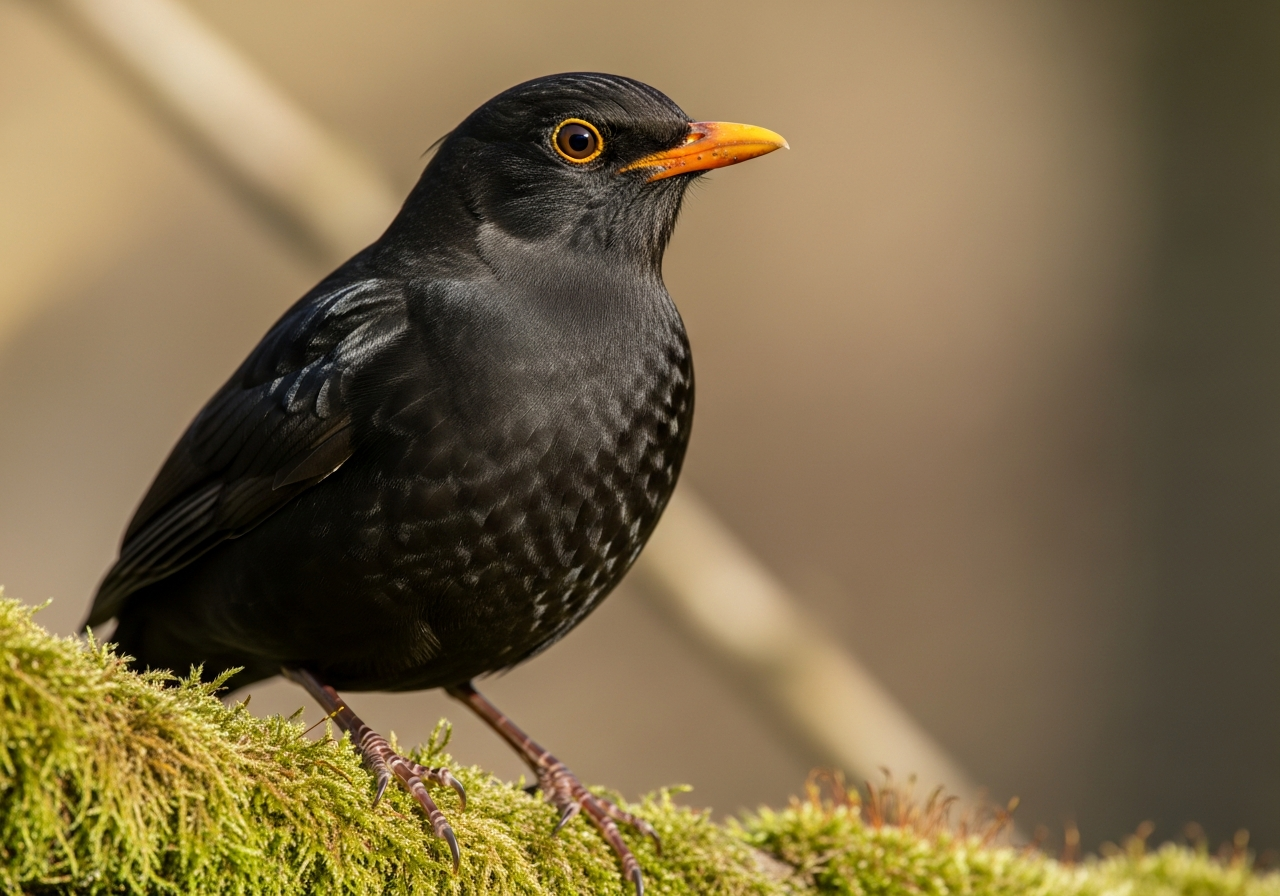
Blackbird
Turdus merula- Size
- Medium (~25 cm)
- Key marks
- Male all black with orange bill; female dark brown; introduced from Europe
- Sound
- Rich fluting song at dawn and dusk
- When
- Year-round; one of the most common introduced garden birds
- Food
- Worms and fruit on lawns — runs then pauses while feeding
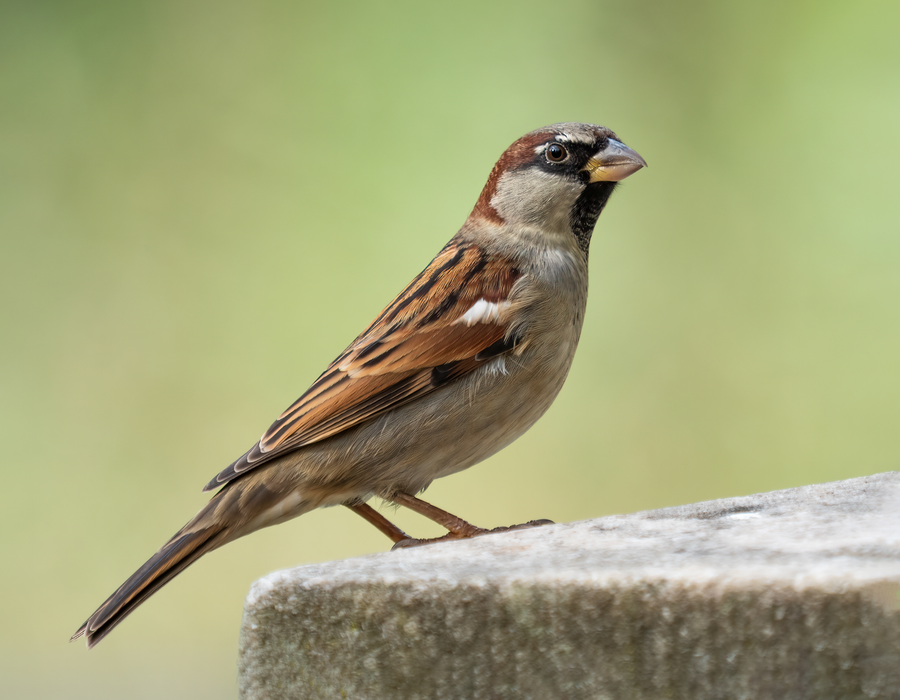
House Sparrow
Passer domesticus- Size
- Small (~14 cm)
- Key marks
- Chunky introduced sparrow; male grey cap and black bib; female streaky brown
- Sound
- Noisy chirping from eaves and bushes
- When
- Year-round in towns and cities; introduced from Europe
- Food
- Seeds and crumbs — visits ground feeders
Sacred Kingfisher (Kōtare)
Todiramphus sanctus- Size
- Medium (~24 cm)
- Key marks
- Turquoise-green back, buff underparts, large dark bill; sits on wires and posts
- Sound
- Sharp 'kek-kek-kek' flight call
- When
- Year-round across New Zealand; nests in bank holes
- Food
- Small fish, insects, and lizards — hunts from perches near water or lawns
Morepork (Ruru)
Ninox novaeseelandiae- Size
- Small (~29 cm)
- Key marks
- Small brown owl with large yellow eyes; heard more often than seen in gardens
- Sound
- Double note 'more-pork' at night — classic NZ night sound
- When
- Year-round across New Zealand; roosts in dense trees by day
- Food
- Insects, small birds, and mice — hunts from perches at night
Pūkeko
Porphyrio melanotus- Size
- Large (~51 cm)
- Key marks
- Blue-purple body, red bill and frontal shield, long red legs; walks in open grass
- Sound
- Harsh 'kruk' calls; squabbles in family groups
- When
- Year-round across New Zealand wetlands and park edges
- Food
- Grass, shoots, and insects — common in damp paddocks and park margins
New Zealand garden bird ID: FAQs
What native birds visit New Zealand gardens?
Tui, fantail, kererū, bellbird, and silvereye are the most common native visitors where flowering and fruiting plants are available. Planting flax, kōwhai, and native fruit trees attracts them.
How do I attract tui to my garden?
Plant kōwhai and flax for nectar, avoid pesticides, and offer a clean sugar-water feeder in winter. Tui are aggressive at feeders — one per station works best.
Is the kererū endangered?
Kererū are protected native pigeons. They were declining but populations are recovering in many areas. Window strikes are a major hazard — place decals on large glass panels.
What is that owl sound at night?
The morepork (ruru) calls a distinctive double 'more-pork' after dark. It is New Zealand's only remaining native owl and is common in suburban areas with mature trees.
Sources & references
Identification marks and calls are compiled from established field guides and ornithological references for New Zealand.
-
RSPB wildlife guides
UK and international bird identification.
-
Cornell Lab — All About Birds
Photos, calls, and ID tips for North American species.
-
iNaturalist
Community-verified species observations worldwide.
- Global Animal Guide editorial standards