Quick answer
Group yip-howl, lone howl, alarm bark — use the descriptions below to match what you heard at night or on a recording.
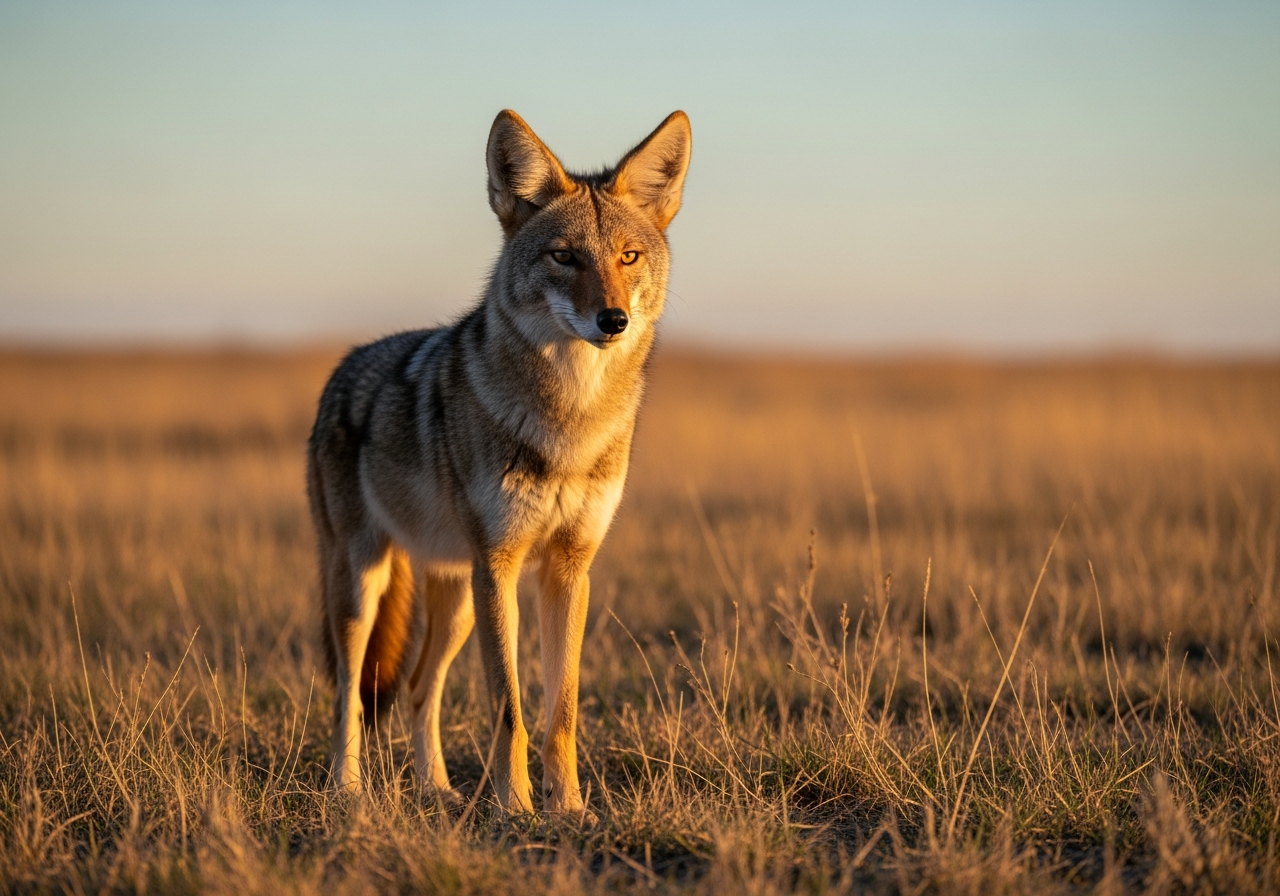
-
Yip-howl
High yips building into howls — the classic suburban night sound, often from a pair or family group.
-
Lone howl
A wavering howl from a single coyote seeking packmates or marking territory.
-
Alarm bark
Sharp huffing barks when a coyote spots a threat — common near den sites.
Related species guides
FAQs
Why do coyotes yip at night?
Coyotes yip and howl to coordinate the pack, celebrate a kill, or respond to sirens — a burst of high yips often follows a long howl.
Are coyotes dangerous?
Coyotes rarely attack people — conflicts usually involve habituated or food-conditioned animals. Keep pets indoors at night in coyote country.
Coyote vs wolf sound?
Coyotes sound higher and more varied; wolves produce deeper, longer howls. A single coyote can sound like many due to rapid yipping.
Sources & references
Vocalisations and field signs are compiled from established mammal guides and acoustic research for North America.
-
RSPB wildlife guides
UK and international bird identification.
-
Cornell Lab — All About Birds
Photos, calls, and ID tips for North American species.
-
iNaturalist
Community-verified species observations worldwide.
- Global Animal Guide editorial standards