Quick answer
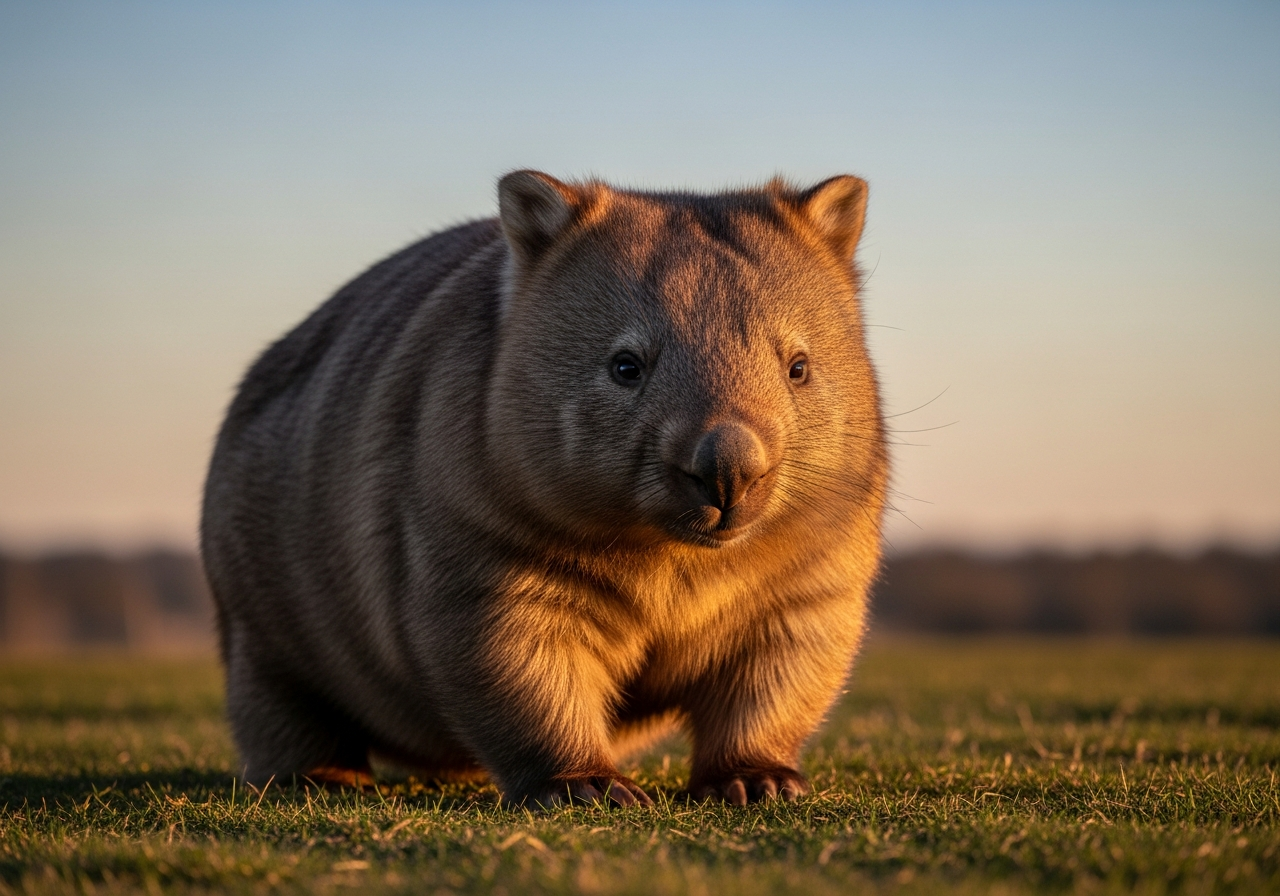
The wombat (Vombatus ursinus) is a stocky, short-legged Australian marsupial and one of the world's largest burrowing animals. It is the only animal known to produce cube-shaped faeces — a result of unique gut elasticity that moulds droppings so they do not roll away. Wombats are herbivores, largely nocturnal, and powerful diggers with a backward-facing pouch.
Key takeaway
The wombat (Vombatus ursinus) is a stocky, short-legged Australian marsupial and one of the world's largest burrowing animals. It is the only animal known to produce cube-shaped faeces — a result of unique gut elasticity that moulds droppings so they do not roll away. Wombats are herbivores, largely nocturnal, and powerful diggers with a backward-facing pouch.
Wombat overview
Wombat (Vombatus ursinus) is a mammal listed here as Least Concern. Typical weight 20–35 kg (44–77 lb); lifespan around 5–15 years in the wild; up to 20+ in captivity.
Wombat ecology
Diet: Herbivore (grasses, roots, bark, sedges). Habitat: Forest, woodland, heath, and alpine grassland. Movement and social systems reflect those pressures across the native range.
Wombats and people
Learn before you travel or keep related pets. Wild wombats are not toys; captive care needs species-specific husbandry.
Status and further reading
Conservation label in our guides: Least Concern. See the full Wombat profile for taxonomy, FAQs, and related topic guides on this site.
Diet, digestion, and ecology
Wombats are slow-metabolising herbivores that graze on grasses, roots, sedges, and bark. Their digestion is extremely efficient — food can take up to 14 days to pass through the gut — extracting maximum nutrition from tough, low-energy vegetation. They are significant ecosystem engineers: their large, complex burrow systems provide shelter for dozens of other species, including reptiles, small mammals, and invertebra
Species and conservation
There are three wombat species. The common wombat is widespread across southeastern Australia and Tasmania and is Least Concern. The northern hairy-nosed wombat (Lasiorhinus krefftii) is Critically Endangered with only around 300 individuals surviving in one protected location in Queensland — one of Australia's rarest mammals. The southern hairy-nosed wombat lives in arid scrub in South Australia. All three produce c
Sources
Wombat FAQs
What are key facts about wombats?
The wombat (Vombatus ursinus) is a stocky, short-legged Australian marsupial and one of the world's largest burrowing animals. It is the only animal known to produce cube-shaped faeces — a result of unique gut elasticity that moulds droppings so they do not roll away. Wombats are herbivores, largely nocturnal, and powerful diggers with a backward-facing pouch.
What is the scientific name of the wombat?
Vombatus ursinus — used in research and conservation listings for wombats.
What do wombats eat?
Wombats eat grasses, roots, bark and sedges, with seasonal and regional variation in Forest, woodland, heath, and alpine grassland.
Where do wombats live?
They are associated with Forest, woodland, heath, and alpine grassland. Local presence depends on food, cover, and human land use.
What is the conservation status of wombats?
Listed in our guides as Least Concern. Check the IUCN Red List and national assessments for the latest formal category.