Quick answer
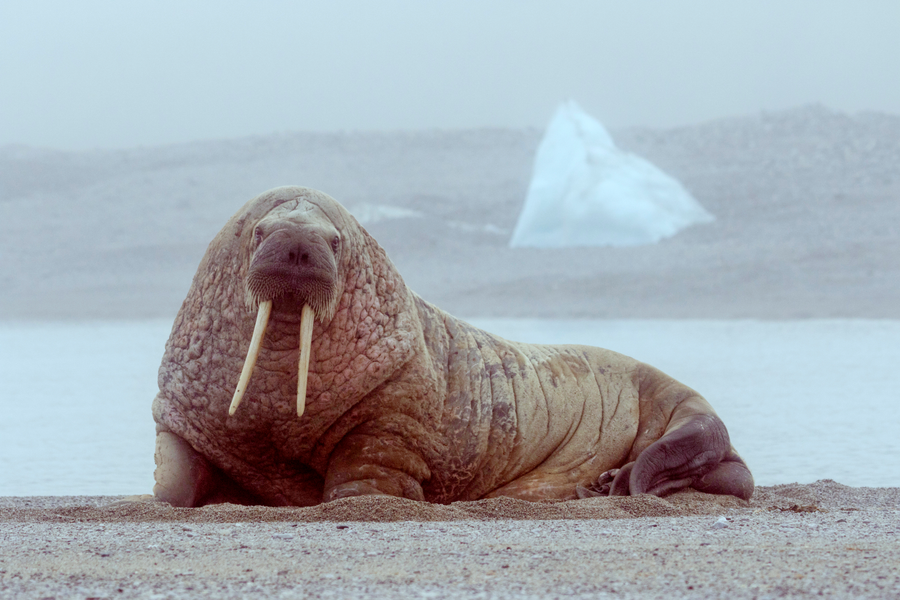
Walruses are massive pinnipeds of the Arctic, with males weighing up to 1,700 kg (3,750 lb) and sporting elongated canine tusks used for hauling out on ice, fighting, and sensing the seafloor. They feed mainly on clams and molluscs on shallow seabeds and gather in huge haul-outs on ice or land.
Key takeaway
Walruses are massive pinnipeds of the Arctic, with males weighing up to 1,700 kg (3,750 lb) and sporting elongated canine tusks used for hauling out on ice, fighting, and sensing the seafloor. They feed mainly on clams and molluscs on shallow seabeds and gather in huge haul-outs on ice or land.
Walrus overview
Walrus (Odobenus rosmarus) is a mammal listed here as Vulnerable. Typical weight Males 900–1,700 kg; females 400–1,250 kg; lifespan around 30–40 years in the wild.
Walrus ecology
Diet: Carnivore — clams, molluscs, and occasional seals or seabirds. Habitat: Arctic seas, pack ice, and coastal haul-outs. Movement and social systems reflect those pressures across the native range.
Walruss and people
Learn before you travel or keep related pets. Wild walruss are not toys; captive care needs species-specific husbandry.
Status and further reading
Conservation label in our guides: Vulnerable. See the full Walrus profile for taxonomy, FAQs, and related topic guides on this site.
Tusks and feeding
Walrus tusks are elongated upper canines that can exceed one metre in large males. They are used to pull the body onto ice, establish dominance, and help the walrus 'feel' the seabed while foraging. A walrus may consume thousands of clams in a day, using powerful lips to suck meat from shells.
Sources
Walrus FAQs
What are key facts about walruss?
Walruses are massive pinnipeds of the Arctic, with males weighing up to 1,700 kg (3,750 lb) and sporting elongated canine tusks used for hauling out on ice, fighting, and sensing the seafloor. They feed mainly on clams and molluscs on shallow seabeds and gather in huge haul-outs on ice or land.
What is the scientific name of the walrus?
Odobenus rosmarus — used in research and conservation listings for walruss.
What do walruss eat?
Walruss eat clams, molluscs, and occasional seals or seabirds, with seasonal and regional variation in Arctic seas, pack ice, and coastal haul-outs.
Where do walruss live?
They are associated with Arctic seas, pack ice, and coastal haul-outs. Local presence depends on food, cover, and human land use.
What is the conservation status of walruss?
Listed in our guides as Vulnerable. Check the IUCN Red List and national assessments for the latest formal category.
Social haul-outs
Walruses rest in dense groups on sea ice or rocky beaches, vocalising with bell-like calls and whistles. Pacific walruses depend heavily on floating ice over shallow feeding grounds; when ice retreats beyond reach of feeding areas, animals haul out on land in enormous, sometimes dangerous crowds.