Swan
Cygnus olor
Quick answer
Swans (Cygnus olor) are birds found across Europe, Asia. The graceful giant of lakes and rivers. Adults typically weigh 10–12 kg (22–26 lb), reach speeds of up to 80 km/h (50 mph), and live About 10 years (up to 20+). They feed on herbivore (aquatic plants, grasses, grain) and are listed as Least Concern on the IUCN Red List. Lakes, rivers, and coasts across Europe and temperate Asia; widely introduced to North America.
Swan facts at a glance
| Scientific name | Cygnus olor |
|---|---|
| Diet | Herbivore (aquatic plants, grasses, grain) |
| Habitat | Lakes, rivers, ponds, estuaries |
| Lifespan | About 10 years (up to 20+) |
| Weight | 10–12 kg (22–26 lb) |
| Wingspan | 2–2.4 m (6.5–8 ft) |
| Conservation status | Least Concern (IUCN) |
| Kingdom | Animalia |
|---|---|
| Phylum | Chordata |
| Class | Aves |
| Order | Anseriformes |
| Family | Anatidae |
| Genus | Cygnus |
What is a group of swans called?
Group name (collective noun)
A group of Swans is called a bevy. It is also known as a wedge or a herd or a bank.
Baby name
A baby Swan is called a cygnet.
Explore more animal collective nouns and baby animal names .
Range and habitat
Swans inhabit Lakes, rivers, and coasts across Europe and temperate Asia; widely introduced to North America. Resident across the UK. Their preferred habitat includes lakes, rivers, ponds, estuaries, where they find food, shelter, and breeding sites. Population density varies with prey availability, water access, and human disturbance. Protected areas and intact corridors remain essential for long-term persistence across Europe, Asia.
Physical characteristics and behaviour
Adult swans typically measure about 1.5 m in length and weigh 10–12 kg (22–26 lb). They can sprint at up to 80 km/h (50 mph) when hunting or escaping predators. Swans are known for the graceful giant of lakes and rivers — social structure, daily activity, and seasonal movements all reflect pressures in their native environment.
Diet and ecological role
Swans feed primarily on herbivore (aquatic plants, grasses, grain). Foraging strategy depends on season, local prey or plant abundance, and competition with other species. As birds, they play a measurable role in their ecosystem — controlling prey numbers, dispersing seeds, or shaping habitat through feeding and movement patterns that other wildlife depends on.
Conservation and human interaction
The IUCN lists swans as Least Concern. Habitat loss, hunting, climate change, and conflict with people are among the main threats worldwide. Responsible ecotourism, anti-poaching patrols, and community-based conservation help in parts of their range. Never approach or feed wild swans — observe from a safe distance and support reputable conservation organisations.
Dig deeper into the Swan
- How Fast Is A Swan
Dig deeper into swan — how fast is a swan.
- How Long do Swan Live?
Dig deeper into swan — how long do swan live.
- Swan Facts 5
Dig deeper into swan — swan facts 5.
- What do Swan Eat
Dig deeper into swan — what do swan eat.
- Where do Swan Live?
Dig deeper into swan — where do swan live.
Explore the Swan
Related Birds
Range & geography
Did you know? Swan facts
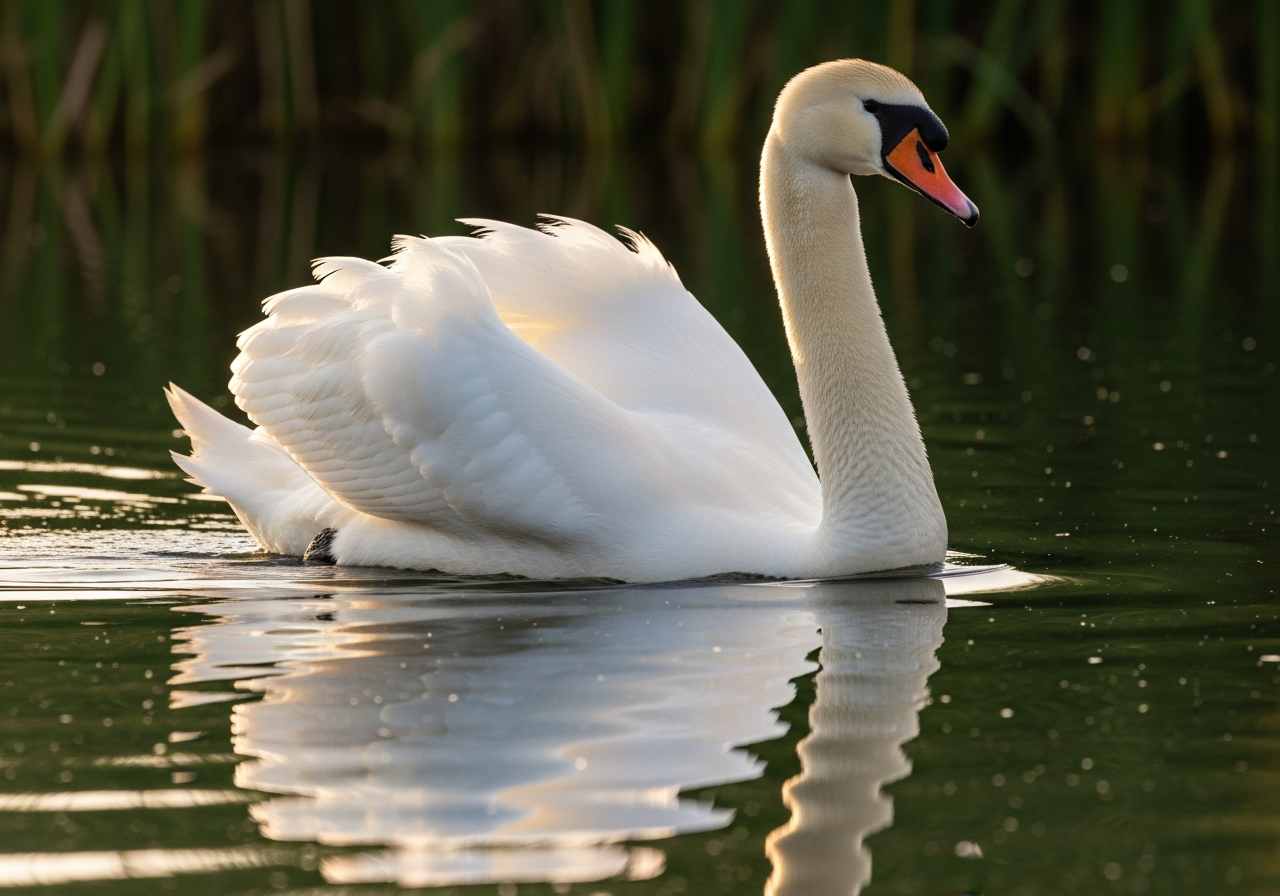
- The mute swan is a large, elegant white waterbird with an orange bill and a black knob at its base, and one of the heaviest flying birds in the world.
- A group of swans is called a bevy or a herd, and in flight they are called a wedge. A baby swan is called a cygnet.
- Mute swans usually form long-lasting pair bonds that often last for life, raising cygnets together each year. Occasionally a pair will separate, especially after repeated nesting failures.
- This is largely a myth. A swan defending its nest can strike hard with its wings and is best avoided, but it is very unlikely to break a healthy adult's bone.
- Swans are mainly herbivores, eating aquatic plants reached with their long necks, along with grass, waterside vegetation, and grain. They occasionally take small water creatures while feeding.
- Conservation: Least Concern (IUCN).
Diet & feeding
Swan feeds primarily as a herbivore (aquatic plants, grasses, grain). Swans are mainly herbivores, feeding on aquatic plants reached by dipping their long necks underwater or upending in the shallows. They also graze on grass and waterside plants and will take grain and some small water creatures. Their long necks let
Adaptations
- Mute swans are famous for forming strong pair bonds that often last for life, and a pair will defend their nest and young together. They build a large mound of vegetation at the water's edge, and both parents care for the grey, fluffy cygnets, which often ride on a parent's back in their first weeks. The image of two swans facing each other with necks curved into a heart is part of their romantic reputation.
- Swans are mainly herbivores, feeding on aquatic plants reached by dipping their long necks underwater or upending in the shallows. They also graze on grass and waterside plants and will take grain and some small water creatures. Their long necks let them feed on vegetation deeper than most other waterfowl can reach.
Behaviour & ecology
- Mute swans are famous for forming strong pair bonds that often last for life, and a pair will defend their nest and young together. They build a large mound of vegetation at the water's edge, and both parents care for the grey, fluffy cygnets, which often ride on a parent's back in their first weeks. The image of two swans facing each other with necks curved into a heart is part of their romantic reputation.
- Swans are mainly herbivores, feeding on aquatic plants reached by dipping their long necks underwater or upending in the shallows. They also graze on grass and waterside plants and will take grain and some small water creatures. Their long necks let them feed on vegetation deeper than most other waterfowl can reach.
- Despite their serene appearance, swans are powerful and can be aggressive when defending a nest or cygnets, hissing and beating their large wings. While stories of a swan breaking a person's arm are exaggerated, a defensive swan can deliver a forceful blow and should be given space, especially during the breeding season.
Communication
- Swan uses calls and visual displays to communicate territory, alarm, and breeding status.
- Vocal repertoires vary by species and are often learned or refined during development.
Habitat & range
Lakes, rivers, ponds, estuaries
Ecological role
Swan shapes vegetation through grazing or browsing and serves as prey for larger predators where ranges overlap.
Frequently asked questions about the Swan
Where do swans live?
Swans are native to Europe, Asia. Lakes, rivers, and coasts across Europe and temperate Asia; widely introduced to North America.
What do swans eat?
They feed on herbivore (aquatic plants, grasses, grain), adjusting seasonally based on what is available in Lakes.
How long do swans live?
About 10 years (up to 20+). Captive individuals sometimes live longer with veterinary care and steady nutrition.
How big is a swan?
Adults weigh 10–12 kg (22–26 lb) and reach roughly 1.5 metres long; males are often larger than females.
Are swans endangered?
Swans are listed as Least Concern on the IUCN Red List. Threats include habitat loss, hunting, and human-wildlife conflict.
How fast can a swan run?
Swans can reach about 80 km/h (50 mph) in short bursts.
What is a group of swans called?
A group of Swans is called a bevy. It is also known as a wedge or a herd or a bank.
What is a baby swan called?
A baby Swan is called a cygnet.
Sources & references
This guide is compiled and reviewed against established zoological and conservation references. Key sources for the Swan:
-
IUCN Red List of Threatened Species
Conservation status (Least Concern) reflects the IUCN Red List category for Cygnus olor.
- IUCN Red List — Cygnus olor.
Conservation status (Least Concern) and population trends.
- Animal Diversity Web — Cygnus olor. University of Michigan Museum of Zoology.
Life history, morphology, and range.
- Wikipedia — Swan.
General taxonomy and overview (cross-check primary sources).
-
Global Animal Guide editorial standards
How we research, source, review, and update every guide for accuracy.