Quick answer
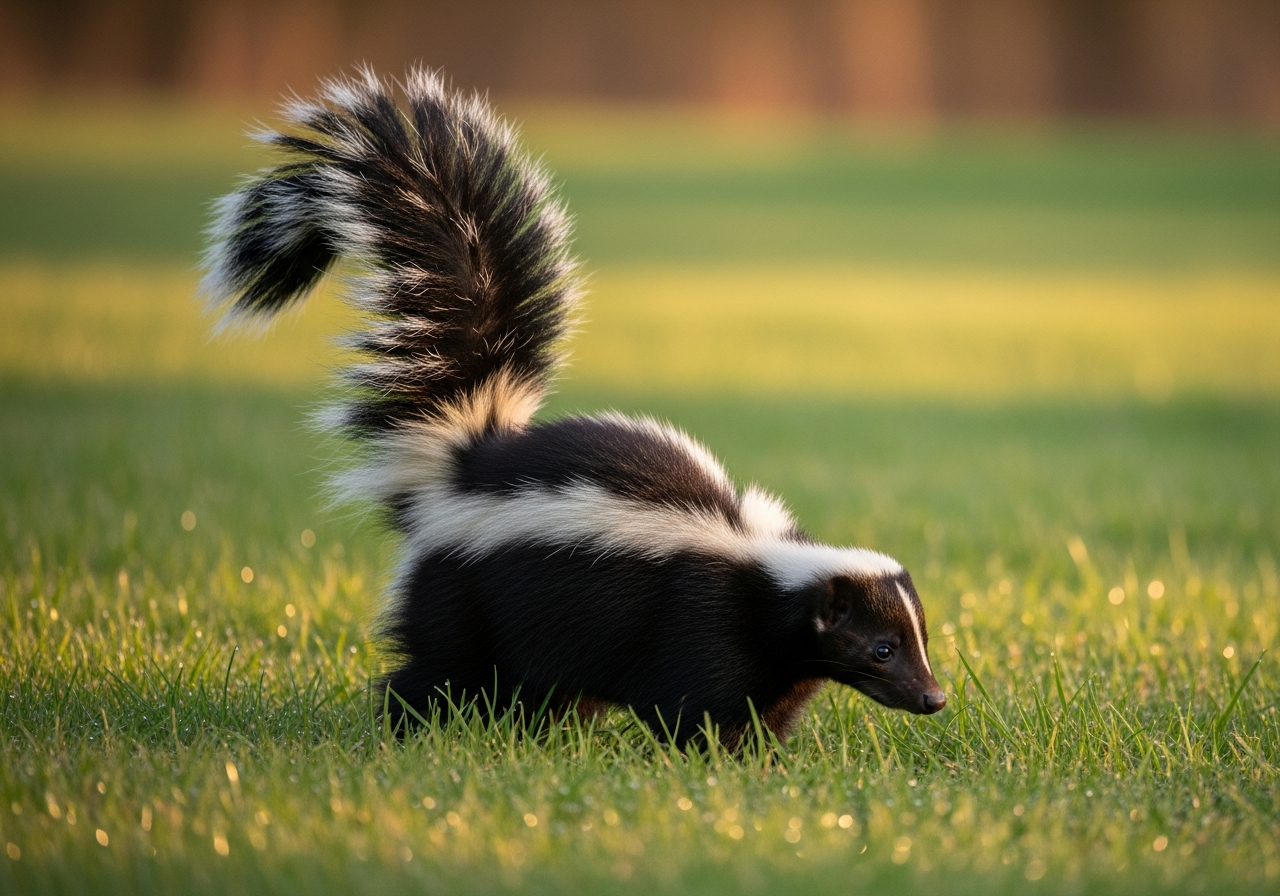
The striped skunk is a cat-sized North American mammal best known for the foul-smelling spray it fires from glands under its tail to deter predators. Its bold black-and-white pattern is a warning to leave it alone. Skunks are omnivores active mainly at night, weigh up to about 6 kg (13 lb), and usually live 2 to 3 years in the wild.
Key takeaway
The striped skunk is a cat-sized North American mammal best known for the foul-smelling spray it fires from glands under its tail to deter predators. Its bold black-and-white pattern is a warning to leave it alone. Skunks are omnivores active mainly at night, weigh up to about 6 kg (13 lb), and usually live 2 to 3 years in the wild.
Skunk overview
Skunk (Mephitis mephitis) is a mammal listed here as Least Concern. Typical weight 1.2–6 kg (2.6–13 lb); lifespan around 2–3 years wild (up to 7).
Skunk ecology
Diet: Omnivore (insects, small animals, fruit). Habitat: Woodland, grassland, farmland, suburbs. Movement and social systems reflect those pressures across the native range.
Skunks and people
Learn before you travel or keep related pets. Wild skunks are not toys; captive care needs species-specific husbandry.
Status and further reading
Conservation label in our guides: Least Concern. See the full Skunk profile for taxonomy, FAQs, and related topic guides on this site.
The famous spray
A skunk's defence is a pair of glands beside the anus that can fire a fine, oily, sulphur-based spray up to about 3 m (10 ft) with good aim. The smell is overpowering and can cause stinging and temporary blindness if it hits the eyes. Skunks would rather warn than waste it: a threatened skunk stamps its feet, hisses, raises its tail, and — in spotted skunks — may even do a handstand before spraying as a last resort.
Diet and behaviour
Striped skunks are opportunistic omnivores that eat insects, grubs, worms, small rodents, eggs, fruit, and human refuse, using their strong claws to dig for grubs and raid wasp nests. They are mainly nocturnal and largely solitary, though several may share a den in cold weather. Their bold coloration means they have few predators apart from the great horned owl, which has a poor sense of smell.
Sources
Skunk FAQs
What are key facts about skunks?
The striped skunk is a cat-sized North American mammal best known for the foul-smelling spray it fires from glands under its tail to deter predators. Its bold black-and-white pattern is a warning to leave it alone. Skunks are omnivores active mainly at night, weigh up to about 6 kg (13 lb), and usually live 2 to 3 years in the wild.
What is the scientific name of the skunk?
Mephitis mephitis — used in research and conservation listings for skunks.
What do skunks eat?
Skunks eat insects, small animals and fruit, with seasonal and regional variation in Woodland, grassland, farmland, suburbs.
Where do skunks live?
They are associated with Woodland, grassland, farmland, suburbs. Local presence depends on food, cover, and human land use.
What is the conservation status of skunks?
Listed in our guides as Least Concern. Check the IUCN Red List and national assessments for the latest formal category.