Quick answer
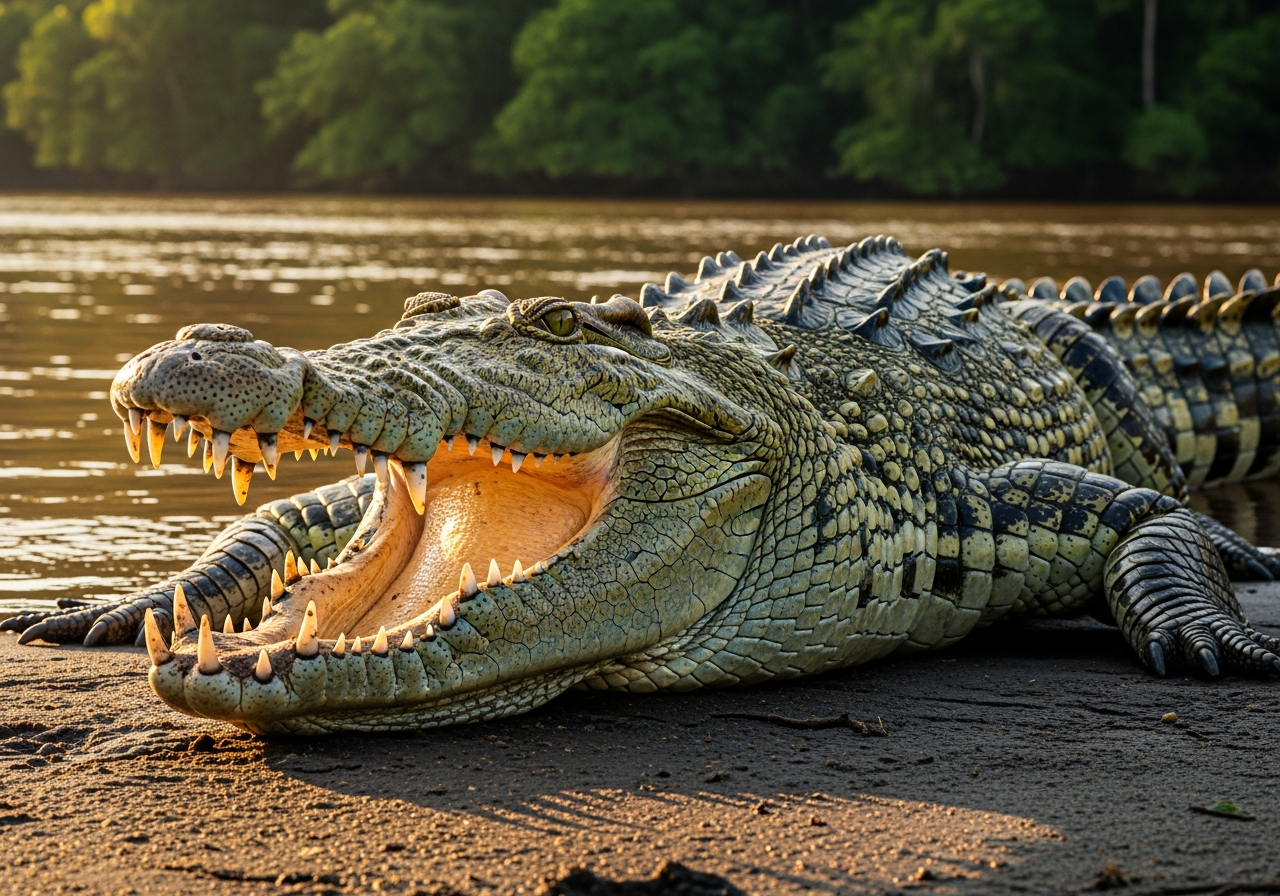
The saltwater crocodile is the largest living reptile, with big males reaching up to 6 m (20 ft) and over 1,000 kg (2,200 lb). Found across the Indo-Pacific from India to northern Australia, it has the strongest bite force ever measured in a living animal and is an ambush predator that can survive in both fresh and salt water. Saltwater crocodiles can live 70 years or more.
Key takeaway
The saltwater crocodile is the largest living reptile, with big males reaching up to 6 m (20 ft) and over 1,000 kg (2,200 lb). Found across the Indo-Pacific from India to northern Australia, it has the strongest bite force ever measured in a living animal and is an ambush predator that can survive in both fresh and salt water. Saltwater crocodiles can live 70 years or more.
Saltwater Crocodile overview
Saltwater Crocodile (Crocodylus porosus) is a reptile listed here as Least Concern. Typical weight about 1000 kg; lifespan around 70+ years.
Saltwater Crocodile ecology
Diet: Carnivore. Habitat: Estuaries, mangroves, rivers, coasts. Movement and social systems reflect those pressures across the native range.
Saltwater Crocodiles and people
Learn before you travel or keep related pets. Wild saltwater crocodiles are not toys; captive care needs species-specific husbandry.
Status and further reading
Conservation label in our guides: Least Concern. See the full Saltwater Crocodile profile for taxonomy, FAQs, and related topic guides on this site.
Behavior and hunting
Saltwater crocodiles are patient ambush predators. They lie almost motionless at the water's edge, then explode forward to seize prey and drag it under in a "death roll." They are highly territorial, and large males defend stretches of river and coast aggressively.
Diet and bite
Salties eat almost anything they can overpower, from fish, crabs, and turtles to large mammals that come to drink. Their bite force is the strongest ever measured in a living animal, but the muscles that open the jaws are weak, which is why a crocodile's mouth can be held shut by hand.
Sources
Saltwater Crocodile FAQs
What are key facts about saltwater crocodiles?
The saltwater crocodile is the largest living reptile, with big males reaching up to 6 m (20 ft) and over 1,000 kg (2,200 lb). Found across the Indo-Pacific from India to northern Australia, it has the strongest bite force ever measured in a living animal and is an ambush predator that can survive in both fresh and salt water. Saltwater crocodiles can live 70 years or more.
What is the scientific name of the saltwater crocodile?
Crocodylus porosus — used in research and conservation listings for saltwater crocodiles.
What do saltwater crocodiles eat?
Saltwater Crocodiles are described as carnivores, with seasonal and regional variation in Estuaries, mangroves, rivers, coasts.
Where do saltwater crocodiles live?
They are associated with Estuaries, mangroves, rivers, coasts. Local presence depends on food, cover, and human land use.
What is the conservation status of saltwater crocodiles?
Listed in our guides as Least Concern. Check the IUCN Red List and national assessments for the latest formal category.