Quick answer
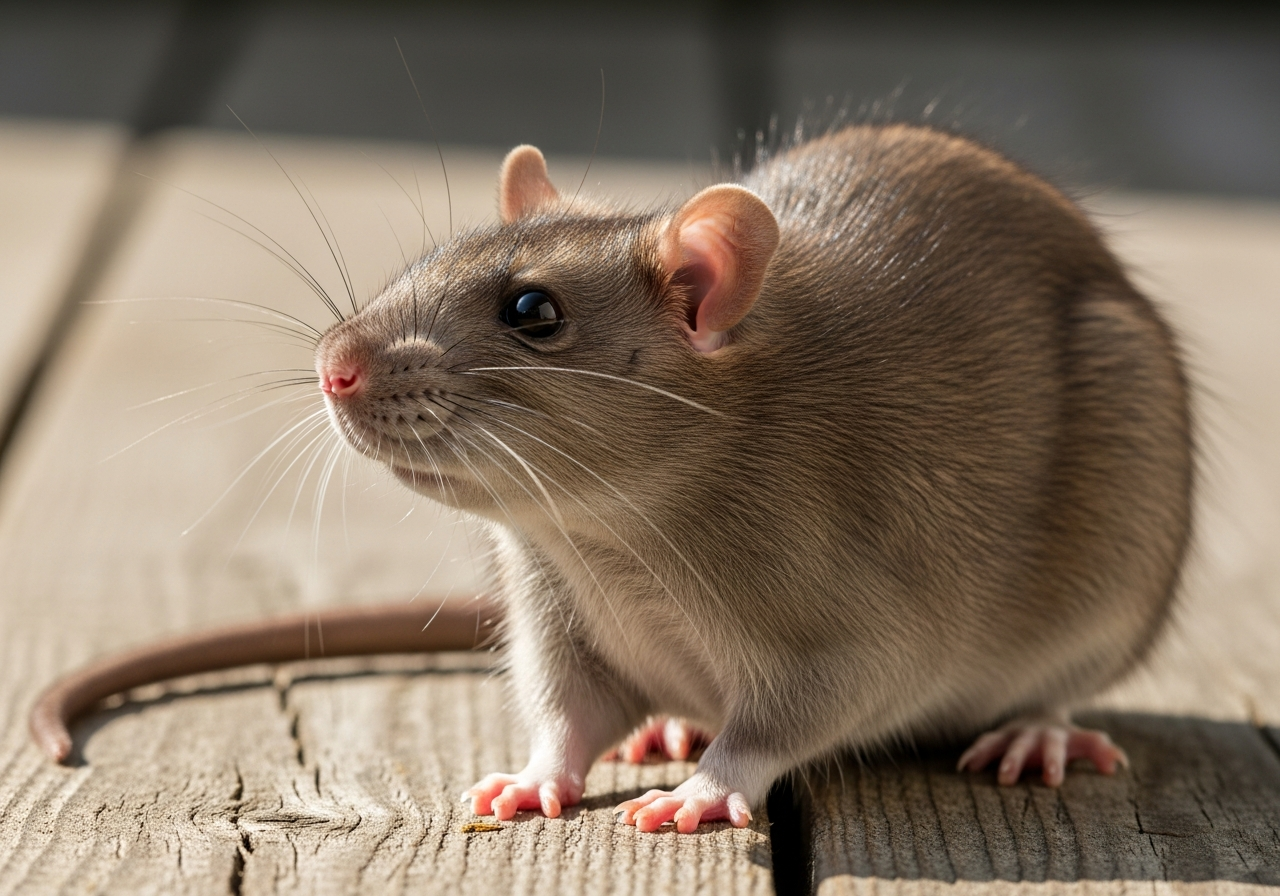
The brown rat, also called the Norway rat, is a large, highly intelligent rodent that lives alongside people across most of the world. It has coarse brown-grey fur, a blunt snout, and a long scaly tail, and it thrives in sewers, cities, farms, and waterways. Brown rats weigh up to about 500 g, are strong swimmers and climbers, and usually live one to two years in the wild.
Key takeaway
The brown rat, also called the Norway rat, is a large, highly intelligent rodent that lives alongside people across most of the world. It has coarse brown-grey fur, a blunt snout, and a long scaly tail, and it thrives in sewers, cities, farms, and waterways. Brown rats weigh up to about 500 g, are strong swimmers and climbers, and usually live one to two years in the wild.
Rat overview
Rat (Rattus norvegicus) is a mammal listed here as Least Concern. Typical weight 200–500 g (7–18 oz); lifespan around 1–2 years in the wild.
Rat ecology
Diet: Omnivore (highly opportunistic). Habitat: Cities, sewers, farms, riverbanks worldwide. Movement and social systems reflect those pressures across the native range.
Rats and people
Learn before you travel or keep related pets. Wild rats are not toys; captive care needs species-specific husbandry.
Status and further reading
Conservation label in our guides: Least Concern. See the full Rat profile for taxonomy, FAQs, and related topic guides on this site.
Intelligence and behaviour
Brown rats are among the most intelligent rodents, capable of learning routes, solving simple puzzles, and even showing signs of empathy in laboratory studies. They are highly social, living in colonies with a clear hierarchy, and they are famously neophobic — wary of new objects and foods in their environment, which makes them difficult to trap or poison. They are also excellent swimmers and can climb, gnaw through
Diet and adaptability
As opportunistic omnivores, brown rats eat almost anything, from grain, fruit, and seeds to meat, refuse, and insects. This flexible diet, combined with rapid breeding and a tolerance for human environments, has made the brown rat one of the most successful mammals on the planet. A colony can grow quickly wherever food and shelter are available.
Sources
Rat FAQs
What are key facts about rats?
The brown rat, also called the Norway rat, is a large, highly intelligent rodent that lives alongside people across most of the world. It has coarse brown-grey fur, a blunt snout, and a long scaly tail, and it thrives in sewers, cities, farms, and waterways. Brown rats weigh up to about 500 g, are strong swimmers and climbers, and usually live one to two years in the wild.
What is the scientific name of the rat?
Rattus norvegicus — used in research and conservation listings for rats.
What do rats eat?
Rats eat highly opportunistic, with seasonal and regional variation in Cities, sewers, farms, riverbanks worldwide.
Where do rats live?
They are associated with Cities, sewers, farms, riverbanks worldwide. Local presence depends on food, cover, and human land use.
What is the conservation status of rats?
Listed in our guides as Least Concern. Check the IUCN Red List and national assessments for the latest formal category.