Quick answer
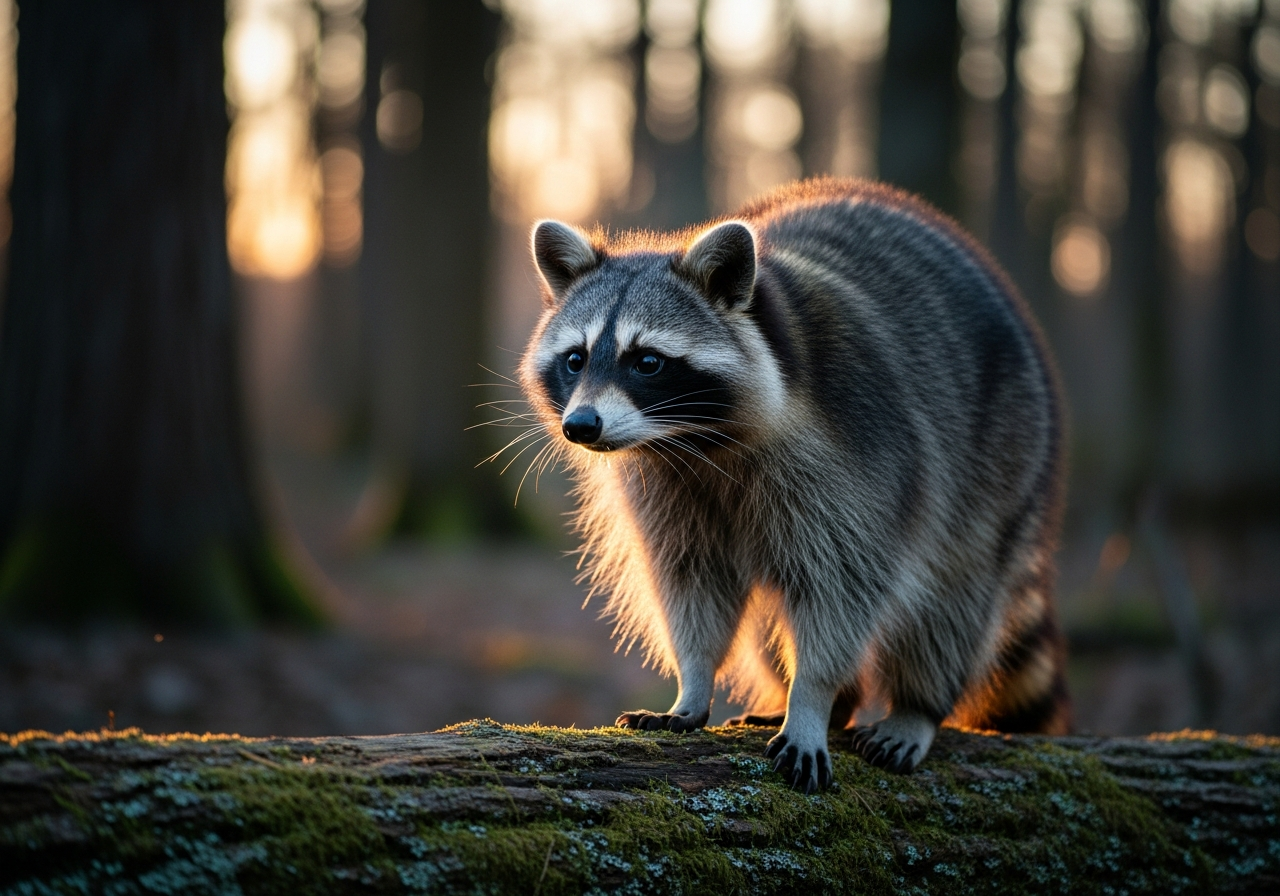
The raccoon is a clever, adaptable mammal native to North America, easily recognized by its black 'bandit' mask and ringed tail. Famous for nimble, sensitive front paws and a habit of 'washing' food, raccoons thrive in forests, wetlands, and cities alike. They are highly intelligent omnivores that typically live 2 to 3 years in the wild, though much longer in captivity.
Key takeaway
The raccoon is a clever, adaptable mammal native to North America, easily recognized by its black 'bandit' mask and ringed tail. Famous for nimble, sensitive front paws and a habit of 'washing' food, raccoons thrive in forests, wetlands, and cities alike. They are highly intelligent omnivores that typically live 2 to 3 years in the wild, though much longer in captivity.
Raccoon overview
Raccoon (Procyon lotor) is a mammal listed here as Least Concern. Typical weight 5–12 kg (11–26 lb); lifespan around 2–3 years in the wild.
Raccoon ecology
Diet: Omnivore. Habitat: Forest, wetland, and urban areas. Movement and social systems reflect those pressures across the native range.
Raccoons and people
Learn before you travel or keep related pets. Wild raccoons are not toys; captive care needs species-specific husbandry.
Status and further reading
Conservation label in our guides: Least Concern. See the full Raccoon profile for taxonomy, FAQs, and related topic guides on this site.
Clever and dexterous
Raccoons are remarkably intelligent and have extraordinarily sensitive, nimble front paws with which they can open latches, jars, and bins. In studies they solve puzzles and remember solutions for years, and their problem-solving skills are a big reason they flourish alongside people.
Why they 'wash' food
Raccoons often dunk and rub their food in water, which looks like washing. They are not cleaning it; wetting their paws dramatically heightens their sense of touch, letting them feel and identify what they are handling. Their Latin name, lotor, even means 'washer'.
Sources
Raccoon FAQs
What are key facts about raccoons?
The raccoon is a clever, adaptable mammal native to North America, easily recognized by its black 'bandit' mask and ringed tail. Famous for nimble, sensitive front paws and a habit of 'washing' food, raccoons thrive in forests, wetlands, and cities alike. They are highly intelligent omnivores that typically live 2 to 3 years in the wild, though much longer in captivity.
What is the scientific name of the raccoon?
Procyon lotor — used in research and conservation listings for raccoons.
What do raccoons eat?
Raccoons are described as omnivores, with seasonal and regional variation in Forest, wetland, and urban areas.
Where do raccoons live?
They are associated with Forest, wetland, and urban areas. Local presence depends on food, cover, and human land use.
What is the conservation status of raccoons?
Listed in our guides as Least Concern. Check the IUCN Red List and national assessments for the latest formal category.