Quick answer
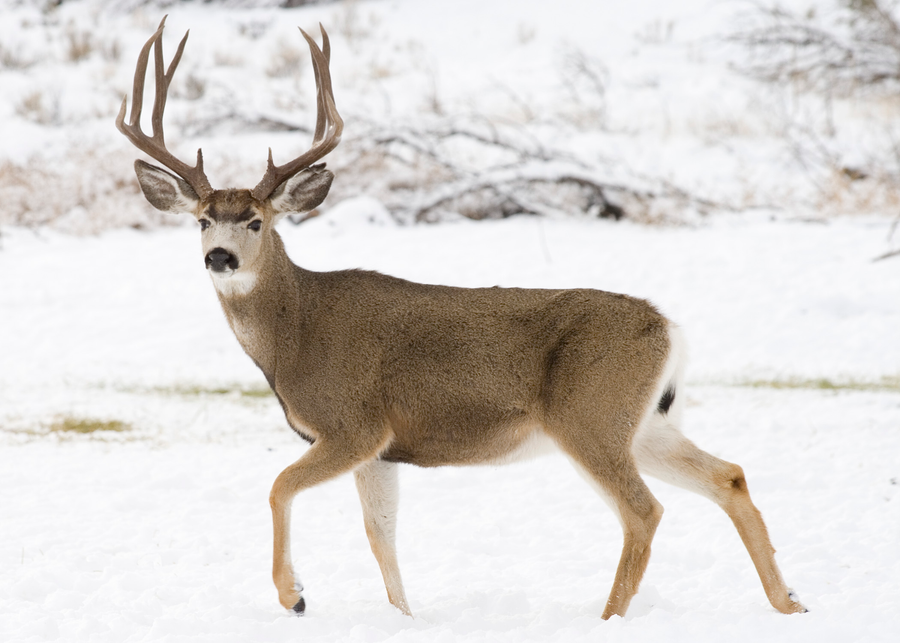
Mule deer are named for their large mule-like ears and black-tipped tail, ranging across western North America from Canada to Mexico. Bucks weigh up to 150 kg (330 lb), bound stiff-legged when fleeing ('stotting'), and migrate seasonally in many mountain populations.
Key takeaway
Mule deer are named for their large mule-like ears and black-tipped tail, ranging across western North America from Canada to Mexico. Bucks weigh up to 150 kg (330 lb), bound stiff-legged when fleeing ('stotting'), and migrate seasonally in many mountain populations.
Mule Deer overview
Mule Deer (Odocoileus hemionus) is a mammal listed here as Least Concern. Typical weight Bucks 55–150 kg; does 43–75 kg; lifespan around 9–11 years in the wild.
Mule Deer ecology
Diet: Herbivore — browse, forbs, grasses, and acorns. Habitat: Western forests, sagebrush, deserts, and foothills of North America. Movement and social systems reflect those pressures across the native range.
Mule Deers and people
Learn before you travel or keep related pets. Wild mule deers are not toys; captive care needs species-specific husbandry.
Status and further reading
Conservation label in our guides: Least Concern. See the full Mule Deer profile for taxonomy, FAQs, and related topic guides on this site.
Stotting and escape behaviour
When alarmed, mule deer often flee with a four-legged bounce called stotting, which may signal fitness to predators or improve visibility over brush. This gait distinguishes them from the running gallop of white-tailed deer.
Forked antlers and the rut
Bucks grow bifurcating antlers that fork rather than branch from a main beam like white-tailed deer. The rut peaks in late autumn; bucks spar for access to does. Afterward antlers are shed and regrow through spring and summer.
Sources
Mule Deer FAQs
What are key facts about mule deers?
Mule deer are named for their large mule-like ears and black-tipped tail, ranging across western North America from Canada to Mexico. Bucks weigh up to 150 kg (330 lb), bound stiff-legged when fleeing ('stotting'), and migrate seasonally in many mountain populations.
What is the scientific name of the mule deer?
Odocoileus hemionus — used in research and conservation listings for mule deers.
What do mule deers eat?
Mule Deers eat browse, forbs, grasses, and acorns, with seasonal and regional variation in Western forests, sagebrush, deserts, and foothills of North America.
Where do mule deers live?
They are associated with Western forests, sagebrush, deserts, and foothills of North America. Local presence depends on food, cover, and human land use.
What is the conservation status of mule deers?
Listed in our guides as Least Concern. Check the IUCN Red List and national assessments for the latest formal category.