Quick answer
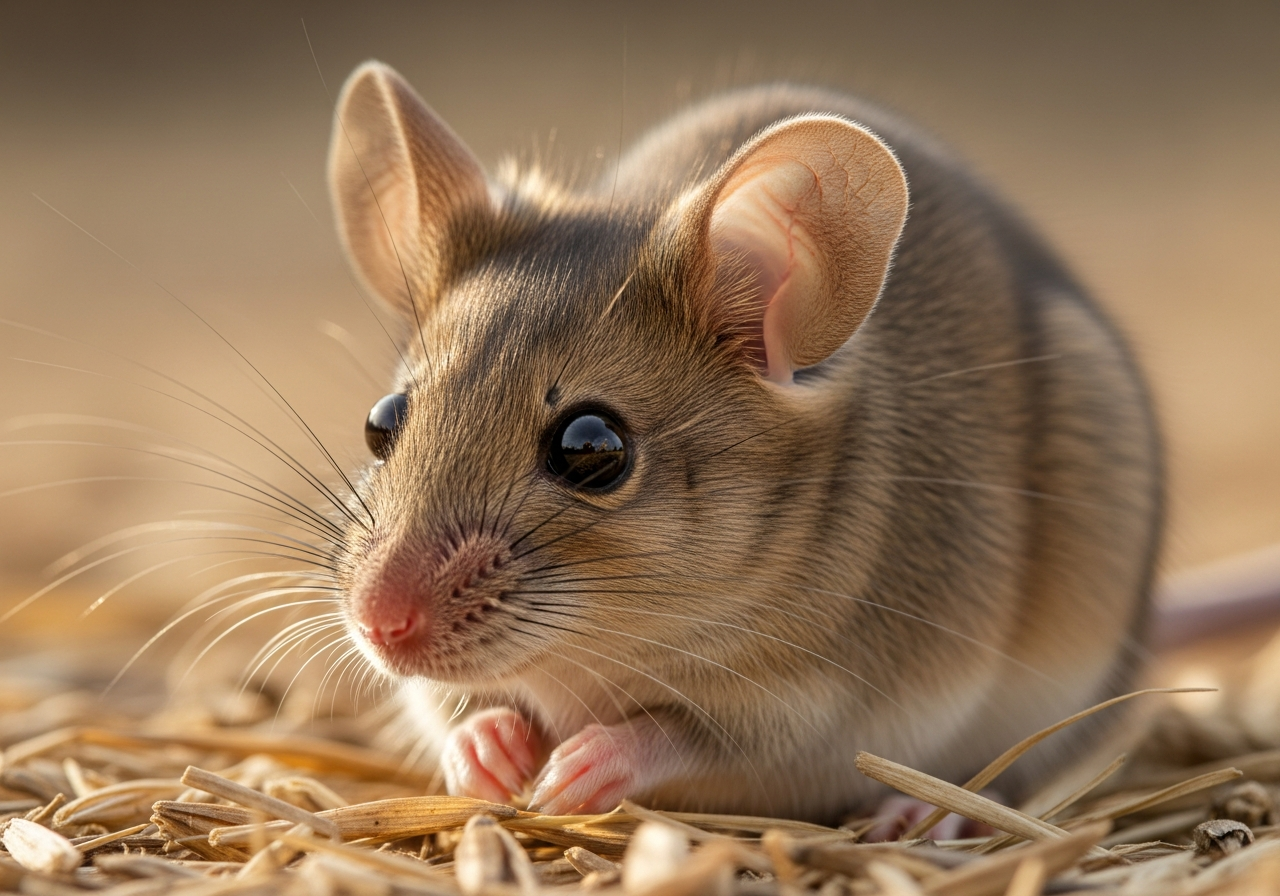
The house mouse is a small rodent with large ears, a pointed snout, and a thin tail roughly as long as its body. It is one of the most successful mammals on Earth, living alongside humans almost everywhere, and is a major laboratory animal. House mice weigh only about 12–30 g, breed rapidly year-round, and usually live around a year in the wild.
Key takeaway
The house mouse is a small rodent with large ears, a pointed snout, and a thin tail roughly as long as its body. It is one of the most successful mammals on Earth, living alongside humans almost everywhere, and is a major laboratory animal. House mice weigh only about 12–30 g, breed rapidly year-round, and usually live around a year in the wild.
Mouse overview
Mouse (Mus musculus) is a mammal listed here as Least Concern. Typical weight 12–30 g (0.4–1 oz); lifespan around About 1 year wild (2–3 in captivity).
Mouse ecology
Diet: Omnivore (mainly seeds and grains). Habitat: Buildings, fields, and grassland worldwide. Movement and social systems reflect those pressures across the native range.
Mouses and people
Learn before you travel or keep related pets. Wild mouses are not toys; captive care needs species-specific husbandry.
Status and further reading
Conservation label in our guides: Least Concern. See the full Mouse profile for taxonomy, FAQs, and related topic guides on this site.
Behaviour and senses
House mice are mainly nocturnal and intensely curious, constantly exploring their surroundings while staying close to cover. They have poor eyesight but an excellent sense of smell, hearing that extends into the ultrasonic, and sensitive whiskers that let them feel their way along walls in the dark. They communicate using scent marks and ultrasonic calls that are too high for people to hear.
Breeding and lifespan
Few mammals breed as fast as the house mouse. A female can produce a litter of around five to eight young every three weeks and can become pregnant again within a day of giving birth, so populations can explode when food and shelter are plentiful. This rapid breeding, combined with a short life, makes the mouse a cornerstone of many food chains.
Sources
Mouse FAQs
What are key facts about mouses?
The house mouse is a small rodent with large ears, a pointed snout, and a thin tail roughly as long as its body. It is one of the most successful mammals on Earth, living alongside humans almost everywhere, and is a major laboratory animal. House mice weigh only about 12–30 g, breed rapidly year-round, and usually live around a year in the wild.
What is the scientific name of the mouse?
Mus musculus — used in research and conservation listings for mouses.
What do mouses eat?
Mouses eat mainly seeds and grains, with seasonal and regional variation in Buildings, fields, and grassland worldwide.
Where do mouses live?
They are associated with Buildings, fields, and grassland worldwide. Local presence depends on food, cover, and human land use.
What is the conservation status of mouses?
Listed in our guides as Least Concern. Check the IUCN Red List and national assessments for the latest formal category.