Quick answer
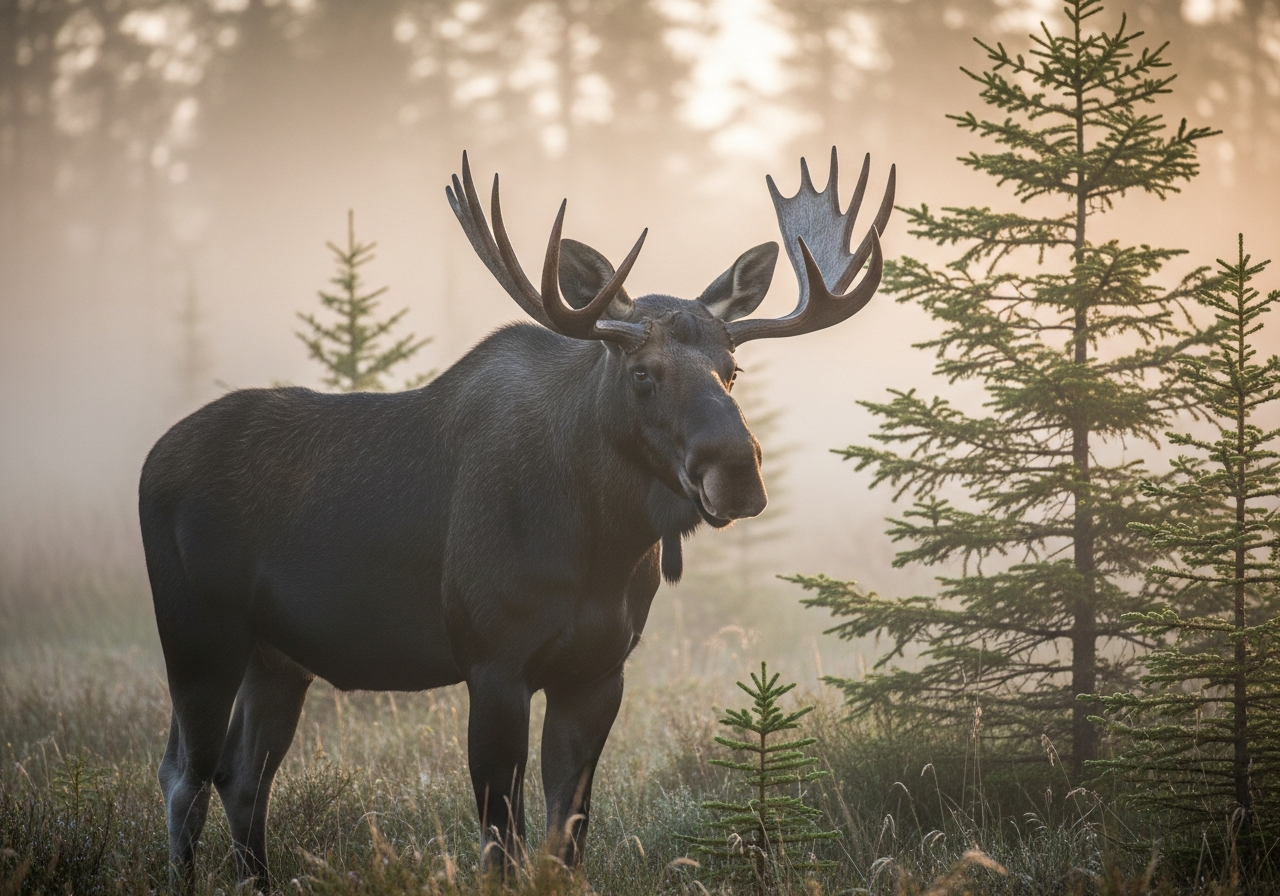
The moose is the largest member of the deer family, standing up to 2.1 m (7 ft) at the shoulder and weighing as much as 700 kg (1,500 lb). Males grow huge, broad antlers each year that can span nearly 2 m (6 ft) across. Moose are solitary herbivores of the northern forests of North America, Scandinavia, and Russia, feeding on leaves, twigs, and water plants. Wild moose typically live 15 to 25 years.
Key takeaway
The moose is the largest member of the deer family, standing up to 2.1 m (7 ft) at the shoulder and weighing as much as 700 kg (1,500 lb). Males grow huge, broad antlers each year that can span nearly 2 m (6 ft) across. Moose are solitary herbivores of the northern forests of North America, Scandinavia, and Russia, feeding on leaves, twigs, and water plants. Wild moose typically live 15 to 25 years.
Moose overview
Moose (Alces alces) is a mammal listed here as Least Concern. Typical weight 270–700 kg (600–1,500 lb); lifespan around 15–25 years in the wild.
Moose ecology
Diet: Herbivore. Habitat: Boreal and mixed forests, wetlands. Movement and social systems reflect those pressures across the native range.
Mooses and people
Learn before you travel or keep related pets. Wild mooses are not toys; captive care needs species-specific husbandry.
Status and further reading
Conservation label in our guides: Least Concern. See the full Moose profile for taxonomy, FAQs, and related topic guides on this site.
Behavior and antlers
Moose are largely solitary, unlike many herd-forming deer, and males come together with females mainly during the autumn breeding season, or rut. Bulls grow a fresh set of broad, palm-shaped antlers each year, shedding them in winter and regrowing them by summer. During the rut, males use their antlers to spar with rivals and attract mates. Despite their bulk, moose are strong swimmers and can run quickly through den
Diet and feeding
Moose are herbivores whose name comes from a word meaning "twig eater." They browse on leaves, shoots, bark, and twigs of trees and shrubs, and in summer wade into lakes and ponds to feed on aquatic plants rich in sodium. An adult moose can eat tens of kilograms of vegetation a day to sustain its huge body. Their long legs let them reach high branches and move through deep snow and water.
Sources
Moose FAQs
What are key facts about mooses?
The moose is the largest member of the deer family, standing up to 2.1 m (7 ft) at the shoulder and weighing as much as 700 kg (1,500 lb). Males grow huge, broad antlers each year that can span nearly 2 m (6 ft) across. Moose are solitary herbivores of the northern forests of North America, Scandinavia, and Russia, feeding on leaves, twigs, and water plants. Wild moose typically live 15 to 25 years.
What is the scientific name of the moose?
Alces alces — used in research and conservation listings for mooses.
What do mooses eat?
Mooses are described as herbivores, with seasonal and regional variation in Boreal and mixed forests, wetlands.
Where do mooses live?
They are associated with Boreal and mixed forests, wetlands. Local presence depends on food, cover, and human land use.
What is the conservation status of mooses?
Listed in our guides as Least Concern. Check the IUCN Red List and national assessments for the latest formal category.