Quick answer
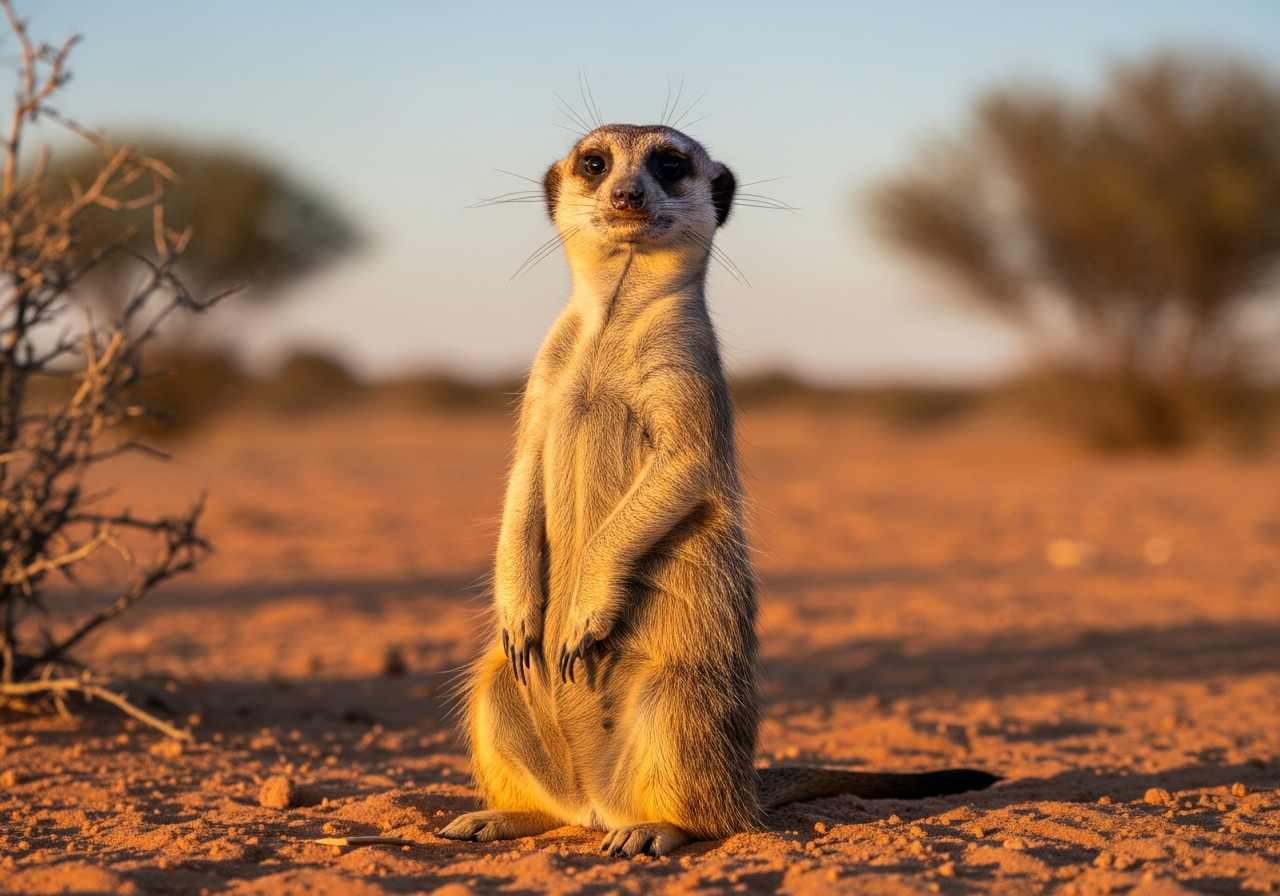
The meerkat is a small, highly social mongoose native to the deserts and dry plains of southern Africa, famous for standing upright on its hind legs to watch for danger. Meerkats live in tight-knit groups called mobs, take turns as lookout sentinels, and raise their young cooperatively. They are immune to some scorpion and snake venom and typically live around 10 years.
Key takeaway
The meerkat is a small, highly social mongoose native to the deserts and dry plains of southern Africa, famous for standing upright on its hind legs to watch for danger. Meerkats live in tight-knit groups called mobs, take turns as lookout sentinels, and raise their young cooperatively. They are immune to some scorpion and snake venom and typically live around 10 years.
Meerkat overview
Meerkat (Suricata suricatta) is a mammal listed here as Least Concern. Typical weight 0.6–1 kg (1.3–2.2 lb); lifespan around About 10 years.
Meerkat ecology
Diet: Insectivore (mostly). Habitat: Desert and dry savanna. Movement and social systems reflect those pressures across the native range.
Meerkats and people
Learn before you travel or keep related pets. Wild meerkats are not toys; captive care needs species-specific husbandry.
Status and further reading
Conservation label in our guides: Least Concern. See the full Meerkat profile for taxonomy, FAQs, and related topic guides on this site.
Teamwork and sentinels
Meerkats live in cooperative groups of up to 30 or more. While most of the mob forages, one or more take turns standing guard on raised ground or a bush, scanning the sky and horizon for predators. The sentinel gives different alarm calls for different threats, telling the group whether danger comes from the air or the ground.
Raising young together
Meerkats are cooperative breeders. A dominant pair produces most of the pups, and other members of the group help by babysitting, feeding, and teaching the youngsters, including how to handle dangerous prey such as scorpions. This shared care gives pups a strong chance of survival in a harsh environment.
Sources
Meerkat FAQs
What are key facts about meerkats?
The meerkat is a small, highly social mongoose native to the deserts and dry plains of southern Africa, famous for standing upright on its hind legs to watch for danger. Meerkats live in tight-knit groups called mobs, take turns as lookout sentinels, and raise their young cooperatively. They are immune to some scorpion and snake venom and typically live around 10 years.
What is the scientific name of the meerkat?
Suricata suricatta — used in research and conservation listings for meerkats.
What do meerkats eat?
Meerkats eat mostly, with seasonal and regional variation in Desert and dry savanna.
Where do meerkats live?
They are associated with Desert and dry savanna. Local presence depends on food, cover, and human land use.
What is the conservation status of meerkats?
Listed in our guides as Least Concern. Check the IUCN Red List and national assessments for the latest formal category.