Image sourcing: see credits & licences
Quick answer
The mallard is the most common and widespread wild duck in the world and the ancestor of nearly all domestic ducks. The male has a glossy green head, yellow bill, and chestnut chest, while the female is mottled brown for camouflage. A dabbling duck of lakes, rivers, and city ponds, the mallard adapts to almost any wetland and usually lives 5 to 10 years.
Top questions about the Mallard
Mallard facts at a glance
- Weight 1.1 kg
- Length 58 cm
- Top speed 88 km/h
- Lifespan 8 years
| Scientific name | Anas platyrhynchos |
|---|---|
| Diet | Omnivore (plants, seeds, insects, invertebrates) |
| Habitat | Lakes, rivers, marshes, and city ponds |
| Lifespan | 5–10 years in the wild |
| Length | 50–65 cm (20–26 in) |
| Top speed | Up to 88 km/h (55 mph) in flight |
| Conservation status | Least Concern (IUCN) |
| Kingdom | Animalia |
|---|---|
| Phylum | Chordata |
| Class | Aves |
| Order | Anseriformes |
| Family | Anatidae |
| Genus | Anas |
Where it lives
The mallard (Anas platyrhynchos) is native to Wetlands across North America, Europe, Asia, and North Africa, and introduced to other regions worldwide. — recorded across North America, Europe, Asia, Africa in this guide’s range summary.
For occurrence records, see GBIF species search and sources below.
How big is a mallard?
An adult mallard measures 58 cm long — about 34% of the height of an average adult person (1.73 m) — and weighs around 1.1 kg, about 2% of an average adult’s body weight (70 kg).
Length vs an average adult’s height (to scale)
What is a group of mallards called?
Group name (collective noun)
A group of Mallards is called a raft. It is also known as a flock or a paddling or a sord.
Baby name
A baby Mallard is called a duckling.
Explore more animal collective nouns and baby animal names .
Appearance and the eclipse
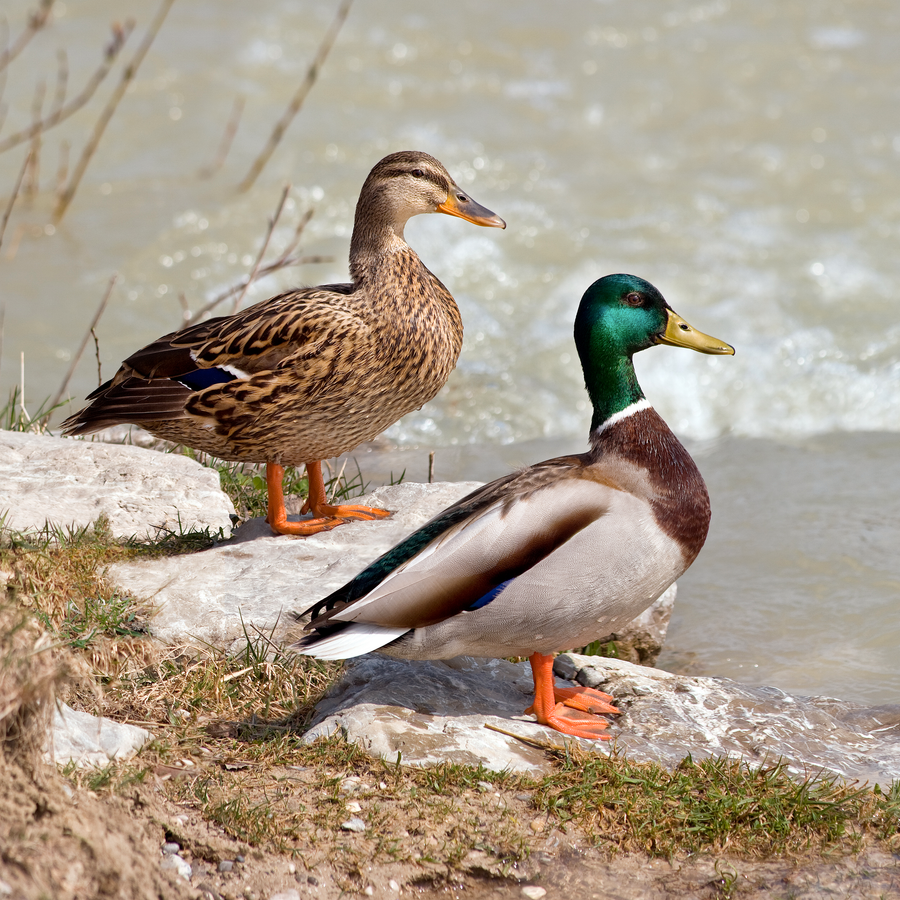
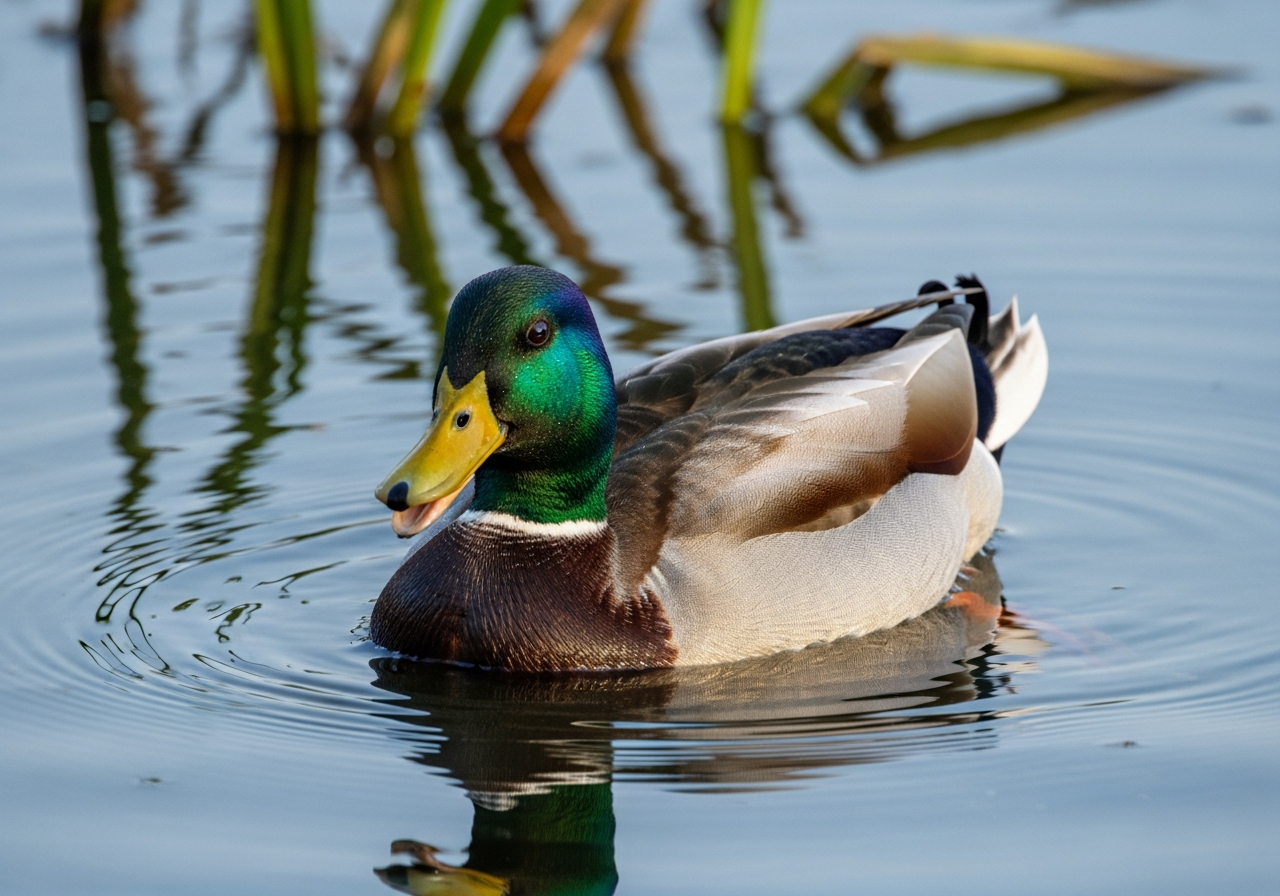
The drake mallard is striking, with an iridescent green head, white neck ring, chestnut breast, and bright yellow bill, while the hen is mottled brown to stay hidden on the nest. Both show a blue-purple wing patch called a speculum. For a few weeks in summer the male molts into a dull, female-like "eclipse" plumage while he is briefly unable to fly.
Dabbling and diet
Mallards are dabbling ducks, tipping forward in the water with their tails in the air to reach plants and small animals below the surface rather than diving. They are omnivores, eating seeds, aquatic plants, insects, worms, and small invertebrates, and in parks they readily accept food from people, though bread is poor nutrition for them.
Breeding and ducklings
The familiar "quack" most people know is actually the call of the female. Hens build hidden nests near water and lay around a dozen eggs. Ducklings hatch covered in down and able to swim and feed themselves within a day, following their mother to water while she guards them closely from predators.
Habitat and global success
Mallards live across North America, Europe, Asia, and North Africa and have been introduced elsewhere, making them one of the most widespread ducks on Earth. They thrive in almost any wetland, from wild marshes to urban park ponds, and their adaptability and willingness to live near people have helped them flourish worldwide.
Dig deeper into the Mallard
- How Fast Is A Mallard?
Mallard top speed is up to about 88 km/h (55 mph) in flight. Sprint vs endurance and what limits pace.
- How Long Do Mallards Live?
Mallard lifespan is typically 5–10 years in the wild. What shortens or extends life, life stages, and status (Least Concern).
- What Do Mallards Eat?
What mallards eat: Omnivore (plants, seeds, insects, invertebrates), foraging style, and seasonal shifts in Lakes, rivers, marshes, and city ponds.
- Where Do Mallards Live?
Where mallards live: Lakes, rivers, marshes, and city ponds, native range cues, and human overlap. Status Least Concern.
Explore the Mallard
Related Birds
Range & geography
Did you know? Mallard facts
- The mallard is the most common and widespread wild duck in the world and the ancestor of nearly all domestic ducks.
- Mallards are omnivores that eat seeds, aquatic plants, insects, worms, and small invertebrates. They dabble at the surface and tip upside down to reach food rather than diving for it.
- The male has a glossy green head, yellow bill, and chestnut breast, while the female is mottled brown for camouflage. Both have a blue wing patch, and the classic loud quack comes from the female.
- Yes. Almost all domestic duck breeds, except the Muscovy, descend from the wild mallard, which is why farmyard ducks vary so much in size and color.
- Bread fills ducks up without giving them the nutrients they need and can harm their health and water quality. Cracked corn, oats, peas, or duck feed are far better if you want to feed them.
- Conservation: Least Concern (IUCN).
Diet & feeding
Mallard feeds primarily as a omnivore (plants, seeds, insects, invertebrates). Mallards are dabbling ducks, tipping forward in the water with their tails in the air to reach plants and small animals below the surface rather than diving. They are omnivores, eating seeds, aquatic plants, insects, worms, and small inverte
Adaptations
- The drake mallard is striking, with an iridescent green head, white neck ring, chestnut breast, and bright yellow bill, while the hen is mottled brown to stay hidden on the nest. Both show a blue-purple wing patch called a speculum. For a few weeks in summer the male molts into a dull, female-like \
- Mallards are dabbling ducks, tipping forward in the water with their tails in the air to reach plants and small animals below the surface rather than diving. They are omnivores, eating seeds, aquatic plants, insects, worms, and small invertebrates, and in parks they readily accept food from people, though bread is poor nutrition for them.
Behaviour & ecology
- The drake mallard is striking, with an iridescent green head, white neck ring, chestnut breast, and bright yellow bill, while the hen is mottled brown to stay hidden on the nest. Both show a blue-purple wing patch called a speculum. For a few weeks in summer the male molts into a dull, female-like \
- Mallards are dabbling ducks, tipping forward in the water with their tails in the air to reach plants and small animals below the surface rather than diving. They are omnivores, eating seeds, aquatic plants, insects, worms, and small invertebrates, and in parks they readily accept food from people, though bread is poor nutrition for them.
- The familiar \
Communication
- Mallard uses calls and visual displays to communicate territory, alarm, and breeding status.
- Vocal repertoires vary by species and are often learned or refined during development.
Habitat & range
Lakes, rivers, marshes, and city ponds
Ecological role
Mallard contributes to seed dispersal, insect control, or nutrient cycling depending on diet and foraging habits.
Conservation status of the Mallard
The mallard (Anas platyrhynchos) is listed as Least Concern on the IUCN Red List. Least Concern (LC) is the IUCN's lowest-risk category, assigned to widespread, abundant species that have been evaluated and found not to be threatened. It does not mean a species faces no pressures — only that it is not currently at risk of extinction.
The mallard (Anas platyrhynchos) is assessed on the IUCN Red List. Look up on the IUCN Red List .
Frequently asked questions about the Mallard
What do mallards eat?
Mallards are omnivores that eat seeds, aquatic plants, insects, worms, and small invertebrates. They dabble at the surface and tip upside down to reach food rather than diving for it.
What is the difference between male and female mallards?
The male has a glossy green head, yellow bill, and chestnut breast, while the female is mottled brown for camouflage. Both have a blue wing patch, and the classic loud quack comes from the female.
Are mallards the ancestors of domestic ducks?
Yes. Almost all domestic duck breeds, except the Muscovy, descend from the wild mallard, which is why farmyard ducks vary so much in size and color.
Why should you not feed bread to mallards?
Bread fills ducks up without giving them the nutrients they need and can harm their health and water quality. Cracked corn, oats, peas, or duck feed are far better if you want to feed them.
How fast can a mallard fly?
Mallards are strong fliers and can reach speeds of around 88 km/h (55 mph), especially with a tailwind, and they migrate long distances between breeding and wintering grounds.
Where do mallards live?
Mallards live across North America, Europe, Asia, and North Africa and have been introduced to other regions. They thrive in nearly any wetland, including lakes, rivers, marshes, and city ponds.
What is a group of mallards called?
A group of Mallards is called a raft. It is also known as a flock or a paddling or a sord.
What is a baby mallard called?
A baby Mallard is called a duckling.
Sources & references
This guide is compiled and reviewed against established zoological and conservation references. Key sources for the Mallard:
-
IUCN Red List of Threatened Species
Conservation status (Least Concern) reflects the IUCN Red List category for Anas platyrhynchos.
-
iNaturalist — observations & photos
Search citizen-science observations and community IDs for Anas platyrhynchos. Useful for range checks and recent sightings — not a substitute for formal Red List status.
-
GBIF — occurrence data
Global Biodiversity Information Facility species search for Anas platyrhynchos. Explore published occurrence records used in range research.
-
eBird — bird observations
Cornell Lab eBird target search for Mallard. Check recent checklists and seasonal abundance where birders report this species.
- IUCN Red List — Anas platyrhynchos.
Conservation status (Least Concern) and population trends.
- Animal Diversity Web — Anas platyrhynchos. University of Michigan Museum of Zoology.
Life history, morphology, and range.
- Wikipedia — Mallard.
General taxonomy and overview (cross-check primary sources).
-
Global Animal Guide editorial standards
How we research, source, review, and update every guide for accuracy.