Quick answer
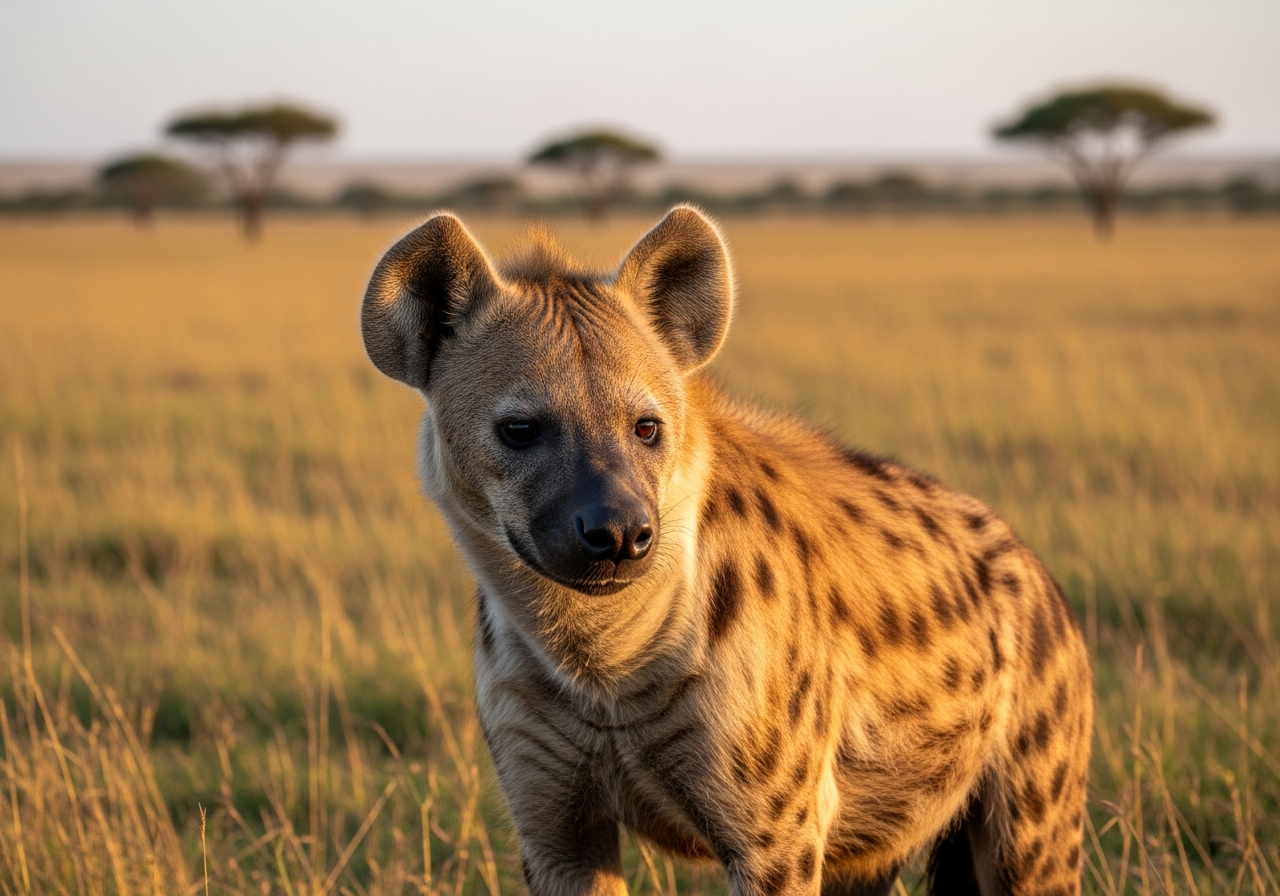
The spotted hyena is a powerful, highly social carnivore of sub-Saharan Africa, known for its bone-crushing jaws and eerie, laugh-like calls. It lives in large matriarchal groups called clans, led by dominant females, and is both a skilled cooperative hunter and an opportunistic scavenger. Despite its dog-like look, the hyena is more closely related to cats and mongooses. Wild spotted hyenas typically live around 12 years.
Key takeaway
The spotted hyena is a powerful, highly social carnivore of sub-Saharan Africa, known for its bone-crushing jaws and eerie, laugh-like calls. It lives in large matriarchal groups called clans, led by dominant females, and is both a skilled cooperative hunter and an opportunistic scavenger. Despite its dog-like look, the hyena is more closely related to cats and mongooses. Wild spotted hyenas typically live around 12 years.
Spotted Hyena overview
Spotted Hyena (Crocuta crocuta) is a mammal listed here as Least Concern. Typical weight 40–86 kg (88–190 lb); lifespan around About 12 years in the wild.
Spotted Hyena ecology
Diet: Carnivore. Habitat: Savanna, grassland, and semi-desert. Movement and social systems reflect those pressures across the native range.
Spotted Hyenas and people
Learn before you travel or keep related pets. Wild spotted hyenas are not toys; captive care needs species-specific husbandry.
Status and further reading
Conservation label in our guides: Least Concern. See the full Spotted Hyena profile for taxonomy, FAQs, and related topic guides on this site.
Diet and hunting
Spotted hyenas are formidable carnivores that hunt the majority of their own food, working together to chase down prey such as wildebeest, zebra, and antelope. They are also expert scavengers and have the strongest jaws relative to size of any mammal, able to crush and digest bone. Their digestive system extracts nutrients from parts other predators leave behind, wasting almost nothing of a carcass. A clan will defen
Sources
Spotted Hyena FAQs
What are key facts about spotted hyenas?
The spotted hyena is a powerful, highly social carnivore of sub-Saharan Africa, known for its bone-crushing jaws and eerie, laugh-like calls. It lives in large matriarchal groups called clans, led by dominant females, and is both a skilled cooperative hunter and an opportunistic scavenger. Despite its dog-like look, the hyena is more closely related to cats and mongooses. Wild spotted hyenas typically live around 12 years.
What is the scientific name of the spotted hyena?
Crocuta crocuta — used in research and conservation listings for spotted hyenas.
What do spotted hyenas eat?
Spotted Hyenas are described as carnivores, with seasonal and regional variation in Savanna, grassland, and semi-desert.
Where do spotted hyenas live?
They are associated with Savanna, grassland, and semi-desert. Local presence depends on food, cover, and human land use.
What is the conservation status of spotted hyenas?
Listed in our guides as Least Concern. Check the IUCN Red List and national assessments for the latest formal category.