Quick answer
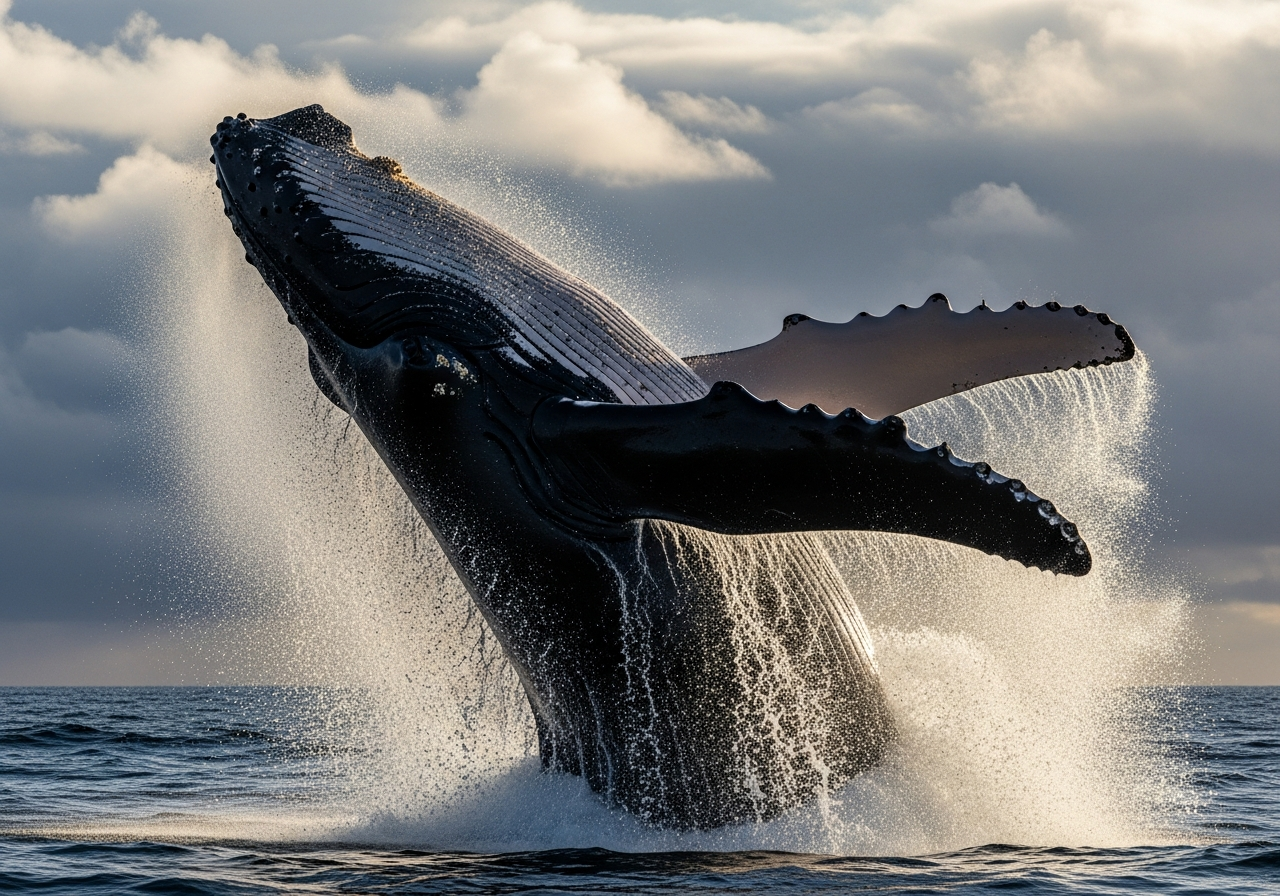
The humpback whale is a large baleen whale found in oceans worldwide, famous for its complex, haunting songs, spectacular breaching, and enormous wing-like flippers. Humpbacks can grow to 15 m (49 ft), migrate thousands of miles between feeding and breeding grounds, and live up to 80 years or more. Once hunted to the brink, they are now a conservation success story listed as Least Concern.
Key takeaway
The humpback whale is a large baleen whale found in oceans worldwide, famous for its complex, haunting songs, spectacular breaching, and enormous wing-like flippers. Humpbacks can grow to 15 m (49 ft), migrate thousands of miles between feeding and breeding grounds, and live up to 80 years or more. Once hunted to the brink, they are now a conservation success story listed as Least Concern.
Humpback Whale overview
Humpback Whale (Megaptera novaeangliae) is a mammal listed here as Least Concern. Typical weight 25,000–30,000 kg (28–33 tons); lifespan around Up to 80–90 years.
Humpback Whale ecology
Diet: Carnivore (krill and small fish). Habitat: Oceans worldwide. Movement and social systems reflect those pressures across the native range.
Humpback Whales and people
Learn before you travel or keep related pets. Wild humpback whales are not toys; captive care needs species-specific husbandry.
Status and further reading
Conservation label in our guides: Least Concern. See the full Humpback Whale profile for taxonomy, FAQs, and related topic guides on this site.
The whale that sings
Male humpbacks produce some of the longest and most complex songs in the animal kingdom, sequences of moans, cries, and whistles that can last 20 minutes and be repeated for hours. All the males in a population sing the same evolving song, which gradually changes from year to year, likely as part of breeding behavior.
Bubble-net feeding
Humpbacks are baleen whales that filter krill and small fish from the water. Groups use a remarkable cooperative technique called bubble-net feeding, blowing a spiraling curtain of bubbles to herd prey into a tight ball before lunging up through the middle with mouths wide open.
Sources
Humpback Whale FAQs
What are key facts about humpback whales?
The humpback whale is a large baleen whale found in oceans worldwide, famous for its complex, haunting songs, spectacular breaching, and enormous wing-like flippers. Humpbacks can grow to 15 m (49 ft), migrate thousands of miles between feeding and breeding grounds, and live up to 80 years or more. Once hunted to the brink, they are now a conservation success story listed as Least Concern.
What is the scientific name of the humpback whale?
Megaptera novaeangliae — used in research and conservation listings for humpback whales.
What do humpback whales eat?
Humpback Whales eat krill and small fish, with seasonal and regional variation in Oceans worldwide.
Where do humpback whales live?
They are associated with Oceans worldwide. Local presence depends on food, cover, and human land use.
What is the conservation status of humpback whales?
Listed in our guides as Least Concern. Check the IUCN Red List and national assessments for the latest formal category.